This article may contain affiliate links. Learn more on our Partner Program page.
Three workers died during maintenance work at a Tata Electronics factory that manufactures components for the iPhone. They inhaled toxic gas from a wastewater treatment tank. Authorities are now investigating whether safety regulations were followed.
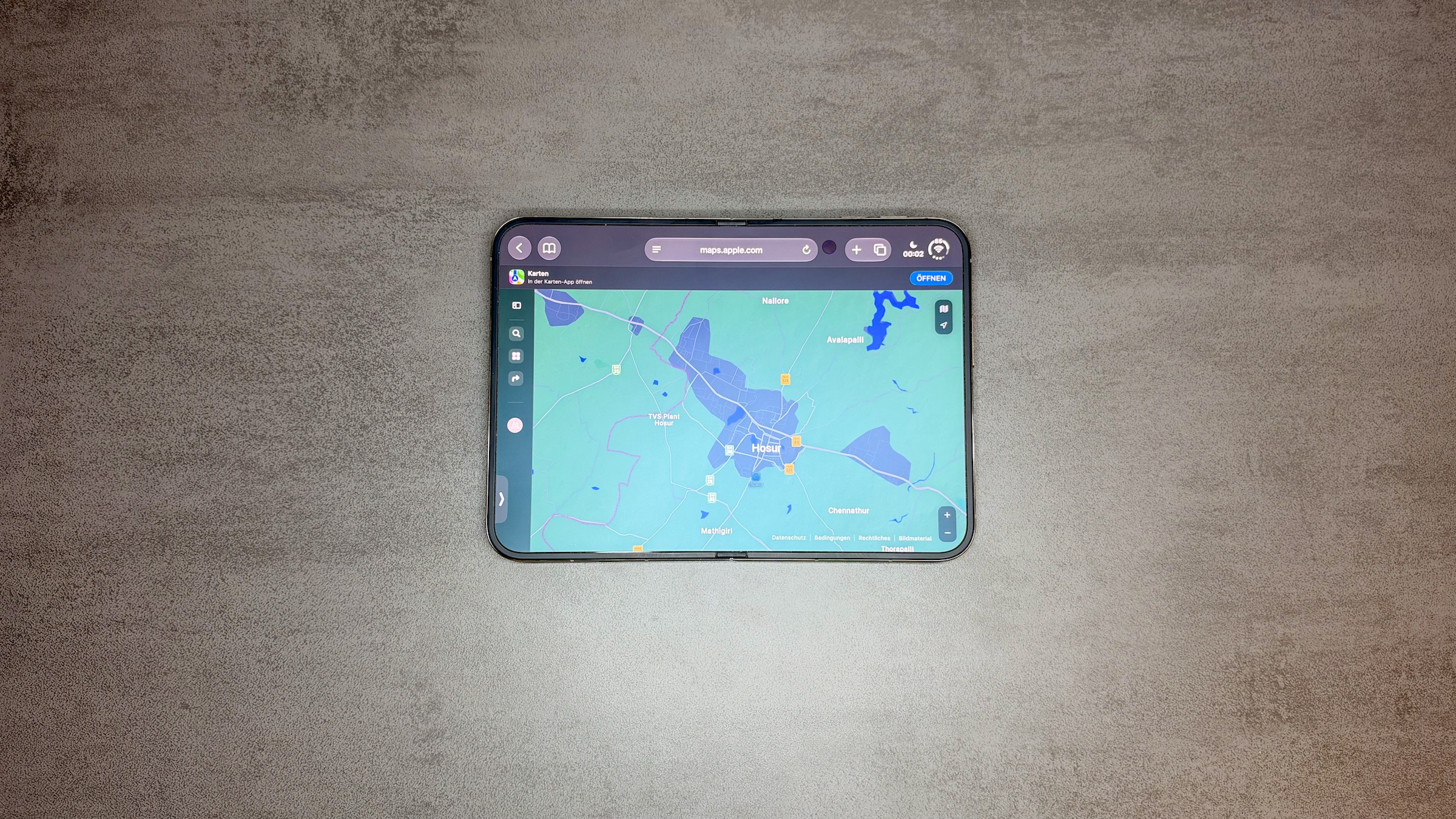
The accident occurred on Monday, November 9, at the Tata Electronics plant in Hosur, in the southern Indian state of Tamil Nadu. Three temporary workers died during maintenance work on the plant's wastewater treatment facility. This was confirmed by Nalco Water, a subsidiary of Ecolab, according to the ANI news agency. Nalco operates the facility; the three workers were employed through a subcontractor.
The factory in Hosur manufactures components for the iPhone, including back covers. India has become a key production location for Apple: one in four iPhones is manufactured there.
Key Facts at a Glance
- Three temporary workers died at the Tata plant in Hosur during maintenance work on the wastewater treatment plant.
- According to authorities, they inhaled gas while inspecting a nanofiltration tank.
- The police are investigating, among other things, the issue of protective equipment and the supervision of temporary workers.
- An Apple team will support the investigation on site.
What happened in Hosur
According to District Administrator C. Dinesh Kumar, as reported by ThePrint, the three were part of a four-person routine maintenance team. One of the workers opened the lid of the nanofiltration system's feed tank, inhaled gas, collapsed, and fell into the tank. The other two climbed in one after the other to help and also lost consciousness.
The fourth worker raised the alarm. Colleagues and the factory's safety team pulled the three out and administered first aid. Doctors at a private hospital in Hosur could only pronounce them dead.
The district administrator said that adequate safety precautions had apparently not been taken. He also questioned why the workers had even entered the narrow tank, since the sludge could normally be removed from the outside via a hatch.
The investigation is ongoing
The police have launched an investigation. They are examining whether regulations for working in confined spaces were followed, whether protective equipment was available, and how the temporary workers were supervised. They are also investigating whether an odor-eliminating powder reacted with residues in the tank, thus releasing the gas. The Tamil Nadu environmental authority is also scheduled to inspect the facility.
According to Reuters, an Apple team is visiting the factory to assist with the investigation. Ecolab has promised the families of the deceased 3 million rupees each in compensation, in addition to insurance payments, according to ThePrint. Production at the factory was not affected, Reuters reported, because it was closed for the Deepavali festival of lights.
Not the first incident in Hosur
Tata Electronics in Hosur has made headlines several times this year. At the end of May, the Tamil Nadu environmental authority accused the components factory of polluting the groundwater of neighboring fields with wastewater and threatened to shut it down. Tata stated in June that the authority had dropped the case. Also in June, confidential Apple documents were apparently stolen in a cyberattack on Tata.
Back in September 2024, a fire had temporarily halted the production of iPhone components in Hosur.
What Apple's rules for suppliers stipulate
Apple's supplier code of conduct requires a safe working environment and the management of health and safety risks. It explicitly applies to employees hired through third parties. According to the code, workers have the right to refuse unsafe work.
I therefore consider this case to be more than just a local workplace accident. The three deceased were neither employed by Tata nor by Apple, but by a subcontractor of the plant operator. It is precisely in such situations that it becomes clear whether a code of conduct is effective in practice. The more Apple shifts iPhone production to India, the more its commitment to workplace safety depends on its enforcement down to these levels.
Should Apple disclose the results of such investigations at its suppliers, or is the assurance that Apple conducts on-site inspections sufficient? Let us know in the comments what kind of response you would expect from Apple.