For a week, select newsrooms were allowed to use the iPhone 18 Pro and iPhone 18 Pro Max in everyday situations, and now the first in-depth reviews have been published. The consensus is surprisingly unanimous: plenty of praise for the camera, battery, and cooling, but hardly any reason to upgrade for those who already own an iPhone 17 Pro. However, the reviewers clearly disagree on one point – and a feature that plays a major role in the tests is missing from the iPhone in Germany and Austria.
Apple unveiled the iPhone 18 Pro and iPhone 18 Pro Max with variable aperture and A20 Pro chip on September 9th; both models went on sale on Friday, September 18th. The first in-depth reviews appeared on September 16th. Particularly thorough were the reports from 9to5Mac, Engadget, and TechRadar, who each used both models as their daily drivers for about a week.
The technical specifications are listed in the overview, which includes all data and prices for the iPhone 18 Pro and Pro Max. In Germany, prices start at €1,449 for the iPhone 18 Pro and €1,599 for the Pro Max, both with 256 GB of storage.
Key Facts at a Glance
- The variable aperture is particularly impressive at night and in combination with the new Pro controls. However, tests offer conflicting accounts of how often the automatic aperture actually closes.
- 9to5Mac measures 22 to 27 percent more CPU and 40 to 45 percent more GPU performance in the A20 Pro; cooling is considered significantly improved.
- The battery life is consistently praised, but the extra weight of the Pro Max is pushing its limits.
- Siri AI is being tested, but is not available on the iPhone in the EU.
- All three agree: If you have an iPhone 17 Pro, you don't need to switch.
Variable aperture: The automatic system decides differently
The main camera features a mechanical aperture for the first time, switching between f/1.48, f/1.8, f/2.8, and f/4.0. Tests surprisingly differ in how the automatic settings handle this. 9to5Mac observed that the iPhone opens to f/1.48 at night, closes down to f/4 for close-up subjects, and often uses f/4 even in daylight. Engadget, on the other hand, found that its automatic photos almost always used the widest aperture.
Both phones show the most measurable advantage at night. 9to5Mac compared identical scenes with the iPhone 17 Pro Max: At the same shutter speed of 1/15 second, the iPhone 18 Pro Max used ISO 10,000 instead of ISO 12,500, resulting in less noise. TechRadar observed significantly shorter waiting times in Night mode, usually one to three seconds instead of five to eight.
In daylight and landscape photography, the aperture makes hardly any visible difference, according to 9to5Mac; the photos appear slightly brighter primarily due to the improved image processing. With close-up subjects, however, true optical depth of field becomes apparent: at f/4, both the foreground and background remain sharp, while at f/1.48, the background becomes soft – without the computational blurring of portrait mode.
According to all three tests, the aperture becomes truly interesting when combined with the new Pro controls for shutter speed, white balance, and histogram. Engadget used shutter speeds between 1/6000 and one second for controlled low-light shots, while 9to5Mac created six-pointed starbursts on streetlights at f/4. TechRadar praised the freely configurable controls but noted the lack of presets with fixed values.
Opinions are mixed regarding the post-processing effects of Cinema Mode. 9to5Mac considers the option to decide after recording a significant improvement. Engadget, however, found the results unpredictable depending on the distance to the subject and was only able to apply the effect to videos shot with the iPhone 18 Pro.
Engadget gave a positive review to Apple's reference image, the new proof of authenticity for photos: Development was almost instantaneous in the test, and text removed with the cleanup tool was immediately recognizable in comparison. However, in the EU, it's not currently possible to take a reference image, only to develop and view it.
Smaller Dynamic Island, same color back, more weight
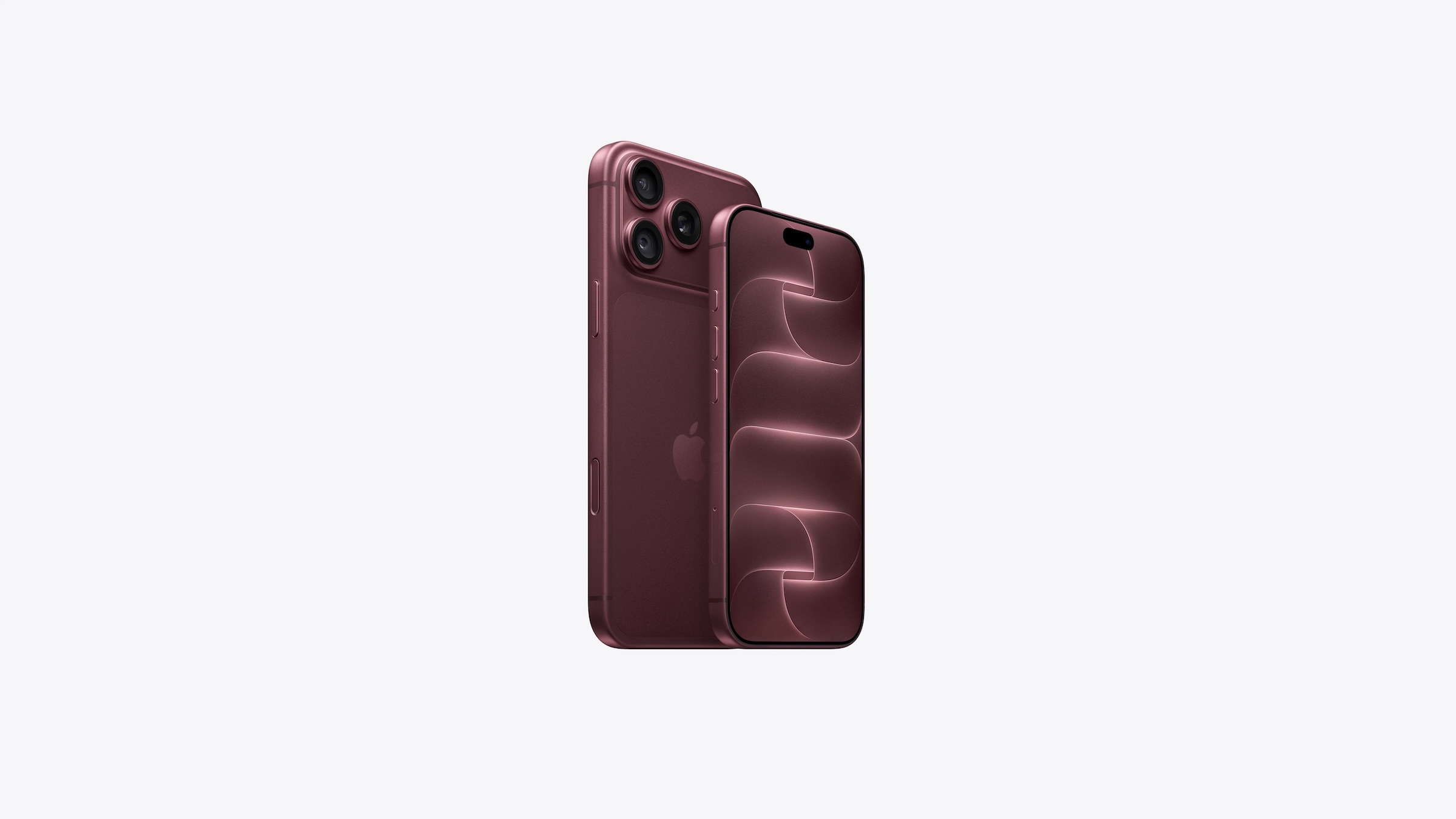
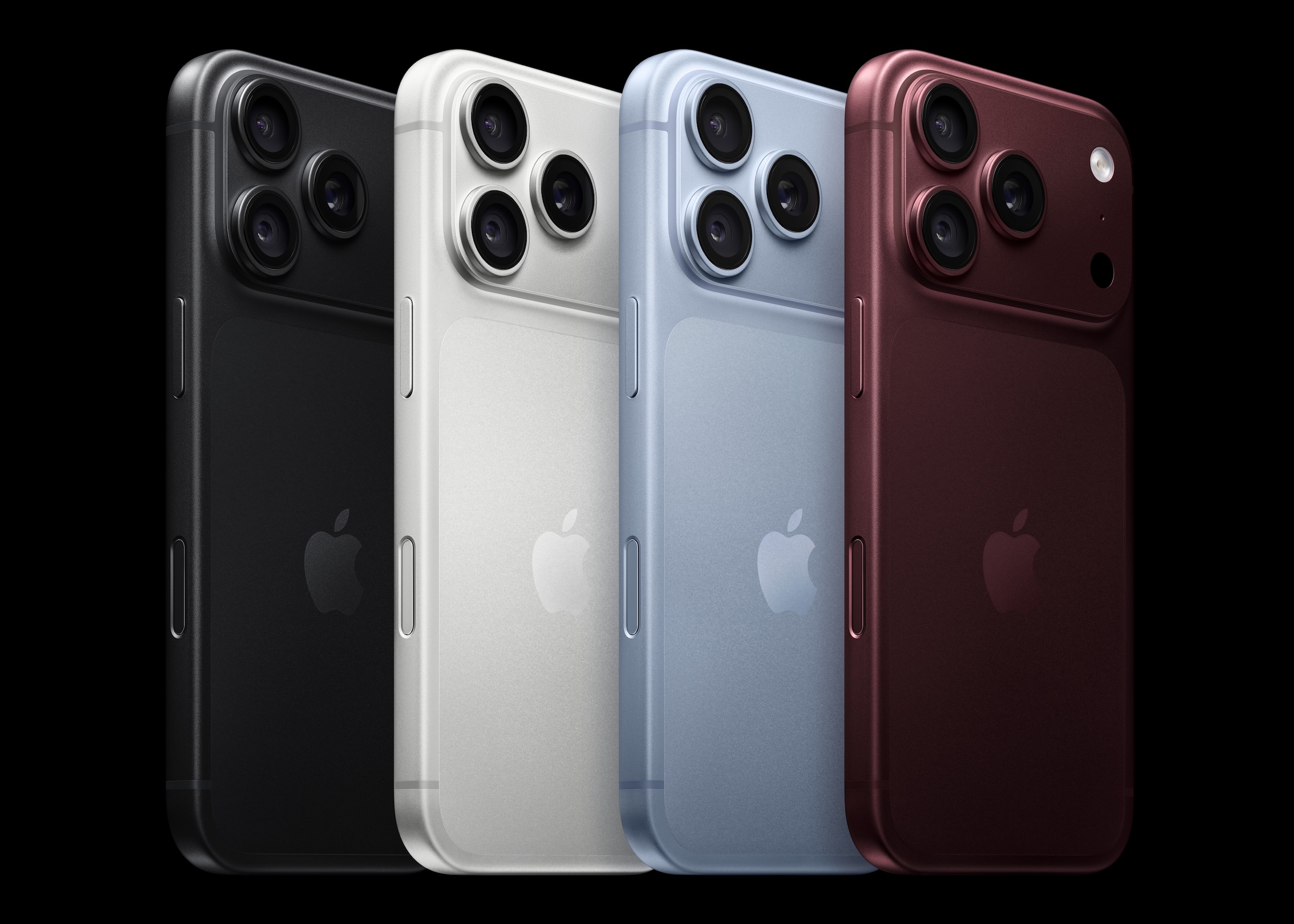
Externally, the new models are barely distinguishable from their predecessors. New colors include Burgundy and Polar, while black, according to 9to5Mac, is the darkest Pro iPhone to date. Apple has now matched the color of the glass back to the aluminum frame, largely eliminating the controversial two-tone look of the iPhone 17 Pro.
The Dynamic Island is about a quarter smaller and now displays three live activities simultaneously. In everyday use, 9to5Mac particularly appreciated that a second live activity on the right displays more information without requiring a long press. According to the test, the infrared camera for Face ID, located below the display, is only visible in bright sunlight.
| Model | Thickness | Weight |
|---|---|---|
| iPhone 17 Pro | 8.75 mm | 206 g |
| iPhone 18 Pro | 8.75 mm | 211 g |
| iPhone 17 Pro Max | 8.75 mm | 233 g |
| iPhone 18 Pro Max | 8.75 mm | 249 g |
The Pro Max weighs 16 grams more than its predecessor, while the smaller model weighs 5 grams more. For 9to5Mac, this means the Pro Max has reached the limit of what is still comfortable to hold – reason enough for the reviewer to opt for the smaller model. Engadget also points out that the aluminum frame is likely to be more prone to scratches than the older titanium models.
Performance, cooling and battery
Opinions on the A20 Pro vary depending on the measurement method. 9to5Mac measured 22 to 27 percent more CPU and 40 to 45 percent more GPU performance in benchmarks compared to the A19 Pro, calling it an unexpectedly large leap. TechRadar, on the other hand, sees the chip as performing similarly to its predecessor in everyday use, with the advantage primarily in video exports and as a reserve for the coming years.
All three agree on the cooling issue. 9to5Mac calls heat generation, which was the biggest weakness of the iPhone 15 Pro and 16 Pro, now one of its greatest strengths. Engadget only experienced the iPhone 18 Pro getting truly warm once; the heat dissipated after about a minute.
Battery life is one of the strongest points. 9to5Mac got a day and a half of use out of the Pro Max, and a full day out of the smaller model. Engadget managed one and a half to two days with the iPhone 18 Pro, while TechRadar achieved around 30 hours with both models. In TechRadar's own battery test, the iPhone 18 Pro lasted 16 hours and 17 minutes, and the Pro Max 18 hours and 27 minutes – according to the editors, significantly less than Apple's figures of up to 36 and 45 hours of video playback.
Important for German-speaking users: According to 9to5Mac, Apple's battery life figures refer to the eSIM-only models; devices with a physical SIM card slot achieve approximately two hours less video playback. In Germany, Apple continues to sell the Pro models with a physical SIM card slot. Those aiming for a 50 percent charge in around 15 minutes will need a compatible power adapter – TechRadar achieved this figure using Apple's 40-watt adapter and a 45-watt model from Anker.
There is a US peculiarity regarding the modem: According to TechRadar, the Pro Max tested in the USA uses a Qualcomm modem, while outside the USA Apple uses its own C2 modem even in the Pro Max.
The price premiums increase with the storage capacity
9to5Mac points out that the price increase in the US primarily affects the larger storage capacities: Entry-level models cost $100 more, and the jump from 512 GB to 1 TB is now $400, twice as large as last year. German prices show the same pattern.
| Memory | iPhone 18 Pro | Surcharge for the previous level | iPhone 18 Pro Max |
|---|---|---|---|
| 256 GB | 1.449 € | – | 1.599 € |
| 512 GB | 1.699 € | + 250 € | 1.849 € |
| 1 TB | 2.199 € | + 500 € | 2.349 € |
| 2 TB | 2.949 € | + 750 € | 3.099 € |
Anyone upgrading from 256 GB to 2 TB in this country will therefore pay 1,500 euros more – more than a second iPhone 18 Pro in its basic configuration costs.
Siri AI: a topic in testing, but not available on iPhones in this country
Engadget and TechRadar have extensively tested Siri AI, with differing results. TechRadar sees the new assistant as the long-promised, significantly more capable system: faster, with visible intermediate steps and access to app content, albeit with occasional missteps. Engadget, on the other hand, criticizes problems understanding follow-up questions and lists the beta label as the device's only drawback.
For readers in Germany and Austria, this part of the tests is only of limited relevance. According to Apple, Siri AI will initially launch only in English and is not yet available in the EU on iOS, iPadOS, and watchOS. Switzerland is an exception: According to an Apple spokesperson, speaking to the news agency AWP, the restriction only applies to EU member states. This means Siri AI joins the list of Apple features that are currently unavailable in the EU.
Engadget also mentions iPhone Handoff, which allows two iPhones to be used with one phone number. However, this feature is not limited to the iPhone 18 Pro, and in Germany, only Telekom is offering it at launch.
An S year with the best iPhone camera
Engadget is reminded of the earlier "S" years, when Apple selectively improved an existing design rather than reinventing it. 9to5Mac describes the iPhone 18 Pro as a logical continuation of what Apple started with the iPhone 17 Pro. Engadget awards it 9 out of 10 points, while TechRadar gives it top marks in all categories except value for money.
When it comes to upgrading, the tests draw almost the same line. 9to5Mac and Engadget see a worthwhile upgrade starting with an iPhone 16 Pro or older, while TechRadar only considers the iPhone 15 Pro a truly significant leap. For iPhone 17 Pro owners, the calculation is clear from our perspective: The differences between the iPhone 18 Pro and iPhone 17 Pro lie almost exclusively in the camera, battery, performance, and cooling.
If you have an iPhone 16 Pro or older and enjoy taking your own photos, the variable aperture and Pro sliders offer real added value. In that case, the camera and battery life will likely be the deciding factors, rather than Siri AI, which you can't use on iPhones in Germany and Austria anyway. It's worth taking a close look at the storage options, as the price increases significantly starting at 1 TB – the iPhone buying guide will help you determine which model is right for you.
Are camera settings and longer battery life enough of a reason for you to get a new iPhone, or would you rather wait for a generation with more noticeable improvements? Let us know in the comments which model you're currently using and whether the upgrade is worth it for you.