Apple's HomePod lineup is about to receive its biggest update in years – but the two speakers are at different stages of development. The HomePod mini is among the smart home devices that Apple reportedly has ready to launch. The larger HomePod is not mentioned in this list.
The HomePod mini was introduced in October 2020 – over five years ago – and has remained unchanged since, aside from new colors. The larger, second-generation HomePod arrived in January 2023, also without any fundamental updates. Both use older chips and are awaiting the completely revamped, AI-powered Siri experience. The progress of the individual smart home products has recently become much clearer: Apple TV, HomePod mini, and the new smart home hub are now considered ready for launch, while the report doesn't specify a timeframe for the larger HomePod. Together with the HomePod and an indoor security camera, these speakers form the core of a smart home initiative with a roadmap extending to 2028. All of these devices are linked to the same LLM-based Siri experience.
Key Facts at a Glance
| Detail | HomePod mini 2 | HomePod 3 |
|---|---|---|
| Chip | S9, S10 or S11 (Apple Watch class) | open, at least S9 level expected |
| Design | unchanged, new colors (including red) | expected to remain unchanged |
| Connectivity | N1 chip possible (Wi-Fi 7, Bluetooth 6, Thread) | N1 chip expected |
| UWB | 2nd Generation | probably |
| Siri | Siri AI as a key selling point | Siri AI as a key selling point |
| Price of the predecessor | €139 (since June 25, 2026) | €399 (since June 25, 2026) |
| Market launch | Autumn 2026 | No timeframe was mentioned. |
HomePod mini 2
Approximately 2,000 days without an update
In early April 2026, the HomePod mini surpassed approximately 2,000 days without a single hardware update – no other active Apple product has remained untouched for so long. The S5 chip used in it originates from the Apple Watch Series 5 released in 2019.
Chip: from S5 to S9 or newer
The biggest internal leap concerns the chip. Leaked Apple code lists the HomePod mini 2, codenamed B525, with a T8310 chip – the same architecture as in the Apple Watch Series 9, 10, and 11. Compared to the S5, this means significantly more speed: faster audio processing, better computational audio, and more efficient operation. It's important to note, however, that this chip does not make the HomePod mini 2 capable of running Apple Intelligence. Local AI processing remains exclusive to the HomePad with its A18 chip – new Apple Intelligence features on the small speaker will therefore likely run via the cloud rather than directly on the device.
Design and colors
According to multiple reports, the design remains unchanged – the round, spherical shape is retained. The only new feature is the color: Apple is said to have tested a red version, and other colors are conceivable. There are also reports of sound improvements, though no details are yet available.
Connectivity
Noticeable improvements in wireless connectivity are expected. The HomePod mini 2 will likely receive the N1 chip for Wi-Fi 7, Bluetooth 6, and Thread – though this isn't confirmed, as Apple occasionally omits the N1 chip in lower-priced products. At a minimum, Wi-Fi 6E and Bluetooth 5.3 are expected to replace the current Wi-Fi 4. Additionally, a second-generation UWB chip will be included for improved handoff functionality between the iPhone and the speaker.
HomePod 3
What is known – and what is not
There are significantly fewer concrete rumors about the full-size HomePod than about the mini, and the gap has recently widened. The latest smart home roadmap report lists three devices ready for launch—Apple TV, HomePod mini, and the smart home hub—along with two more: a robotic nine-inch version of the hub and an indoor security camera. The full-size HomePod is not mentioned in either list.
Mark Gurman explicitly confirmed in the spring that it was coming; this speaker is also dependent on the same Siri update as the other Home devices. However, this means that what is already reliable for the mini does not apply to the HomePod 3.
Chip and Sound
The current second-generation HomePod uses the S7 chip from the Apple Watch Series 7. Details about its successor chip are lacking, but an upgrade to at least the S9 level is considered very likely. This would enable improved computational audio - the technology where the chip adjusts the sound to the room in real time. The N1 chip with Wi-Fi 7, Bluetooth 6, and Thread is also expected; Thread is particularly important for smart home users because it allows direct communication with Matter devices.
Design
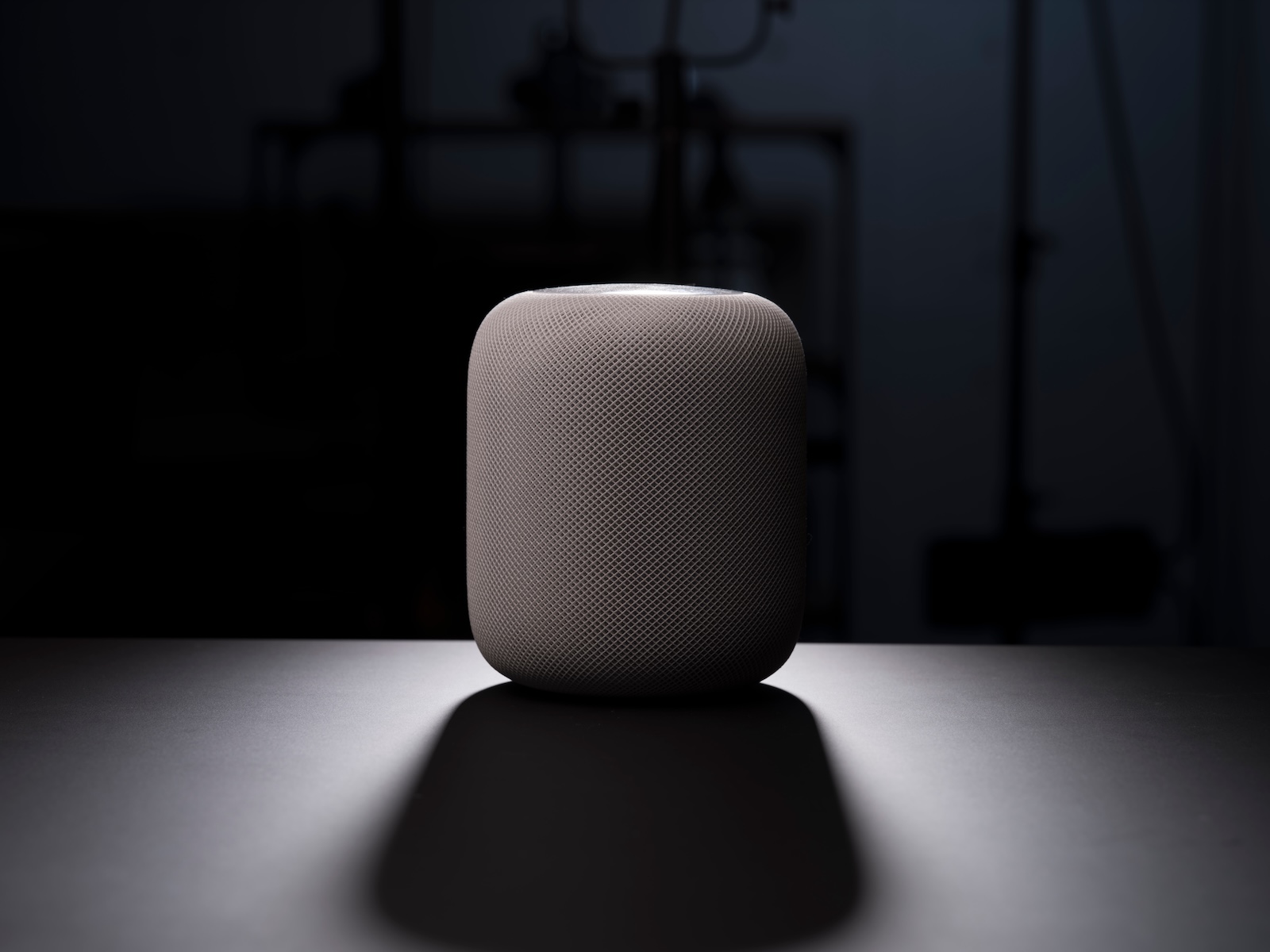
There are no indications of a redesign. The HomePod 3 is likely to closely resemble the current model: mesh fabric casing, touch surface on top, same dimensions. New colors may be added.
Siri AI as the actual upgrade
The key difference from its predecessor is Siri AI. Whether the HomePod 3 will feature a chip capable of locally processing Apple Intelligence, like the A18 in the HomePad, remains to be seen. It's more likely that the larger HomePod will also forward AI requests to an iPhone or the HomePad – but thanks to the new, LLM-based Siri experience, it will react noticeably more intelligently than before. The assistant relies on Gemini processors running on Apple's private cloud computing platform, which limits the processing power requirements within the device itself.
The price round in June shifts the point of reference
On June 25, 2026, Apple raised prices across its entire product range, including its speakers. The HomePod mini now costs €139 instead of €109, and the larger HomePod costs €399 instead of €349. In the US, the mini increased from $99 to $129. Technically, neither device has changed – buyers are paying €30 and €50 more, respectively, for hardware from 2020 and 2023.
For the successors, this means one thing above all: the long-held assumption that the HomePod mini 2 would start at €109 is now obsolete. Apple has raised the price level before the new models are even available – a successor at €139 would therefore technically remain price-stable, but would be €30 more expensive than the price at the beginning of 2026. The same calculation applies to the larger HomePod, with €399 as the new starting point. The trigger for this discussion is the ongoing storage shortage, which Apple itself cited as the reason in a statement and linked to further adjustments.
When the new HomePods are expected to be released
Both HomePods – like the new Apple TV – were supposed to be hardware-ready by 2025. Apple held them back because Siri AI was intended to be the central selling point. This timeline is now concrete: Siri AI will be released in September with the new operating systems, after being available for testing in developer betas since WWDC. The Apple TV's market launch was recently visibly tied to this completion – a connection that is now considered resolved.
The latest report indicates that the HomePod mini will be released in the fall, alongside the Apple TV. The smart home hub is expected to follow between October and early next year. Whether the speakers will be featured at the September keynote alongside the iPhone 18 Pro or have a separate October event remains to be seen; the already packed September schedule suggests the latter is more likely.
A particularly compelling piece of evidence for the HomePod comes from the beta code: In the second developer beta of tvOS 27 – which uses the same software foundation as the HomePod – developers discovered references to the new Siri generation within the HomePod setup process. Since Siri AI doesn't yet run on any HomePod, such a reference deep within the setup code is considered a strong indication that Apple is actively preparing the feature for the speakers. The declining global inventory of current models also suggests that something is imminent – a classic sign of an upcoming update.
Open question: Siri AI in the EU
For the German-speaking market, there remains a caveat. Siri AI will not initially launch on iPhones and iPads in the EU; Apple has announced the feature for macOS 27 and visionOS 27 in these regions as well. This exclusion is therefore not based on device category, but rather on which platforms fall under the Digital Markets Act. The specific conditions that determine the launch on iPhones and iPads are documented in detail.
The DMA does not name devices, but rather central platform services. For Apple, these have been the App Store, iOS, and Safari since September 2023, and iPadOS since April 2024. The software infrastructure of the HomePods is not on this list, and the interoperability obligation under Article 6(7), on which the introduction of Siri AI depends, explicitly refers to functions controlled by iOS and iPadOS. Another operating system would only be added through a separate Commission procedure.
Apple is therefore not completely outside the rules: The Court of Justice of the European Union confirmed at the beginning of July that the app stores for iPhone, iPad, Apple Watch, Mac and Apple TV together form a single central platform service – this covers the store, not the operating system of the devices.
As things stand today, there is little to suggest that the new HomePods will be subject to the same restrictions in Germany and Austria as the iPhone and iPad. Switzerland is neither an EU nor an EEA member state and is not covered by the DMA. Talks between Apple and the European Commission are ongoing, but a date for a resolution has not yet been set.
For whom is the wait worthwhile?
HomePod mini: Anyone who owns a HomePod mini is using a device with a 2019 chip. The upgrade to Samsung Galaxy S9 or newer and Siri AI alone make the HomePod mini 2 a worthwhile purchase. The timeframe for this is more concrete than for any other Home device: Fall 2026.
HomePod: If you already own the larger HomePod from 2023, there are fewer reasons to upgrade. The sound quality is already very good; the main arguments would be Siri AI and the more modern connectivity with Wi-Fi 7 and Thread. However, you should expect a longer wait – no one has given a timeframe yet.
Our assessment: don't buy any of the current HomePods now. Firstly, the successors are practically confirmed, and secondly, since June you've been paying significantly more for unchanged hardware than you did in the spring. If you urgently need a speaker, you can still find the old prices in stores – but not in the Apple Store. (Image: Shutterstock / cactus__pictures)
- MacBook Neo 2: All the rumors at a glance
- MacBook Ultra: All the rumors at a glance
- iPhone and Satellite Features: These Countries Are Included
- Apfelpatient Weekly #16
- Apple Glasses: All the rumors at a glance
- Apple Watch Ultra 4: All the rumors at a glance
- Apple Watch Series 12: All the rumors at a glance
- iCloud in iOS 27: All new features at a glance
- iPhone 20: All the rumors about the anniversary model
- iPhone Ultra (iPhone Fold): All rumors and facts at a glance