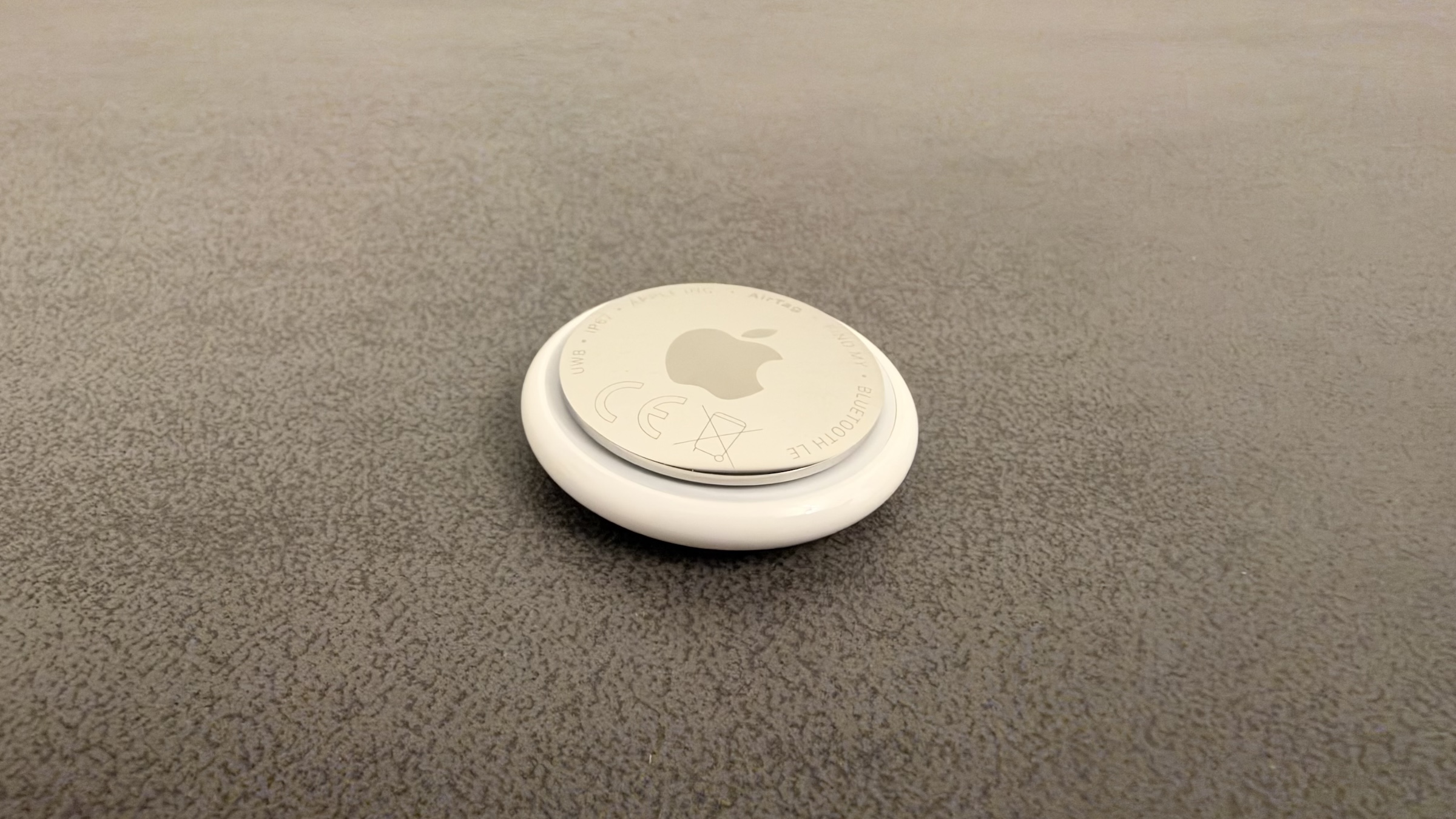
A badge the size of an AirTag that uses a camera to record what its wearer sees: Apple worked on this device for years. Since September 22, 2026, development has been on hold – a prototype exists, but there is no longer a release date.
The Apple AI pin was envisioned as an unobtrusive wearable that would work seamlessly with the iPhone, enriching everyday life with contextual information. It wasn't intended as a standalone device, but rather as an extension of the existing ecosystem, centered around the camera, assistant, and voice control. According to a Bloomberg report, Apple has paused development of the pendant. This overview summarizes what is known about the device and how it compares to other wearable projects.
Key Facts at a Glance
| Detail | Status |
|---|---|
| Status | Development paused (as of September 22, 2026) |
| Design | thin, round disc the size of an AirTag, made of aluminum and glass |
| Controls | physical button on the side |
| How to wear | Clip on clothing or pendant around the neck |
| Camera | The planned details contradict each other |
| Computing power | custom chip in the AirPods chip class, evaluation on the iPhone |
| Requirement | paired iPhone, not a standalone device |
| Market launch | Previously discussed as a possible date in 2027, this date is now considered unlikely |
Development is paused
On September 22, 2026, it was announced that Apple had suspended work on the device. A prototype existed at that time, but a decision regarding a market launch was never made. The previously mentioned 2027 release date is therefore no longer valid, and no new date was given.
The timing of the report is noteworthy. The same report describes how Apple is testing a fitness tracker without a display elsewhere. A camera wearable is postponed, and a device without a camera takes its place.
Design
The prototype is the same size as an AirTag and has the shape of a thin, round disc made of aluminum and glass. Due to the integrated technology, it is slightly thicker than an AirTag.
A physical button for control is located on one side. Two wearing options were envisioned: clipping it to clothing or a bag, and attaching it to a necklace via an opening on the top. The device was designed to be charged wirelessly.
Camera
The camera is the core of the concept, but the details of its implementation differ.
One description describes a permanently active, low-resolution camera that solely analyzes the surroundings. Taking photos or videos would not be possible with this setup. Another description mentions two front-facing cameras: a standard camera and a wide-angle camera; in this case, taking photos or videos would be possible.
Both representations exist side by side, and no one has yet resolved them. The purpose is undisputed: visual intelligence, that is, the evaluation of objects, places, and situations by the camera in order to provide relevant information.
Microphone and speaker
At least one microphone is included to record voice commands and ambient sounds. Whether a speaker will be added is still undecided. Without one, audio output would be handled by connected devices.
Assistance and AI functions
The device relied on the revamped assistant from the very beginning. This point has changed significantly since the initial reports: Siri AI is now here, having been released on September 14, 2026, with iOS 27.
For German-speaking regions, one limitation remains. In the EU, Siri AI will not run on iPhones or iPads at launch, with the exception of macOS and visionOS. This limitation does not apply in Switzerland. Furthermore, the language is also a factor: the assistant launched in English, and five more languages are planned for October, but German is not among them.
For a device whose sole purpose is to answer questions about its surroundings, the second point carries more weight than the first.
Dependence on the iPhone
The AI Pin was never designed as a standalone device, but rather as an accessory. While it does include a dedicated chip, this chip is based on those used in AirPods and is not designed for complex calculations. The majority of the processing takes place on the iPhone.
Internally, the device was described as the eyes and ears of the iPhone. This aptly describes its role: a sensor and input extension, not a computer on your lapel.
Why the concept is difficult
The market has already rejected this type of device once before. The Humane AI Pin fell far short of expectations and failed both technically and in everyday use. Apple's advantage would have been that they didn't rely on a standalone device, but rather on its integration with the iPhone – a point that played an early role in our analysis of Apple's wearable strategy.
In addition, there is a problem that cannot be solved technically. A camera on the chest is harder for the other person to assess than glasses or earbuds. Someone standing in front of such a device cannot tell whether it is currently recording.
The other AI wearables
Apple is tracking multiple devices of this type simultaneously. The pendant is the only one that is currently inactive.
| Plan | Status | Time |
|---|---|---|
| AirPods with cameras | Work in progress, code found in iOS 27 | earliest 2027 |
| Smart glasses | In development, without health features at launch | – |
| Fitness tracker without a display | Prototypes, technology testing | earliest 2028 |
| AI trailer with camera | paused | open |
Regarding AirPods, a code discovery in iOS 27 hinted at a wearable device with cameras; its development is considered the most advanced. The smart glasses are expected to launch without health and fitness features and will have a camera system for environmental analysis; a display in the lenses is not planned.
What the postponement reveals about the order
It's striking which device was postponed. With AirPods and glasses, the camera is located where people already wear technology. A pin, on the other hand, would have to justify a new gesture in everyday life: attaching something that no one has attached before.
We therefore expect Apple not to abandon body cameras altogether, but rather to introduce them first where they can be integrated into an existing product. The trailer would then be the latecomer, not the pioneer – if it comes at all.
Who is the Apple AI PIN intended for?
The device was intended for anyone who wants to access information about their surroundings without reaching for their iPhone: while shopping, on the go, or in unfamiliar cities. It was never meant to replace the iPhone or Apple Watch, but rather to complement it for people already using the Apple ecosystem.
Anyone waiting for such a device is waiting indefinitely. The visual intelligence on the iPhone already covers this use case, only now you have to reach into your pocket. And you don't have to wait until the next big thing for a wearable with a camera anyway – AirPods and glasses are already ahead of it.
Would you have attached a camera pendant to your shirt, or do you think a camera in your ear or on your nose is a better place for it? Let us know your prediction in the comments.