Without cellular or Wi-Fi, an iPhone stays reachable — but by no means everywhere to the same extent. Apple offers four satellite services, and in Germany, Austria and Switzerland only two of them work. Here's which ones, which devices support them, and what the upcoming change of operator means.
Since the iPhone 14, every newer model has been able to establish a direct connection to a satellite. What started as a pure emergency function is now a bundle of four services — and since the Apple Watch Ultra 3, no longer limited to the iPhone. Availability varies considerably from country to country, because each feature requires its own approvals and local partners. On top of that, something is shifting in the background: the network behind all of it is currently changing hands.
The four satellite features at a glance
Apple distinguishes between four services, all of which appear only when neither cellular nor Wi-Fi is available:
- Emergency SOS via satellite connects you to emergency services. A guided questionnaire collects the most important details before the message is sent.
- Find My via satellite updates your location in the app so family and friends can see it. The transmission is end-to-end encrypted.
- Messages via satellite lets you send regular iMessages and SMS to any contact.
- Roadside Assistance via satellite puts you in touch with a roadside service when your car breaks down.
As soon as there is no connection left, an entry called "Satellite" appears in Control Center. From there you can start the connection assistant, which shows exactly the features unlocked in your current country. Settings additionally offers a demo you can run without triggering a real emergency call — investing two minutes before your next hike saves you from searching when it matters.
Availability by country
| Feature | Available in |
|---|---|
| Emergency SOS via satellite | Australia, Austria, Belgium, Canada, France, Germany, Ireland, Italy, Japan, Luxembourg, Mexico, Netherlands, New Zealand, Portugal, Spain, Switzerland, United Kingdom, United States |
| Find My via satellite | in the same countries |
| Messages via satellite | Canada, Japan, Mexico, United States |
| Roadside Assistance via satellite | Australia, United Kingdom, United States |
For German-speaking regions this means: emergency calls and location sharing are available in Germany, Austria and Switzerland, while messages and roadside assistance are not. Germany was part of the first European rollout in December 2022, alongside France, the United Kingdom and Ireland; Austria and Switzerland followed shortly afterwards.
That the messaging feature in particular is missing has little to do with technology. Apple points to the required approvals and regulation by the respective authorities. Roadside assistance, in turn, depends on local towing networks that Apple would first have to build up.
Travellers take the features with them: in a country where a service is unlocked, it can be used for the duration of the stay.
Which devices support the features
Every iPhone model from the iPhone 14 onwards carries the necessary hardware - from the standard models to Pro and Air. Older devices cannot be retrofitted, because the antenna technology is built in.
The Apple Watch Ultra 3 is a recent addition. It handles Emergency SOS, Find My and Messages via satellite on its own, without a paired iPhone. When there is no reception, a satellite icon appears on the display, opening the available services. The country restrictions apply unchanged.
The specific iOS or watchOS version required varies by country and feature. On current system versions this no longer matters in practice.
What the services cost
Apple charges nothing so far. After activating an iPhone 14 or newer, the satellite features are free for two years. Apple has extended this period several times since launch — most recently in September 2025, by another year for owners of an iPhone 14 or iPhone 15.
Whether this will ever turn into a paid offering is something Apple has never commented on. For the messaging feature, carrier charges may also apply if SMS is sent instead of iMessage.
Two restrictions that are often overlooked
The first concerns where the device was bought: iPhones purchased in Armenia, Belarus, China, Kazakhstan, Kyrgyzstan or Russia can never activate the satellite features — regardless of where the device is located later on.
The second concerns your location. The services appear only without cellular and Wi-Fi coverage. Testing them from home therefore fails; the Satellite button in Control Center then merely opens the demo. If you need location sharing in everyday use, you are better served by the regular features of the Find My app.
There is also the practical side: a stable connection requires a clear view of the sky. Under dense tree cover, in narrow valleys or between rock faces, it breaks off. The iPhone uses arrows to indicate which way to turn.
The operator is changing to Amazon
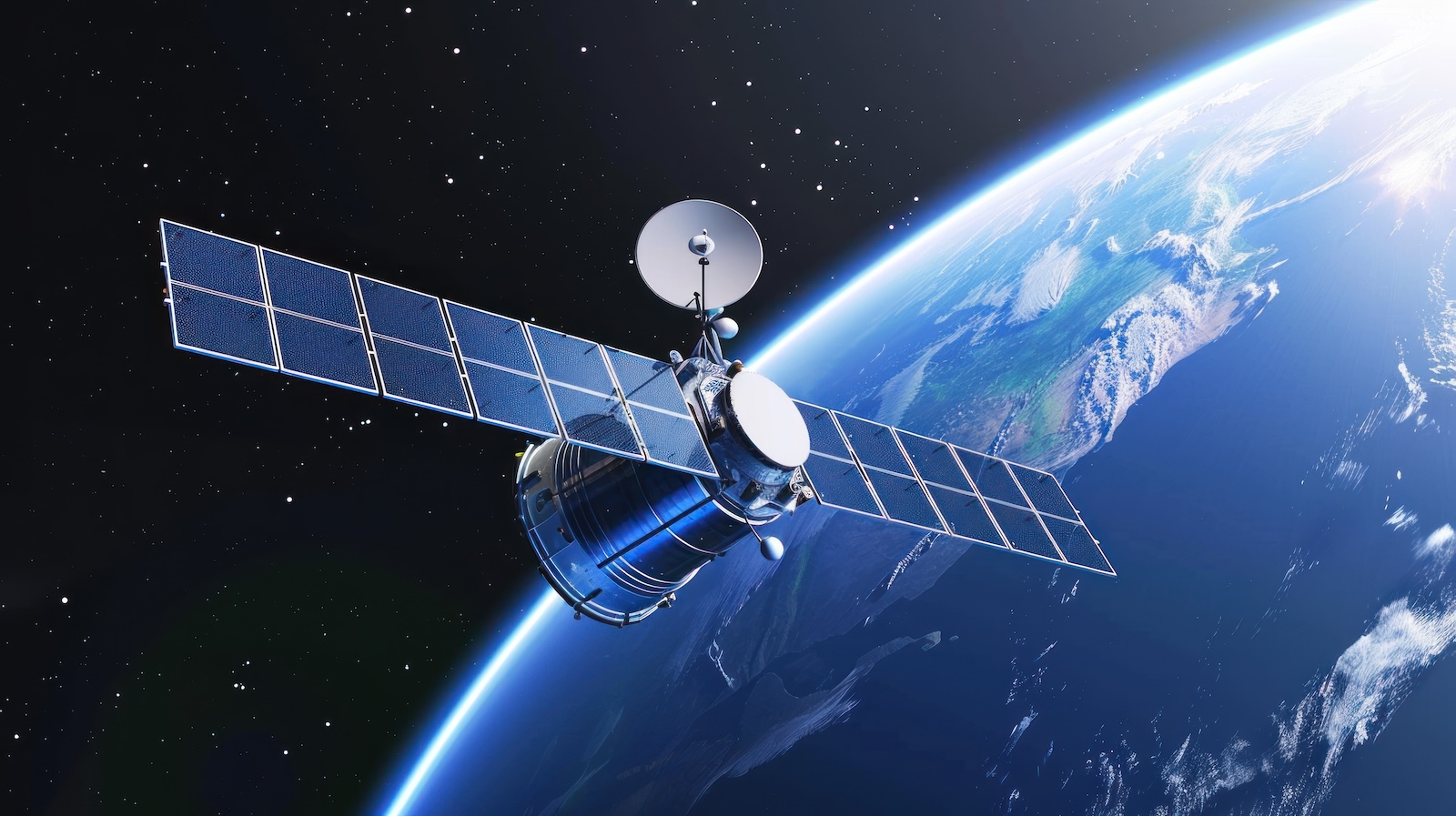
Globalstar has been behind all of Apple's satellite features so far. That is changing: Amazon is taking over the company and, in doing so, has also acquired Apple's 20 percent stake. The acquisition is scheduled to close in 2027, subject to approvals.
Both companies have agreed that the existing Globalstar network will continue to operate, with Amazon's own Leo constellation joining it. For Leo, Amazon has filed for a network of up to 5,105 satellites, set to go into service from 2028 and promising higher speeds.
Nothing changes for users until then. In the medium term, the rollout will determine whether the missing services also reach Europe — and whether the pure emergency connection becomes something more. Apple clearly dominates the satellite smartphone market so far, but relies on someone else's infrastructure to do so.
Satellite features: the key points at a glance
For Germany, Austria and Switzerland the situation remains manageable: emergency calls and location sharing work, messages and roadside assistance do not. What is required is an iPhone from the 14 series onwards or an Apple Watch Ultra 3, plus a clear view of the sky and the absence of any other connection.
The most worthwhile step is a look at Settings before you leave: set up your Medical ID, add emergency contacts and run through the demo once. For the iPhone 18 Pro, a more far-reaching satellite connection is on the table — until then the service remains what it is today: a fallback that counts at the right moment. (Image: Shutterstock / Rini. com)
- Apfelpatient Weekly #16
- Apple Glasses: All the rumors at a glance
- Apple Watch Ultra 4: All the rumors at a glance
- Apple Watch Series 12: All the rumors at a glance
- iCloud in iOS 27: All new features at a glance
- iPhone 20: All the rumors about the anniversary model
- iPhone Ultra (iPhone Fold): All rumors and facts at a glance
- Apfelpatient Weekly #15
- Apple Music vs. Spotify: Which streaming Service is worth it?
- iPhone Ultra (iPhone Fold): All rumors and facts at a glance
- iPad mini 8: All the rumors at a glance
Frequently Asked Questions: Apple's Satellite Features
Partially. Emergency SOS calls via satellite and "Where is?" via satellite have been available since December 2022, but satellite messaging and roadside assistance are not. The same applies to Austria and Switzerland.
Apple has so far unlocked the feature only in the United States, Canada, Mexico and Japan. It is not down to the device — Apple points to the required approvals and regulation by the respective authorities. No timeline exists for further countries.
Every model from the iPhone 14 onwards, across the entire line-up. Older iPhones cannot be retrofitted, because the necessary antenna technology is built in. The Apple Watch Ultra 3 supports the services as well.
Not so far. After activating an iPhone 14 or newer, the features are free for two years, and Apple has extended that period several times since launch — most recently in September 2025 for owners of an iPhone 14 or iPhone 15. Carrier charges may apply when sending SMS instead of iMessage.
The satellite features show up only when neither cellular nor Wi-Fi is available. With reception, the button merely opens the demo mode. Testing from home therefore fails by design.
Yes, the Apple Watch Ultra 3 supports Emergency SOS, "Find My," and satellite messaging on its own. If there's no signal, a satellite icon appears on the display, allowing you to access the available services. Country restrictions remain unchanged.
Nothing in the short term. The deal is scheduled to close in 2027, subject to approvals, and the existing Globalstar network keeps running. Amazon's own Leo constellation, with up to 5,105 satellites, is set to join it from 2028.