This article may contain affiliate links. Learn more on our Partner Program page.
The iPhone Duo is on TIME's list of the best inventions of 2026, and Apple CEO John Ternus tells its backstory. It goes back to 2011, when he himself was involved in a patent application for foldable devices. He has less than flattering words for the first foldables from the competition.
The basis for this is the profile "John Ternus Is Engineering a New Era for Apple" by TIME correspondent Andrew R. Chow, which appears as the entry for the iPhone Duo in TIME's list of the best inventions of 2026. Chow spoke with Ternus twice in September: on the day of the unveiling in Cupertino and a week later in New York for the launch of the Pro models. Also contributing is Richard Dinh, Apple's Vice President of Product Design.
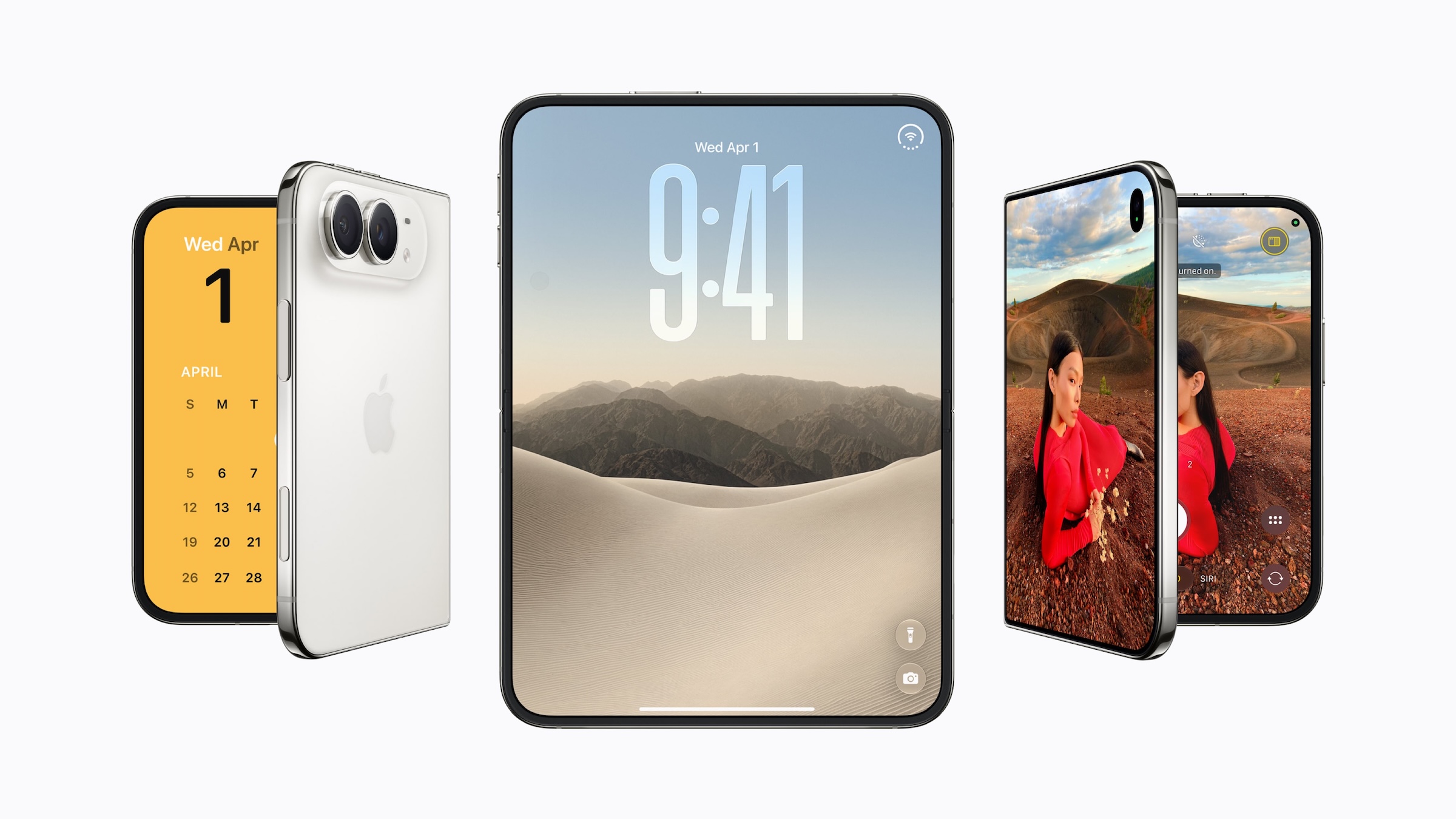
The iPhone Duo can be pre-ordered starting Friday, October 16th, at 2 PM and will be available in stores on October 23rd. In Germany, it starts at €2,299; all the key details can be found in the overview of iPhone Duo specifications, prices, and release dates.
Key Facts at a Glance
- TIME includes the iPhone Duo in its list of the best inventions of 2026.
- According to TIME, Ternus and five other engineers filed a patent application for foldable devices back in 2011.
- Ternus says that the first foldable phones from other manufacturers felt "kind of cheap and crappy".
- According to design chief Richard Dinh, Ternus explicitly gave the team more time to develop its own display interface.
- TIME cites a price tag of over $2,000 as the biggest risk to success.
A patent from 2011
The idea is significantly older than the device itself at Apple. In 2011, when many people were still using flip phones, Ternus and five other engineers filed a patent application for foldable electronic devices, according to TIME. The application addressed the question of what kind of batteries and circuit boards such a concept would require.
Ternus describes the reasoning behind it as follows:
It seemed clear that we would eventually reach a point where OLED displays would be flexible.
Approximately 15 years will pass between the patent application and the presentation on September 9, 2026.
"Cheap and crappy": Ternus on the competition
TIME described the first foldable smartphones from other manufacturers in the 2010s as fragile and not very useful, with a large, visible crease in the middle. Ternus puts it more succinctly:
The other examples around the world felt somehow cheap and crappy.
Back in September, Ternus, in an interview with Tom's Guide and TechRadar, criticized the surfaces of competing devices and described the moment when a matte prototype sealed the deal for the iPhone Duo. The TIME profile now provides the inside view.
How the surface was formed
Ternus encouraged the team to invest more time and effort into the project, even though other foldable devices had entered the market earlier. Dinh reports that at one point he asked Ternus whether his team should use a surface similar to those of the competition. Dinh himself considered these materials flawed, but possibly good enough.
Dinh remembers the answer:
And he said, 'Look, Rich, you'll know when it's the right thing to do.'
This gave the team the confidence to push the boundaries of innovation and manufacturing, bringing together suppliers from around the world. The result was a nanotexture made from a proprietary polymer on a hinge with over 100 precision parts. Apple itself wants to be judged by how visible the crease remains; the promise regarding the crease comes from hardware manager Tom Marieb.
In addition, TIME mentions two other components: a new display engine that controls the switching between the inner and outer display, and a redesigned iOS in which the most important controls have moved from the bottom to the right edge.
Shaky hands during the presentation
The portrait opens with a scene from the day of the presentation in Cupertino. Ternus showed the duo to streamer IShowSpeed, who broadcast the encounter live to his 61 million YouTube subscribers. Viewers noticed Ternus's trembling hands as he dragged a photo into a message box. "I was in such a moment of adrenaline, caffeine, and anticipation for the day," he explained to TIME, adding that he had barely slept the night before.
The price remains the open flank
TIME makes no secret of the fact that success is not guaranteed. The magazine compares the risk to the never-released Apple Car and the Vision Pro, whose sales were very low last year, and expects many potential buyers to be deterred by the price tag of over $2,000. As a counter-argument, TIME cites the strong demand for Samsung's Galaxy Z Fold8, especially in Asia.
In Germany, the price point is even higher. The 256GB version costs €2,299, while the 2TB version costs €3,799. For most buyers, the price difference between this and the iPhone 18 Pro is likely to be more decisive than any award.
What the backstory reveals about the iPhone Duo
I find Dinh's story more insightful than the quote about the competition. It explains why Apple is years behind Samsung: The team waited for an interface they had to develop themselves, instead of adopting an existing one. Whether this actually makes the crease more durable will only become apparent after months of everyday use, not at launch.
The iPhone Duo is therefore under immense pressure. Ternus has accepted Apple's lag in foldables for years in order to avoid repeating the mistakes of the first generation, and that's precisely the standard by which the device will now be judged.
Has the crease in a foldable smartphone been the main reason you were hesitant, or is it the price? Let us know in the comments what the deciding factor is for you.