
This article may contain affiliate links. Learn more on our Partner Program page.
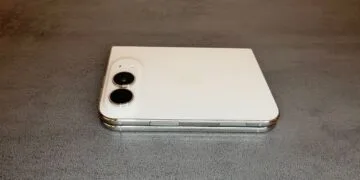
John Ternus decided, based on a prototype with a matte finish, that Apple would build a foldable iPhone. “Yes, that’s it” – that’s how Apple’s new CEO described the moment the decision was made. Two days after his first keynote, he explained the concept behind it, why a stylus is being added to the iPhone, and what the €2,299 price tag represents.
Since the unveiling of the foldable iPhone Duo on September 9th, the discussion has revolved around one question: Why only now, years after the competition? In a joint interview with Tom's Guide and TechRadar, Ternus and marketing chief Greg Joswiak answered this question – and the answer boils down to a single component.
Key Facts at a Glance
- According to Ternus, the deciding factor was the first glimpse of a prototype with a nanotextured surface.
- Apple redesigned the process for the duo because it was previously designed for glass and not polymer.
- Ternus does not see the Apple Pencil on the iPhone as a break with a rule – there never was one.
- He defends the price with the complexity of the device, without downplaying the increase.
- The „Intelligent Personal Hub” mentioned in the keynote referred to the iPhone, not a new device.
The moment the decision was made
The crease is the problem by which foldable devices have been judged for years. Apple's answer is nanotexture – the matte surface that was first used on the Studio Display and later migrated to the iPad Pro and MacBook Pro. It diffuses reflections, and that's precisely what makes the crease less visible.
However, the process couldn't be easily transferred: it was designed for glass, while the Duo's inner display has a polymer surface. Apple developed a new nanotexture for it.
When Ternus first saw the result on a prototype, the matter was settled for him – from then on, it was simply a matter of implementing it and making it a reality. He spoke clearly about the competition in the same context: their surfaces felt cheap, wavy, and wrinkled; the nanotexture eliminates these imperfections and leaves a smooth, durable surface.
Joswiak added that what other manufacturers had shown so far had not been particularly inspiring. Starting with something half-finished had never been Apple's style.
The pen and the rule that wasn't one
The fact that an iPhone will support the Apple Pencil in the future contradicts one of the most famous statements in the company's history. Ternus sees no problem with this: he never understood it as a rule. With the iPad, Apple first proved that a touchscreen can be used excellently with a finger – and then saw what additional possibilities a stylus offers on the larger surface. The Duo presents the same opportunity.
The stylus isn't necessary, but some people might like it. This confirms what was heard this summer about Apple's tests with its own stylus for the foldable iPhone.
Apple has also redesigned the user interface for dual screens: The central controls are located on the right edge, in the same position on both displays. When closed, they lie under the right thumb; when opened, they are again – according to Ternus, this is the key to making the transition between screens feel seamless.
What should bear the price
Ternus was asked directly about the price – €2,299 in Germany. His answer: Apple builds things that people love and that also offer good value for money; the duo is exceptionally complex and elaborately constructed, more expensive than other iPhones, but worth its price.
Joswiak continued the argument for the Pro models, whose prices have also increased. The key question, he said, was how to give an iPhone 17 Pro a kind of boost – not for minor improvements, but for significant leaps compared to the previous year.
For the October launch, Apple is working with developers to adapt apps for both displays, including Netflix, Slack, and Zoom. Joswiak draws a parallel to the first iPad: Back then, a lot of effort was put into ensuring the device didn't feel like a large phone – which was exactly the case with Android tablets.
What was meant by the personal hub
One passage of the keynote had sparked speculation: Ternus spoke of an intelligent personal center, which was immediately interpreted in the industry as a hint at a future AI device. In an interview, he clarified that he was referring to the iPhone. A change in strategy regarding wearable devices is not imminent.
His reasoning is fundamental: people want ads; they process information visually far more effectively than through audio. A device with a display that fits in a pocket therefore won't lose its importance. He doesn't rule out new product categories – AI opens the door for them – but he explicitly states that the iPhone will remain central.
A declaration of love for the screen
The news value of the conversation therefore lies not only in the crease. While other companies are working on screenless AI companions, Apple's new CEO explains why the display remains – not with the business model, but with human perception.
For you as a buyer, this means: Anyone waiting for an Apple device to replace the iPhone will be waiting in vain after this announcement. The AI features are coming to existing devices. The Duo, with its camera mode that automatically detects when everyone is in the frame, is precisely the example Ternus cites.
Is a matte finish enough of a reason for you to spend €2,299 – or are you waiting to see how the crease holds up after a year of everyday use? Let us know in the comments what's making you hesitate about the Duo.