This article may contain affiliate links. Learn more on our Partner Program page.
A decision on the injunction is still pending, but OpenAI made some concessions during the hearing. The company agreed not to use the trade secrets that Apple claims were stolen. The judge also made it clear which way he is leaning.
In the lawsuit Apple filed against OpenAI over allegedly leaked hardware secrets, the parties heard arguments on October 14 before Judge Edward Davila in the Federal District Court for the Northern District of California regarding Apple's request for a preliminary injunction. The defendants are former Apple employees Chang Liu and Tang Tan, as well as OpenAI and its hardware subsidiary io Products.
Bloomberg reports on the hearing, including verbatim statements from judges and lawyers in the courtroom. A written ruling from the court is not yet available.
Key Facts at a Glance
- OpenAI has voluntarily committed to not using the trade secrets claimed by Apple. The court can enforce this commitment, and sanctions are possible in case of violations.
- In addition, OpenAI is having forensic images created of the devices of 14 employees, which may contain confidential Apple information.
- Judge Davila considers it "very likely" that he will grant Apple's request for a preliminary injunction. He has not yet made a decision.
- He called Apple's demand to be allowed to examine all devices and code repositories a "huge demand." Apple now intends to limit the review to a small number of former employees.
What OpenAI promised at the hearing
The core of the hearing was a commitment made by OpenAI without a court order. The company pledged not to use the information that Apple claims is stolen trade secrets. This does not constitute an admission of guilt: OpenAI continues to deny the allegations.
The promise is nonetheless binding. According to the report, the court can enforce it, and violations can result in sanctions. For Apple, this has a similar effect to part of the requested injunction, although Davila has not yet had to rule on it.
In addition, evidence is being secured. OpenAI is having the devices of 14 employees forensically mapped, as they may contain confidential Apple information. This documents their current state before anything can change.
The judge curbs Apple's maximum demand
The hearing yielded mixed results for Apple. Davila said it was "very likely" he would issue the injunction. At the same time, he called Apple's desire to have every device and every repository inspected by OpenAI a "huge demand.".
Apple's attorney John M. Desmarais then backed down. Apple is not concerned with "400 bad apples," but with "a few bad apples," and the inspections should be limited to a small group of former employees. The number alludes to the more than 400 former Apple employees at OpenAI.
This represents a significant narrowing of the scope of the lawsuit compared to its previous approach. Apple had recently expanded the lawsuit to include dozens of employees and demanded extensive evidence gathering.
Two applications, two procedures
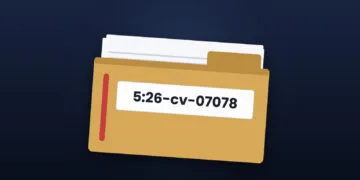
The proceedings recently involved two parallel motions that were handled differently. Davila issued a written ruling on Apple's motion for expedited evidence gathering and canceled the hearing scheduled for October 14, according to the court's decision (Dct. 175, Case No. 5:26-cv-07078). The decision explicitly pertains only to this motion.
However, the preliminary injunction was the subject of an oral hearing on the same day. This results in the current status: the expedited taking of evidence was decided without a hearing, the injunction was discussed, but remains open.
Why OpenAI's commitment is tactically smart
I see this commitment less as a concession and more as a shrewd move. OpenAI is voluntarily granting what a court would likely order anyway, thus retaining control over its scope. An order drafted by Davila himself could be significantly broader than a commitment whose scope OpenAI helped determine.
Apple now has something concrete to work with: an enforceable order and secured devices belonging to 14 people. Since Davila has already deemed the maximum demand too broad, and Apple's lawyer has even narrowed it down to just a few individuals, I expect that any injunction, if issued, will be strictly limited to this group. For OpenAI and io's hardware plans, this would be a requirement, but not a standstill.
Do you consider OpenAI's voluntary commitment a sign of weakness or a clever move to preempt a harsher ruling? Share your opinion in the comments.