This article may contain affiliate links. Learn more on our Partner Program page.
Apple has upgraded the iMac to the M6 processor – without changing the price in Germany. Both models receive two additional CPU and GPU cores, Wi-Fi 7, and faster Ethernet. The color palette, however, remains unchanged.
On October 27, Apple unveiled the new iMac via a press release in the Newsroom. It is part of the round of new devices that Apple had announced under the motto "Pro and tell", which began the day before with the iPad mini. This ends a rumor phase in which the all-in-one was initially expected with the M5, before the jump straight to the M6 started making the rounds.
Apple's desktop line already features the M6 processor: it's been used in the Mac mini with the M6 and M5 Pro since August. The complete specifications of the iMac can be found on Apple's German datasheet, and prices are available in the German Apple Store.
Key Facts at a Glance
- The iMac comes with M6 in two models: 10-core CPU and GPU with two Thunderbolt ports, 12-core CPU and GPU with four ports.
- In Germany and Austria, it costs 1,799 and 1,999 euros respectively – the same entry-level prices as the previous M4 model, but with two more cores each.
- New features include WLAN 7, Bluetooth 6 and 2.5 Gigabit Ethernet, which is standard equipment on the 12-core model.
- Pre-orders open from October 28th at 6:10 PM, available in stores from November 6th.
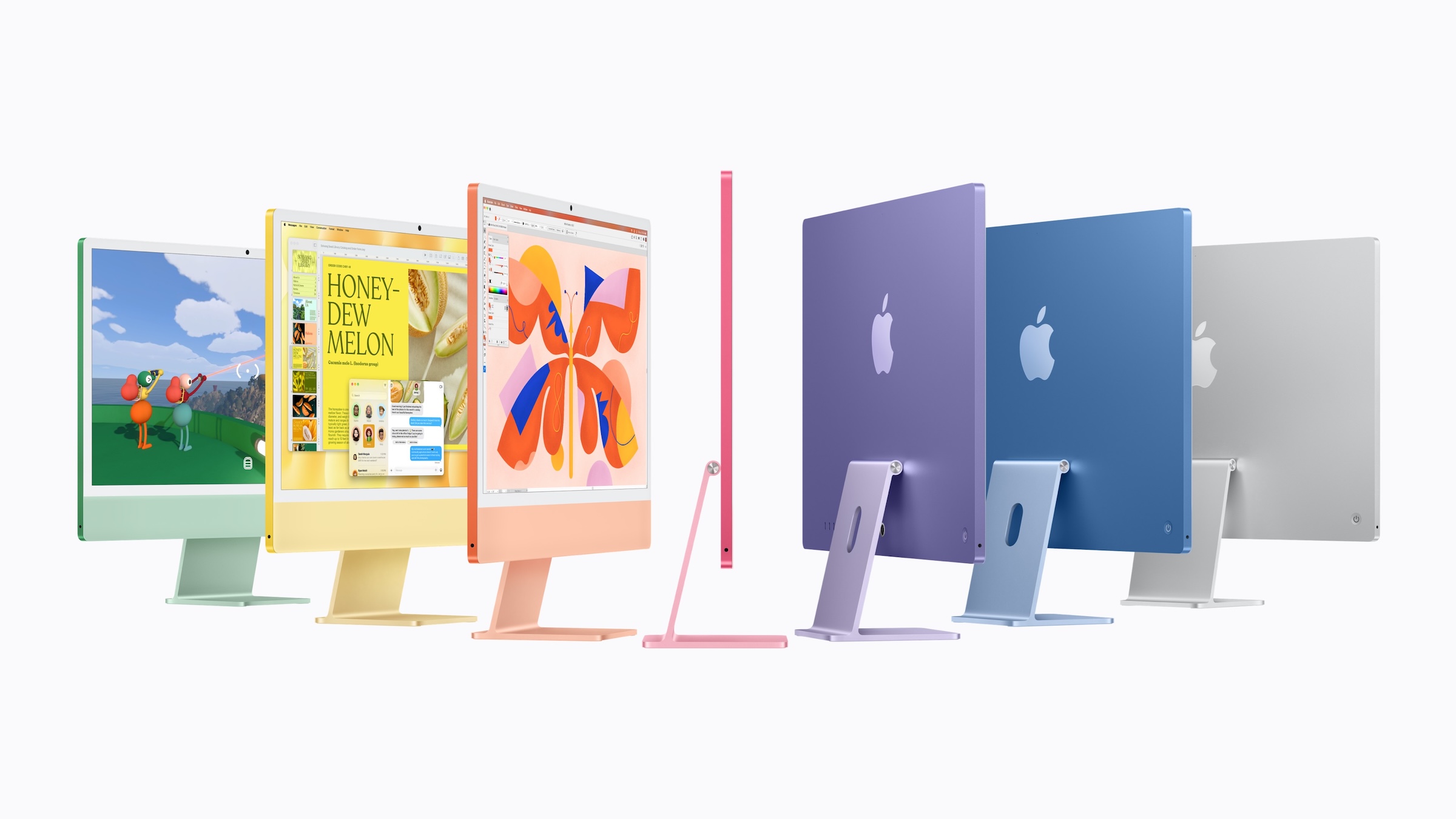
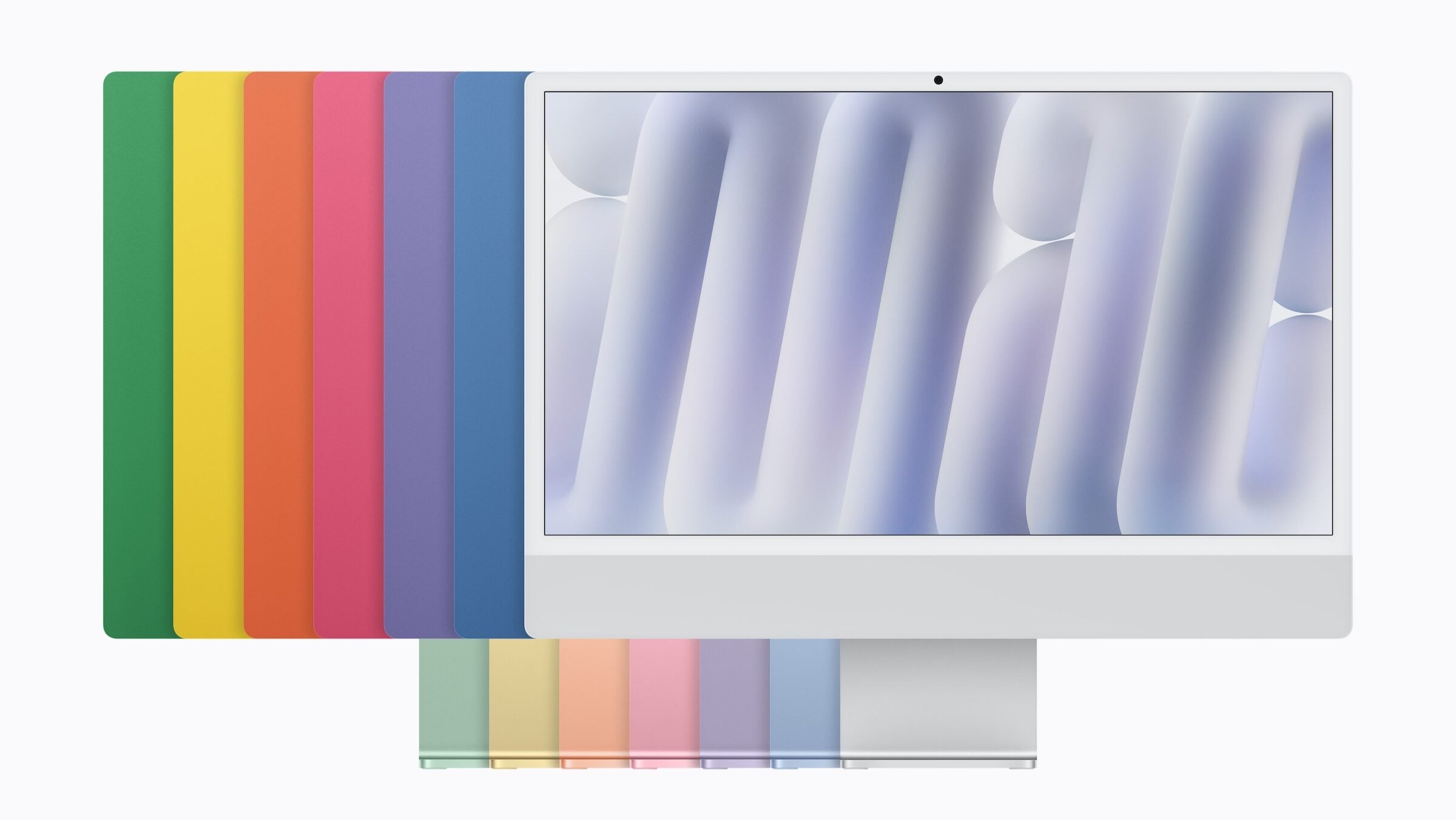
- The colors have the same seven names as in the predecessor.
Two models, each with two more cores
The M6 processor in the iMac consists of three core types. The entry-level model has two Super Cores, three Performance Cores, and five Efficiency Cores, while the higher-end model has two Super Cores, four Performance Cores, and six Efficiency Cores. Both variants feature a dual 16-core Neural Engine, Neural Accelerators in each graphics core, hardware ray tracing, and a memory bandwidth of up to 170 GB/s.
| M6 with 10-core CPU | M6 with 12-core CPU | |
|---|---|---|
| CPU | 2 Super cores, 3 Performance cores, 5 Efficiency cores | 2 Super cores, 4 Performance cores, 6 Efficiency cores |
| GPU | 10 cores | 12 cores |
| RAM | 16 GB, optional 24 GB | 16 GB, optionally 24 or 32 GB |
| SSD | 256 GB, optionally up to 1 TB | 256 GB, optionally up to 2 TB |
| Thunderbolt | 2 × Thunderbolt / USB 4 | 4 × Thunderbolt 4 |
| External Displays | one | up to two |
| Ethernet | optional 2.5 Gbit | 2.5 Gbit as standard |
| Nanotextured glass | – | optional |
| Touch ID | keyboard option only | standard |
| Price Germany and Austria | 1.799 € | 1.999 € |
| Price Switzerland | 1499 CHF | 1699 CHF |
Those needing 32 GB of RAM or a 2 TB SSD will only achieve this with the 12-core model. How much memory is practical for individual use depends primarily on the applications – RAM requirements on Apple Silicon differ significantly between office work and local AI models.
What changes compared to the M4
The casing remains unchanged: 24-inch display with 4480 × 2520 pixels, 500 nits, P3 color gamut, 12 MP camera with Center Stage, six speakers. The changes are inside.
Apple compares the M6 to the M4 in several ways, each measuring different aspects. The iMac is said to be up to 1.5 times faster in Excel, up to twice as fast in image editing with Affinity, and in games with ray tracing. Apple cites the greatest improvement for processing prompts in LM Studio: up to five times faster. According to Apple, the Neural Engine alone is up to twice as fast as in the previous generation; the system only achieves the fivefold increase when combined with the GPU's Neural Accelerators and the higher memory bandwidth.
The iMac's wireless connectivity upgrades from Wi-Fi 6E and Bluetooth 5.3 to Wi-Fi 7 and Bluetooth 6. According to Apple, the SSD reads and writes up to twice as fast.
| iMac M4 (last) | iMac M6 | |
|---|---|---|
| Entry-level model | 8-core CPU / GPU, 2 ports | 10-core CPU/GPU, 2 ports |
| Larger model | 10-core CPU / GPU, 4 ports | 12-core CPU/GPU, 4 ports |
| Wireless | WLAN 6E, Bluetooth 5.3 | Wi-Fi 7, Bluetooth 6 |
| Entry price | 1.799 € | 1.799 € |
| Price of larger model | 1.999 € | 1.999 € |
The M4 prices are the last valid ones after the price round in June, both with 16 GB and 256 GB respectively.
Ports, Ethernet and displays
The port count structure remains unchanged. The entry-level model has two Thunderbolt/USB 4 ports and drives one external display at up to 6K at 60Hz or 4K at 165Hz. The 12-core model features four Thunderbolt 4 ports and drives two displays at up to 6K – or a single display at 8K at 60Hz, 5K at 120Hz, or 4K at 240Hz. For information on the limitations of other Macs, see the overview of how many external displays a Mac supports.
Ethernet is being upgraded from Gigabit to 2.5 Gbit. According to the datasheet and configurator, it is included as standard on the 12-core model and available as an option on the 10-core model.
macOS 27 and Siri AI
The iMac ships with macOS 27 Golden Gate, which includes Siri AI – according to Apple's footnote, this feature is available as a beta starting with macOS 27.2. German is not currently among the supported languages: Apple lists English, French, Japanese, Korean, Portuguese, and Spanish. However, the other Apple Intelligence features do work in German.
German was once again missing from the latest language update. All articles about the system are compiled on the macOS 27 page.
Pre-order and market launch
The new iMac can be ordered starting Wednesday, October 28th, at 6:10 PM German time, and will be available in stores on Friday, November 6th. Apple has announced 35 countries and regions for the launch, including Germany, Austria, and Switzerland.
In Austria, the same Euro prices apply as in Germany. In Switzerland, the entry-level model costs 1499 Swiss francs, and the 12-core model costs 1699 Swiss francs. All articles about the device can be found on the iMac page.
Same price, more calculators
I consider the iMac with the M6 processor a successful update, precisely because it's so understated. In Germany, for €1,799, you now get two more cores, Wi-Fi 7, and the option of 2.5 Gbps Ethernet – more than the previous M4 model offered. After the price hike in June, which increased the iMac's price by €250 to €300, this is no small feat.
New colors were rumored for this generation this summer. Apple is now using the same seven names as with the M4 – blue, purple, pink, orange, yellow, green, and silver. Those who were waiting for a new color palette won't find it in this generation.
Anyone looking to replace an M1 or Intel iMac now has the right time, and the 12-core model is, in my opinion, the more sensible choice: Touch ID, four ports, Ethernet, and the nanotexture option justify the €200 price difference more than the two additional cores. Those who already own an M4 iMac can safely skip this generation. And those who already have a monitor, keyboard, and mouse will find the Mac mini more affordable – the Mac buying guide compares both options.
Would you go for the entry-level iMac or spend the extra 200 euros for Touch ID, four ports, and Ethernet? Let us know in the comments which model you'll choose and why.