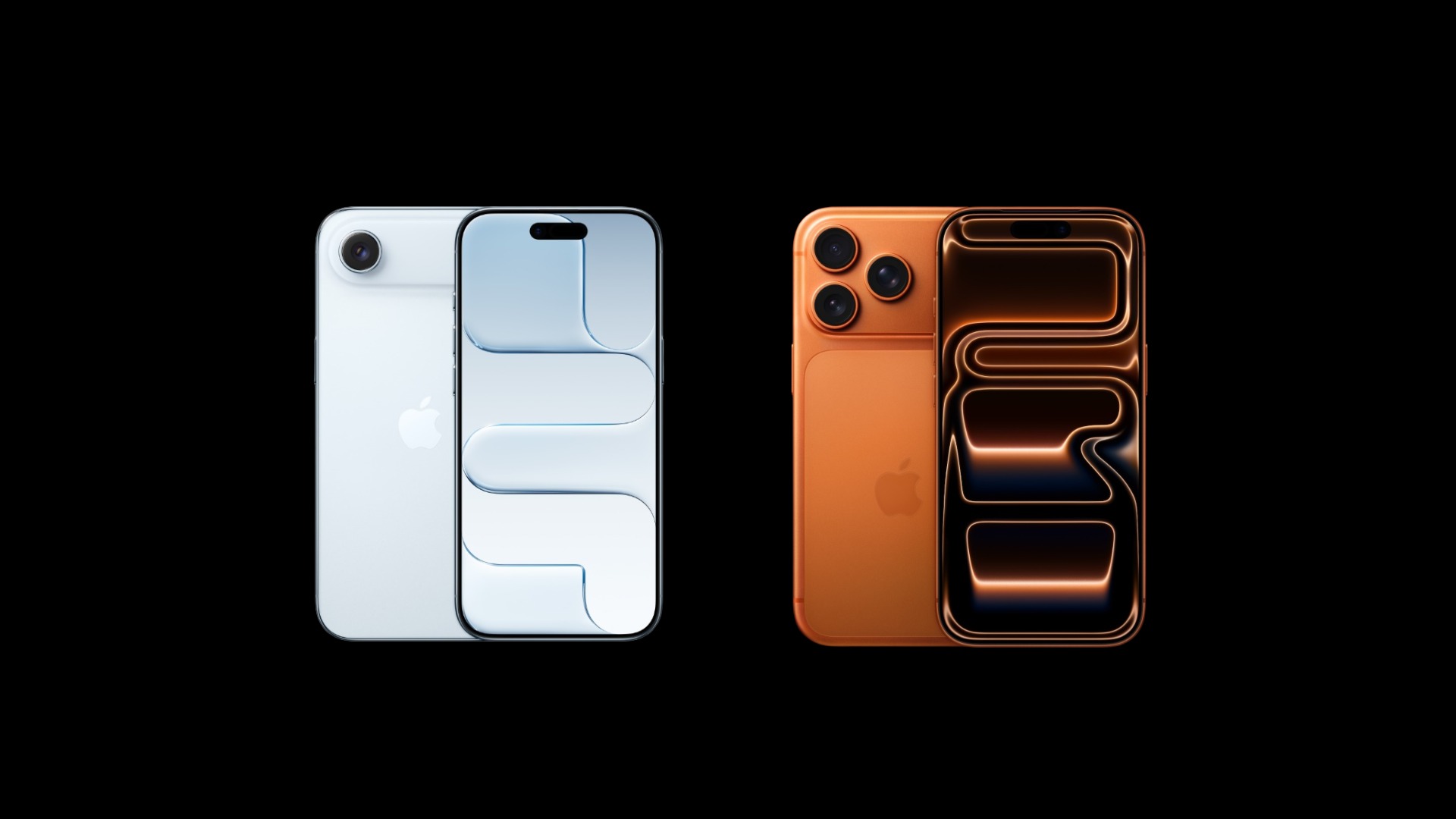
Two iPhones, one chip, one display panel – and yet two completely different devices. The iPhone Air and the iPhone 17 Pro are separated by 41 grams, two cameras, and 100 euros. Knowing the differences will save you from making the wrong choice.
With the iPhone Air, Apple filled a gap in its lineup previously occupied by the Plus model – albeit with a completely different approach. Instead of a large display at a lower price, the focus here is on an extremely thin design, for which Apple makes compromises elsewhere. The iPhone 17 Pro takes the opposite approach: more cameras, better cooling, longer battery life, but noticeably more weight.
Both models share the A19 Pro chip and the same Super Retina XDR panel. The differences lie elsewhere – and they are greater than the shared chip would suggest. Anyone looking to compare the current models can find an overview of the entire range in our iPhone buying guide for the iPhone 17, Air, and 17e.
Key Facts at a Glance
- The iPhone Air weighs 165 grams and, at 5.64 mm, is the thinnest iPhone Apple has ever made – 41 grams lighter than the iPhone 17 Pro.
- Both models use the A19 Pro chip, but only the Pro series has a 6-core GPU and a vapor chamber for cooling.
- The Air has a single rear camera, the 17 Pro a triple system with 8x optical zoom range.
- The battery life of the two models differs by six hours of video playback.
- The Air only supports eSIM and USB 2, while the Pro offers physical SIM and USB 3.
Display: same panel, three sizes
The iPhone Air and the Pro models use the same Super Retina XDR panel. Both support ProMotion with adaptive refresh rates up to 120 Hz, variable frequencies, and an always-on display.
The only difference is the screen size: the iPhone Air measures 6.5 inches, the iPhone 17 Pro 6.3 inches, and the iPhone 17 Pro Max 6.9 inches. Those who have to decide between the two Pro sizes can find the details in the direct comparison of the iPhone 17 Pro and Pro Max.
Weight comparison: How light is the iPhone Air really?
The iPhone Air weighs 165 grams, making it the lightest model in the current lineup. At 5.64 mm thick, it's also the thinnest iPhone Apple has ever made. The iPhone 17 Pro is 8.75 mm thick and weighs 206 grams, while the Pro Max weighs 233 grams.
| Model | Weight | Depth | Display |
|---|---|---|---|
| iPhone Air | 165 g | 5.64 mm | 6.5″ |
| iPhone 17e | 170 g | 7.80 mm | 6.1″ |
| iPhone 17 | 177 g | 7.95 mm | 6.3″ |
| iPhone 17 Pro | 206 g | 8.75 mm | 6.3″ |
| iPhone 17 Pro Max | 233 g | 8.75 mm | 6.9″ |
The weight difference compared to the iPhone 17 is smaller than the marketing suggests, at 12 grams – around seven percent. The difference only becomes truly apparent when compared to the Pro series: 41 grams less than the iPhone 17 Pro, 68 grams less than the Pro Max. That equates to 29 percent and is the jump you can actually feel in your hand.
What's remarkable is the combination of weight and screen size. At 6.5 inches, the Air offers more screen space than both the iPhone 17 and the 17 Pro, yet remains lighter than both. This combination is unique in the lineup – large displays and low weight have traditionally been mutually exclusive for Apple.
All values are taken from Apple's technical specifications and may vary slightly depending on the configuration.
Battery life: six hours difference
The slim design comes at a price, and that price is reflected in the battery life. The iPhone Air offers up to 27 hours of video playback, the iPhone 17 Pro up to 33 hours, and the Pro Max up to 39 hours.
This puts the Air roughly on par with the iPhone 16 Pro – not bad, but a noticeable step backward compared to the current Pro series. With intensive use, this determines whether there's any battery left in the evening or not.
Camera: one module against three
This is the biggest difference between the two models. The iPhone Air has a single rear camera, while the iPhone 17 Pro has a triple-camera system.
| Feature | iPhone Air | iPhone 17 Pro |
|---|---|---|
| Rear cameras | 1 (48 MP Fusion) | 3 (48 MP Fusion, Ultra Wide Angle, Telephoto) |
| Optical zoom range | 2x | 8x |
| 4K Dolby Vision | up to 60 fps | up to 120 fps |
| Slow motion | 1080p | 4K |
| LiDAR scanner | no | Yes |
| ProRAW | no | Yes |
| Cinema mode | no | Yes |
| Spatial photos and videos | no | Yes |
| Macro shots | no | Yes |
| Flash | True Tone | adaptive True Tone |
| Image stabilization | Sensor-shift OIS | Sensor shift OIS 2nd generation |
| Microphones | Standard | Four-microphone array |
Both devices have the same 48MP Fusion main camera and Center Stage front camera. For snapshots and everyday photos, the models are very similar. However, as soon as wide-angle lenses, zoom, or video editing come into play, the gap opens up dramatically. Those interested in what Apple has changed in the Pro camera system can find the details in the article about the new camera platform of the iPhone 17 Pro.
Performance: same chip, different endurance
Both models are powered by the A19 Pro chip with 12 GB of RAM. The difference lies in two details: the Air has a 5-core GPU, while the Pro models have a 6-core GPU.
More important than the single GPU core is the cooling system. Only the Pro models feature a vapor chamber that dissipates heat across a larger area. This isn't noticeable during short bursts of activity, but rather during extended sessions – such as gaming or exporting video footage. The way the vapor chamber works explains why the Air throttles earlier under sustained load.
Material and colors: Titanium versus Aluminum
The iPhone 17 Pro features a unibody design made of aluminum and is available in Cosmic Orange, Deep Blue, and Silver. The iPhone Air uses titanium, giving it a slimmer and more elegant look – available in Sky Blue, Light Gold, Cloud White, and Space Black.
The change in materials for the Pro series was controversial at launch because Apple had previously advertised titanium for years. In practice, the difference is most noticeable in the weight, not in the robustness.
Connections and mobile communications: this is where the field diverges
The interfaces reveal where Apple cut corners with the Air.
| Feature | iPhone Air | iPhone 17 Pro |
|---|---|---|
| Modem | Apple C1X | Qualcomm (with mmWave in the USA) |
| SIM | eSIM only | eSIM and Nano-SIM |
| USB via USB-C | USB 2 (480 Mbit/s) | USB 3 |
The USB difference is the most practically relevant point. Those who regularly transfer large video files will experience significantly longer transfer times with the Air. For everyone else, it makes no difference, because backups and synchronization are done wirelessly anyway.
The eSIM restriction is now unproblematic in Germany, Austria, and Switzerland – all major providers support it. However, those who travel frequently outside of Europe and use local prepaid SIM cards should still carefully consider switching to eSIM beforehand.
Prices: 100 euros difference
| Model | Starting price | Memory | maximum |
|---|---|---|---|
| iPhone Air | 1.199 € | 256 GB | 1 TB |
| iPhone 17 Pro | 1.299 € | 256 GB | 1 TB |
| iPhone 17 Pro Max | 1.449 € | 256 GB | 2 TB |
Each additional storage tier costs €250. The price difference between the Air and the 17 Pro is therefore only €100 – which is negligible considering the value of two extra cameras, the vapor chamber, and six hours more battery life.
Why the price difference is the Air's real weakness
Which model is right for whom depends less on the technical specifications than on those 100 euros. The iPhone Air is a well-designed device with a clear unique selling point, but it's positioned too close to the iPhone 17 Pro.
Anyone willing to spend €1,199 on an iPhone will generally also spend €1,299 – and get a device that is superior in almost every aspect. The only area where the Air wins is weight. That's a valid point, but a weak one.
The Air is therefore the right choice for you primarily if you actually hold your iPhone all day and never use camera functions beyond the main camera. In all other cases, the iPhone 17 Pro is the more well-rounded package – or the iPhone 17, which at 177 grams is only twelve grams heavier than the Air and costs 300 euros less.
The fact that Air sales fell short of expectations aligns with this calculation. Current rumors about the iPhone 18 suggest that the second generation will address precisely these points. (Image Apfelpatient x Apple)
- MacBook Air M5: 13 vs. 15 inch – Which size is worth it?
- MacBook Pro M5: 14 vs. 16 inch – Which is worth it?
- iPad Buying Guide 2026: Which iPad is right for you?
- Mac Buying Guide M4: Mac mini vs. Mac Studio vs. iMac
- MacBook Air vs. MacBook Pro 2026: Which is worth it?
Frequently Asked Questions: iPhone Air and iPhone 17 Pro
No. In Allstate's bend test, the iPhone Air only gave way at 190 pounds of pressure, while the iPhone 17 Pro gave way at 200 pounds – the difference is smaller than the thickness would suggest. This is due to the titanium frame. However, the display of both models will break if dropped face down.
For snapshots, portraits, and videos in standard situations, yes – the 48MP main camera is identical on both models. However, ultrawide and telephoto lenses are missing. Anyone who regularly photographs landscapes, architecture, or distant subjects will immediately miss both.
It weighs 165 grams compared to 206 grams for the iPhone 17 Pro, which is 41 grams or about 20 percent less. Compared to the iPhone 17, the difference is only 12 grams – there, the advantage is hardly noticeable.
The iPhone 17 Pro offers up to 33 hours of video playback, the iPhone Air up to 27 hours, and the iPhone 17 Pro Max up to 39 hours.
It depends on the timing. Reports suggest the second generation will have an additional camera and a larger battery – precisely the areas where the first Air fell short. If you don't need a device immediately, you're better off waiting.
It works exclusively with eSIM; there is no physical card slot. In Germany, Austria, and Switzerland, all major providers support eSIM. Problems only arise with local prepaid SIM cards outside of Europe.
Only when transferring large files via cable. The iPhone Air uses USB 2 with 480 Mbps, the iPhone 17 Pro USB 3 – the difference is clearly noticeable when transferring hours of video footage. It makes no difference for backups and photos via iCloud.