
This article may contain affiliate links. Learn more on our Partner Program page.
The September event is over, but the year isn't. Apple has already unveiled one device and scheduled it for October, and at least seven more are expected in the same weeks – from the first MacBook with a touchscreen to a home hub with a display. However, the reliability of these individual expectations varies considerably.
The iPhone 18 Pro, iPhone Duo, Apple Watch Series 12, Ultra 4, and AirPods 5 were unveiled at the keynote on September 9th. Sales begin on September 18th – with one exception: the foldable iPhone Duo will arrive later. This marks the start of a second fall product season for Apple, and this year's lineup is unusually packed. Expectations range from three Macs and four home entertainment devices to a new iPad mini. So far, only one release date has been confirmed.
Key Facts at a Glance
- The iPhone Duo is the only device with a fixed October release date: pre-orders from October 16th, sales from October 23rd.
- Three Macs are expected, including the first MacBook with a touchscreen and OLED display.
- Four devices for the home are pending: Apple TV 4K, home hub with display, HomePod mini 2 and HomePod 3.
- The iPad mini is expected to have an OLED display, while the base model might not follow until 2027.
- For everything except the duo, there is neither a date nor confirmation – the frequency is based on reports, not announcements.
The iPhone Duo is a given
Apple has already unveiled the foldable iPhone and announced the release date: pre-orders begin on October 16th, with delivery starting on October 23rd. In Germany, it starts at €2,299 for 256 GB, with options ranging up to €3,799 for 2 TB. Unlike the other new iPhones, it will be shipped exclusively with eSIM worldwide, including in Germany.
Those undecided between the foldable model and the classic flagship device can find a comparison in our buying guide for the Duo and iPhone 18 Pro. The complete specifications are available in the details section of the data sheet.
Three Macs, one of them with a touchscreen
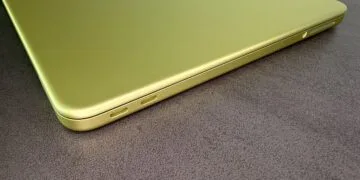
The most striking device in the expected lineup is a redesigned high-end MacBook with a touchscreen and OLED display – the first Mac that can be operated with a finger. Our MacBook Ultra overview summarizes what is currently known about it.
Alongside these are an updated 14-inch MacBook Pro and an iMac. The MacBook Pro with M6 is the base model of the series, while the iMac features new colors and the M6 processor.
The same open question hangs over all three models: Will there even be an M6 Pro and an M6 Max? According to reports from the summer, Apple might skip the top-of-the-line M6 series and instead bring forward the next generation. Everything hinges on this for a high-end MacBook – a top-of-the-line device without a top-of-the-line chip makes little sense.
Four devices for the home
The largest section concerns the living room. A new Apple TV 4K with Siri AI, a home hub with a built-in display, and new speakers in both sizes are expected.
The common denominator is voice control: all four devices are expected to receive features tied to new hardware. The evidence is strongest for the Apple TV – most recently, a model identifier appeared in the code that points to the A19 chip generation.
The situation is most uncertain for the larger HomePod. It was not included in the most recently reported list of devices ready for launch, even though it was considered confirmed in the spring.
An iPad mini with OLED
The smaller iPad is expected to feature an OLED display and a significantly more powerful chip. The timeframe has recently been narrowed down to October.
The base model of the iPad is also overdue, but might not arrive until early 2027. This means it falls outside the October release window.
How safe is it?
The table only lists devices that Apple has not yet revealed. The column on the right represents our own assessment of the available sources, not information provided by Apple. The ranking is based on two criteria: evidence found in Apple's own code and the number of independent reports.
| Product | Expected | How resilient |
|---|---|---|
| Apple TV 4K | October | Code evidence and several reports |
| iPad mini | October | Multiple reports, no code evidence |
| Home hub with display | October to early 2027 | Reports, timeframe recently softened |
| HomePod mini 2 | October | Several reports |
| MacBook Pro / Ultra | Autumn | Reports, open chip question |
| MacBook Pro with M6 | Autumn | Reports, open chip question |
| iMac with M6 | Until the end of the year | Individual reports |
| HomePod 3 | Unclear | Most recently removed from the list |
| iPad base model | Spring 2027 | Reports outside the October window |
Why October is so full this year
What's striking isn't so much the number of devices, but their distribution. Apple has reserved September for iPhone, Watch, and AirPods, and piled everything else behind them – Mac, home entertainment, and iPad – all in a single month.
The list falls into two groups. Updates like the MacBook Pro with a new chip or the iMac in new colors don't require any fanfare – that's how it was in August when the Mac mini and Mac Studio were announced without any event. A first MacBook with a touchscreen and a home hub with a display, on the other hand, are not updates, but rather new device categories.
Our expectation is therefore a mix: chip updates via notification, and a separate date for the Touch MacBook and the home hub. Both are possible, and the decision will likely depend less on the number of devices than on how well Apple wants to explain touch operation on the Mac.
In practical terms, this means that postponing your purchase is particularly worthwhile for the Apple TV and the iPad mini, as the indications of a new release are strongest there. The risk is higher for high-end Macs, because as long as the chip issue remains unresolved, the release date could be delayed.
For whom the wait is worthwhile
With Apple TV, the evidence clearly favors waiting: upgrading a 2022 device to one with a current-generation chip is rarely a difficult calculation. The same applies to the iPad mini, whose display has been the weakest point of the series for years.
Those who need a high-end MacBook, however, are faced with an open question. As long as it's unclear which chips the series will actually use, the right time to buy one cannot be determined. And it wouldn't be surprising if the HomePod 3 were to take another year to arrive.
Which of the upcoming devices would have made the biggest difference for you if Apple had revealed it back in September – or are you only waiting for one of them anyway? Let us know in the comments which one you're most interested in.