When Apple unveiled its revamped voice control in June, two devices were missing from the list: Apple TV and HomePod. An entry in the tvOS 27 system software now suggests that at least the home entertainment device will be added. The discovery comes from a tool view that developers can access on any Mac – and it's not yet present in tvOS 26.
The upcoming Apple TV 4K has been considered largely finished for months, with software being regularly cited as the bottleneck: as long as the new voice control wasn't ready, the hardware remained on the shelf. This narrative runs through the collected rumors about the new Apple TV 4K and has recently been dispelled – Apple TV and HomePod mini are considered ready for launch this fall. The newly discovered entry in tvOS 27 adds the software component to the picture: Siri AI is apparently already integrated into the platform.
Key Facts at a Glance
- The app list in tvOS 27 includes a Siri entry with the identifier
com.apple.campo; it is missing in tvOS 26. - „Campos” has been documented as the internal name for the chatbot Siri since January – until then only for iOS, iPadOS and macOS.
- A second identifier from the Mac system, ATVRemote1,5, refers to a Siri Remote that is still unreleased.
- The 2022 Apple TV 4K uses 4 GB of RAM – Apple Intelligence requires at least 8 GB on all other platforms.
- tvOS is not among the platforms covered by the DMA – the EU ban on Siri AI has no bearing on it. For Germany, Austria, and Switzerland (DACH region), the language remains the same: Siri AI will initially launch only in English.
A Siri entry that tvOS 26 doesn't recognize
The information comes from the Device Hub, an overview within Xcode that lists the installed components of a simulator system on macOS 27. In the list for tvOS 27, there is an entry called Siri, identified as com.apple.campo. This entry does not appear when comparing the same view with tvOS 26 – it was added with the new generation.
Attempting to launch the component from this view results in an error message: The application is not activated. The message provides no further information. 9to5Mac described this issue after independently examining both system states.
The fact that an entry appears in this list does not necessarily mean that users will later find a visible Siri app on their television. The list also includes system services that run in the background and never appear as tiles. The reliable statement is that the platform recognizes the component – not in what form it will ultimately appear.
Why the identifier is so meaningful
The identifier is the real core of the discovery. "Campos" is the internal name for the transformation of Siri into a fully-fledged chatbot., became known through a Bloomberg report in January. This report named three systems that would receive the update: iOS 27, iPadOS 27, and macOS 27. tvOS was not included.
Even at the June presentation, the living room was left out. At that time, only a few minor new features were on the agenda for Apple TV, as summarized in the overview of tvOS 27 features.
However, a first point of contention emerged back in June: In the second developer beta of tvOS 27, references to the new Siri generation were found in the code surrounding the HomePod setup. At the time, these were text snippets in the setup process. Now, a dedicated component exists under the project name – two months later and one step closer to reality.
The storage capacity speaks against the current model
For owners of the current Apple TV 4K, the obvious question is whether such a feature will be added via an update. The hardware specifications suggest otherwise. The third model from 2022 uses the A15 Bionic chip and 4 GB of RAM.
Apple Intelligence states that iPhone, iPad, and Mac all require at least 8 GB of RAM. While Apple hasn't published a specific minimum requirement for tvOS, the industry considers the doubling of storage to be the real reason why the current device isn't making the jump – not the chip's processing power.
| Model | Chip | RAM | Siri AI |
|---|---|---|---|
| Apple TV 4K (2022) | A15 Bionic | 4 GB | is considered excluded |
| Expected model (Autumn 2026) | more powerful chip expected | Doubling expected | expected as a selling point |
| iPhone, iPad, Mac (Siri AI) | from A17 Pro or M1 | at least 8 GB | available |
The remote control is also about to change.
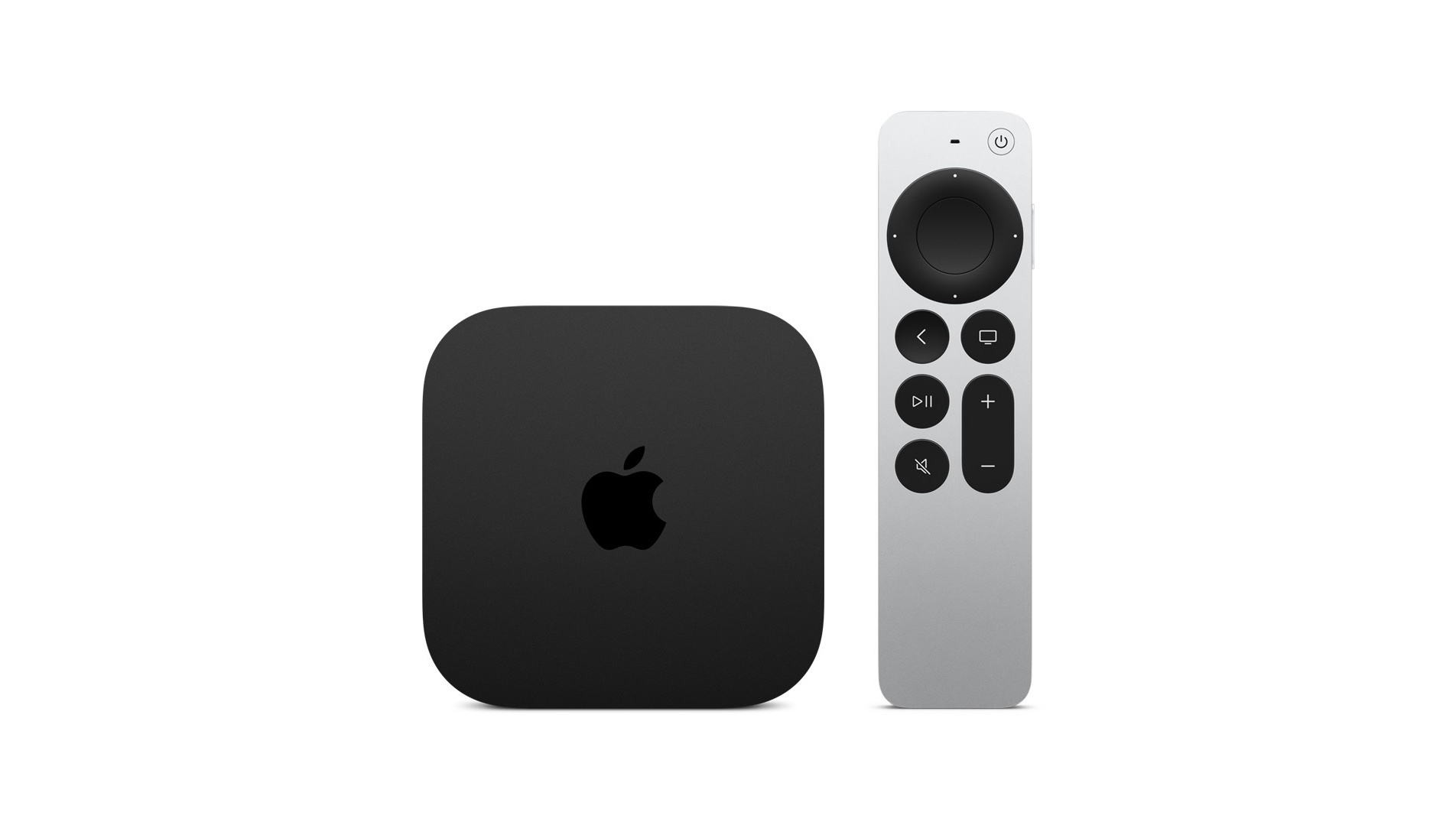
Alongside the Siri entry, a second wave of software provides a clue about the accessory. The macOS 26.7 release candidate contains the identifier ATVRemote1,5 – a Siri Remote that doesn't yet exist. It appears there alongside numerous other code names for home devices, Macs, and iPads, found in the Mac system's code. The current third generation was released in November 2022 alongside the current Apple TV 4K and differs from its predecessor primarily by its USB-C port.
The identifier doesn't reveal what changes are behind it. Nevertheless, it's noteworthy because the Siri Remote is linked to an expectation that Apple hasn't yet fulfilled: being able to find the remote on the sofa. Before the launch of the second generation in spring 2021, precise location tracking was considered virtually guaranteed. At the launch, it turned out that the new Siri Remote would be released without the U1 chip – meaning without the ultra-wideband capability that allows for precise positioning of objects down to a few centimeters.
The solution came two and a half years later and remained a software workaround. Since tvOS 17, the remote can be located via the Control Center on the iPhone; a white dot on the display grows larger as you get closer. Apple describes the process in the Apple TV manual. There's no directional indicator like with the AirTag because the necessary hardware is missing – even now, in the third generation.
A codename confirms that a successor exists, but not which components it contains. Therefore, the same principle applies to the "finding" chapter as to Siri AI on television: you can only rely on it once it's specified in the datasheet.
DMA does not work on Apple TV
For German-speaking countries, it's worth taking a closer look at what Apple's EU ban actually depends on. The Digital Markets Act doesn't obligate the company as a whole, but only individual services that the EU Commission has explicitly designated as such. For Apple, these have been the App Store, the iPhone operating system iOS, and the Safari browser since September 2023; iPadOS was added in April 2024. tvOS is not on this list.
The Court of Justice of the European Union confirmed in July that the various App Store versions – including the one for Apple TV – are considered a single service. This ruling applies to the store itself, not the operating system. However, the interoperability obligations that Apple cites to justify the postponement of Siri AI depend on the four classified services.
Apple's own availability information fits perfectly into this picture: it lists iOS, iPadOS, and watchOS. The Apple Watch is a special case because it's tied to a paired iPhone and therefore to a specific system – the same logic that doesn't apply to Macs and Vision Pros, where Siri AI works in the EU. An Apple TV isn't connected to an iPhone. The reasons for the block on mobile devices are explained in the DMA conflict documentation, and the overview of Apple features not available in the EU shows just how long the list of missing features has become.
Our expectation is that as long as tvOS is not subject to the DMA, households in Germany, Austria and Switzerland will receive Siri AI on Apple TV as soon as Apple releases the feature there – without the detour that iPhone and iPad currently have to take.
Language is the real hurdle
What remains is a limitation of a completely different kind. Apple explicitly identifies Siri AI as initially English-language. For a device operated by voice command and remote control, this carries more weight than on the iPhone: Someone who controls their television in German won't benefit much from English voice control in their living room.
This hurdle affects all German-speaking markets equally and is independent of any regulation. The point at which Siri AI arrives in the living room will be decided here – not in Brussels.
The purchase period is moving into autumn
If you're currently considering an Apple TV 4K, this discovery gives you another reason to wait. The current model is almost four years old, its successor is expected this fall, and preparations for the September event are underway. Buying one now means acquiring a device that foreseeably won't feature the key innovation of this generation.
At the same time, a realistic outlook is advisable. Even if the new model is unveiled in September and features Siri AI as a selling point, in German-speaking living rooms this would initially be a promise for the future, because language support is lacking. The decisive moment, therefore, lies not at the market launch, but with the first wave of language support afterward – and this time, exceptionally, it doesn't just affect the EU.
What would be a deal-breaker for you – an Apple TV that initially only supports the new voice control in English, or one that lacks it entirely? Let us know in the comments how you would decide.
- App Store: Apple and EU Commission settle dispute
- macOS 26.7: Code names for home devices, Macs and iPads
- Slow Horses Season 6: Trailer reveals the start date