

This article may contain affiliate links. Learn more on our Partner Program page.
One day after the unveiling of the MacBook Pro with PROLED XDR display, a market researcher has presented a sales figure: He predicts Apple will produce up to 1.5 million units by 2027. The price and the continued presence of the Mini-LED models could slow sales. For now, there is only one supplier for the display.
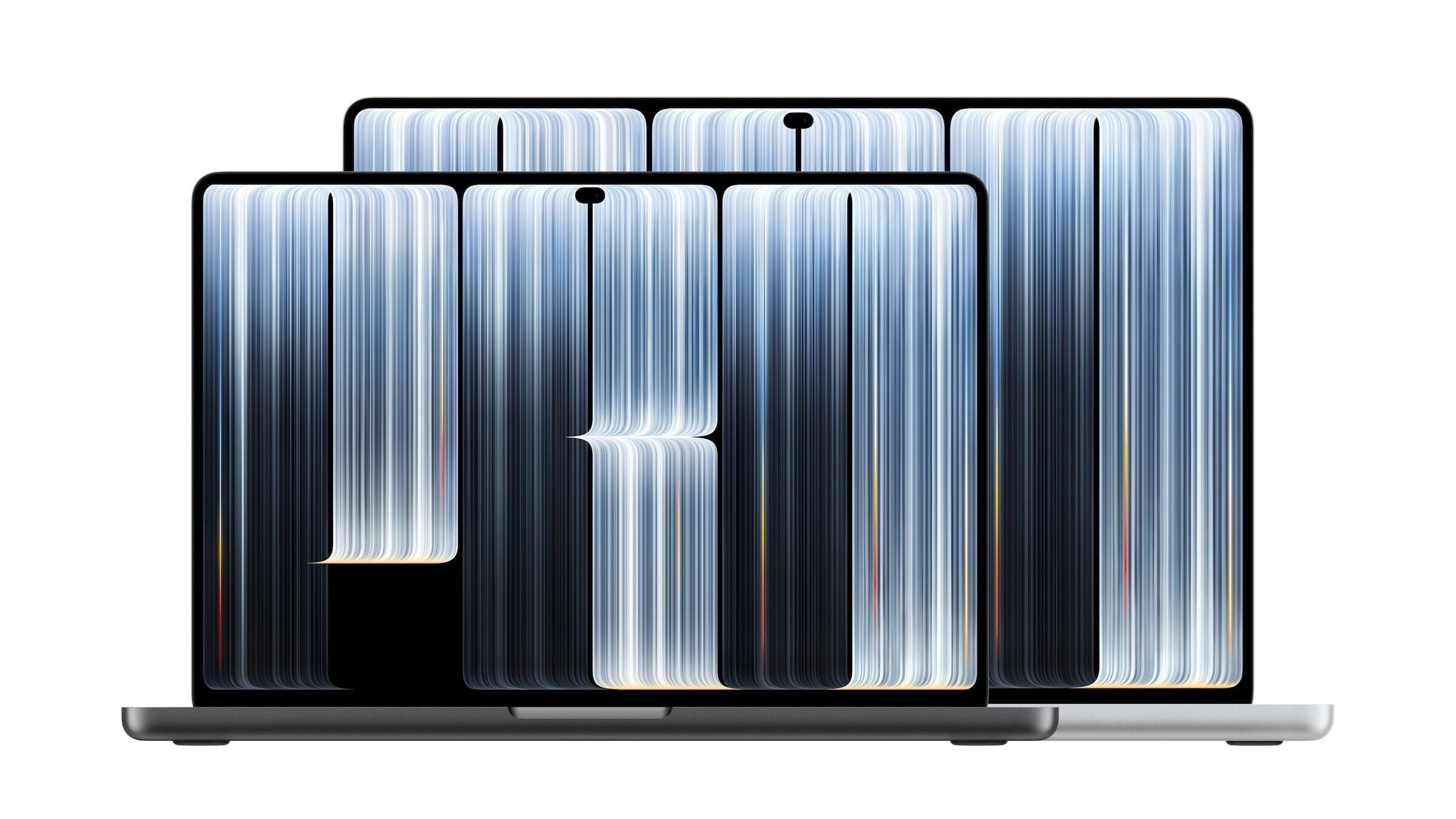
Apple unveiled the MacBook Pro with PROLED XDR display on October 28th, the company's first notebook with a tandem OLED display and touchscreen. It has been available for pre-order since the launch date and will be in stores starting November 6th.
A day later, Taiwanese market research firm TrendForce published a forecast for the device. It specifies a shipment volume for 2027, the sole panel supplier, and a new timeframe for the MacBook Air with OLED. The unit numbers only apply to the new OLED models, not the entire MacBook Pro lineup.
Key Facts at a Glance
- TrendForce estimates shipments of the MacBook Pro with PROLED XDR display at 1.2 to 1.5 million units in 2027.
- The market researcher cites the starting price of $2,899 in the US and the continued sale of mini-LED models as obstacles. In Germany, the device costs from €3,299.
- The OLED panels come exclusively from Samsung Display, from the first section of a production line that Samsung has reserved solely for Apple.
- TrendForce expects the MacBook Air with OLED display to arrive in 2029; earlier reports mentioned 2028.
- TrendForce predicts that the market for OLED notebooks will grow by almost 40 percent in 2026 and by more than 40 percent in 2027.
What the estimate says
TrendForce estimates shipments of the new MacBook Pro for 2027 at 1.2 to 1.5 million units. This figure is the market research firm's estimate for the first full year of sales.
TrendForce believes that demand could be dampened primarily by two factors: the high entry price and the fact that Apple is continuing to sell the existing models with Mini-LED displays. Those wanting to buy a MacBook Pro with either the M5 Pro or M5 Max thus have the choice between the two displays, even with the same chip.
TrendForce expects the entire OLED notebook market to grow by almost 40 percent in 2026 and by more than 40 percent in 2027 – even though the notebook market as a whole is projected to shrink for two consecutive years. So far, the segment has been primarily driven by Windows manufacturers such as Lenovo, HP, and ASUS.
One supplier, one production line
According to TrendForce, Samsung Display is the sole supplier of the panels for the new MacBook Pro. This aligns with reports from the summer that Samsung is the exclusive supplier of the OLED touch display.
TrendForce provides further details on the manufacturing process: Samsung has reserved the first section of its 8.6-generation OLED production line in Asan, South Korea, exclusively for Apple. According to TrendForce, the MacBook Pro is the first product to go into mass production on this line. The requirements are demanding: Tandem OLED with two light-emitting layers and a pixel density of 254 ppi drive up material costs and the amount of waste.
Other panel manufacturers do undergo testing programs, but face high barriers to entry for the MacBook Pro. According to TrendForce, LG Display, BOE, and TCL CSOT are primarily focusing on the MacBook Air with OLED, which the market research firm expects to launch in 2029. Bloomberg had reported in March that... 2028 for the first MacBook Air with OLED named.
Two market researchers, two invoices
TrendForce is an established market research firm specializing in display and semiconductor markets. The figures are estimates from the market research firm and not official Apple data.
The extent to which such estimates can diverge is illustrated by a comparison with Counterpoint Research. At the beginning of October, the market research firm projected a 50 percent increase for OLED notebook displays in 2026, but only 24 percent for 2027. TrendForce, on the other hand, expects less growth in 2026 and more in 2027.
| OLED prediction for notebooks | 2026 | 2027 |
|---|---|---|
| TrendForce, Devices (October 29) | just under +40 % | more than +40 % |
| Counterpoint, Displays (October 8) | +50 % | +24 % |
Both metrics don't measure exactly the same thing: TrendForce refers to shipped OLED notebooks, while Counterpoint refers to shipped OLED displays for notebooks. Both agree, however, that Apple's entry into the market is driving the segment forward.
Same chip, 400 euro difference
TrendForce cites the starting price of $2,899 as a limiting factor for demand. In Germany and Austria, the 14-inch model with a PROLED XDR display starts at €3,299, and in Switzerland at CHF 2,799. The 14-inch MacBook Pro with the M5 Pro and Mini-LED display remains available starting at €2,899.
I believe this juxtaposition is the crucial point of the estimate. Anyone looking for a MacBook Pro with the M5 Pro chip can get the same chip with a Mini-LED display for €2,899 and with a PROLED XDR display for €3,299 – what the price difference brings besides the display and touchscreen is shown by comparing PROLED XDR and Mini-LED in the MacBook Pro. The fact that Apple's OLED forecasts can be inaccurate was demonstrated by the iPad Pro: according to Omdia, panel shipments in the first quarter of 2026 fell 37 percent short of projections.
How realistic the 1.5 million figure is depends heavily on how many buyers are willing to pay the premium for OLED and Touch when the same chip is also available with Mini-LED. Would you spend the extra 400 euros for the MacBook Pro with OLED and Touch, or stick with the Mini-LED model? Let us know in the comments what you would choose.