

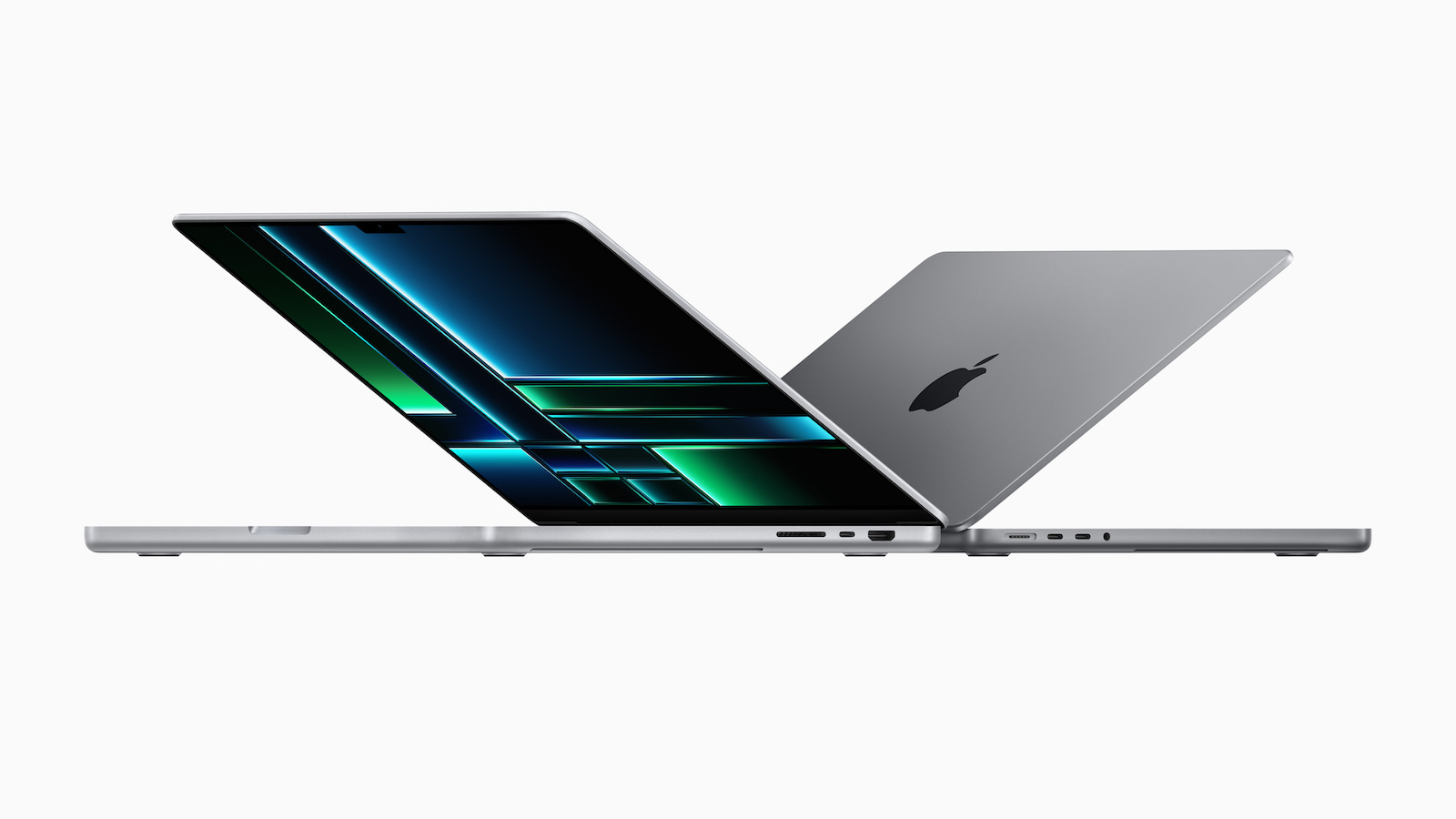
Apple hasn't yet unveiled a MacBook with an OLED display, but the market is already fully expecting it. One market researcher has significantly raised his expectations for OLED notebook displays this year, citing the upcoming MacBook Pro as one of the main drivers. The outlook for Mini-LED, however, is bleak.
In a recent report dated October 8, Counterpoint Research predicts that shipments of OLED displays for notebooks will increase by 50 percent in 2026. In April, the same market research firm had projected a 33 percent increase for the segment and even then identified Apple as the driving force behind the OLED notebook market. This new figure comes just under three weeks before Apple is expected to unveil the first MacBook Pro with an OLED touchscreen, according to Bloomberg.
Key Facts at a Glance
- Counterpoint expects a 50 percent increase in OLED notebook displays in 2026; in April, the figure was 33 percent.
- The market researcher cites Apple's expected switch to OLED in the MacBook Pro and the demand for expensive AI notebooks as drivers.
- In the premium segment, OLED is expected to account for three quarters of displays by 2026, up from 56 percent the previous year.
- Mini-LED displays for notebooks are expected to decline by 38 percent in 2026 and by a further 60 percent in 2027.
- In contrast, the entire market for notebook displays is shrinking by 3 percent because expensive memory is slowing down demand.
What the new forecast shows
Counterpoint distinguishes between the overall market for notebook displays and advanced displays, which the market research firm includes OLED and Mini-LED in. While the overall market is expected to decline by 3 percent in 2026, the premium segment is projected to grow by 11 percent. The report cites the continued rise in memory costs, which are driving up notebook prices overall, as the reason for the weakness in the overall market.
Within the premium segment, the balance is shifting significantly. According to Counterpoint, OLED and Mini-LED were almost neck and neck in 2025, but by 2026 OLED is expected to account for three out of four premium displays.
| Share of the premium segment | 2025 | 2026 |
|---|---|---|
| OLED | 56 % | 75 % |
| Mini-LED | 44 % | 25 % |
Following the 50 percent increase in OLED capacity this year, a further increase of 24 percent is expected in 2027.
| Segment | 2026 | 2027 |
|---|---|---|
| Total notebook displays | -3 % | – |
| OLED and Mini-LED together | +11 % | – |
| OLED | +50 % | +24 % |
| Mini-LED | -38 % | -60 % |
The two OLED figures indicate that nearly twice as many OLED notebook displays will be shipped in 2027 as in 2025. For Mini-LED, only about a quarter of the 2025 volume would remain in the same period. Counterpoint cites the thinner design of OLED, the improved image quality, and decreasing costs as reasons for the decline.
Why Apple is the deciding factor
The current MacBook Pro uses a mini-LED display, which Apple markets as Liquid Retina XDR. Bloomberg reports that the upcoming 14- and 16-inch generation will feature an OLED display with a touchscreen and, for the first time, a Dynamic Island. According to previous reports, the panel for this will be supplied exclusively by Samsung Display. The expected launch of the device, which is also reportedly called the MacBook Ultra, has been postponed several times this year: In April, it was slated for early 2027, but now it's October.
Counterpoint explicitly speaks of an expected launch. Apple has confirmed neither the device nor the date; Bloomberg cites an unveiling on or around October 27. The same round is also expected to include an entry-level MacBook Pro and an iMac with M6, as well as an iPad mini with OLED – two weeks after the "Welcome home" event on October 13, which kicks off the Apple releases in October 2026.
What should make OLED cheaper in notebooks
In addition to demand, Counterpoint cites several technological developments that should make OLED more attractive and cheaper for notebooks:
- Tandem OLED with two overlapping light-emitting layers for greater brightness, lower power consumption, and longer lifespan. Apple already uses this design in the iPad Pro.
- New manufacturing processes from Visionox and LG Display are designed to make better use of materials and increase yield.
- Phosphorescent blue OLED emitters, which are intended to reduce the power consumption of the panels.
- Larger production lines of the 8.7 generation, which are intended to reduce manufacturing costs.
Counterpoint anticipates annual growth rates of 26 percent for shipped OLED notebook panels and 35 percent for revenue by 2030, both calculated from 2024 onwards. Over six years, this would translate to roughly four times as many panels and approximately six times as much revenue. Revenue is thus growing faster than the number of panels shipped, meaning that, on average, a single panel would become more valuable.
A display alone does not sell a notebook
I believe the raised forecast is primarily a bet on Apple. A 50 percent increase in a segment that has so far consisted mainly of expensive Windows notebooks requires a manufacturer to switch to a new platform all at once, with high production volumes. Analyst David Naranjo himself emphasizes that growth depends on whether advancements in panel technology translate into compelling products at competitive prices.
The iPad Pro demonstrates how quickly such calculations can change: According to Omdia, only around 820,000 panels of the OLED model were shipped in the first quarter instead of the projected 1.3 million – a shortfall of 37 percent. I see the price as the main reason for this. Whether the MacBook Pro with OLED will meet the forecast therefore depends less on the display itself than on the Euro price that Apple announces at the end of October. Anyone already planning to buy a MacBook Pro should wait for that date.
Would you pay significantly more for an OLED display with a touchscreen than for the current MacBook Pro, or is Mini-LED perfectly sufficient for you? Let us know in the comments where your price limit lies.