
When you use an iPhone, you have a powerful device with many built-in security features. Over the years, Apple has introduced numerous measures to better protect your data. Many of these are readily available, but you must activate them first. In times of data theft, phishing, and targeted attacks on smartphones, it's worth knowing the most important iPhone security features—and enabling them.
In everyday life, many users simply type in their PIN and think that's enough. In fact, there are multiple layers of protection that help keep your device and information safe. Some features, like two-factor authentication, are required for certain iOS services; others, like stolen device protection, offer a decisive advantage in an emergency. This article provides an overview of the five most important iPhone security features and explains how to set them up and what they do.
Enable Two-Factor Authentication
Two-factor authentication (2FA) provides additional security for your Apple ID. When you sign in to iCloud on a new device or on the web, you'll need to verify your identity with a six-digit code. This code will be sent to another Apple device you're already signed in to. Alternatively, it can be sent to a trusted phone number. Even if someone knows your password, they can't get past it without access to a trusted device. You can enable 2FA or check if it's enabled by going to Settings > [Your Name] > Sign-in & Security.
Security key for even more protection
In addition to the code from two-factor authentication, you can also use physical security keys like the YubiKey. These USB-C or NFC devices serve as an additional authentication factor. If you set up a security key, you'll need it when signing in to new devices or on the web. This means that even if someone has access to your device or phone number, they won't be able to access your account without the physical key. You can also set up security keys under Settings > [Your Name] > Sign-in & Security.
Activate protection against stolen devices
Apple introduced this feature because there were cases of criminals overhearing passwords and then stealing iPhones. If you enable Stolen Device Protection, the passcode alone is no longer sufficient to access sensitive data. Biometric authentication is then always required – either with Face ID or Touch ID. There is also a security delay: Important changes like resetting your Apple ID password require two biometric confirmations and a one-hour waiting period. This prevents thieves from taking over your device immediately, even if they know your password. You can find the feature under Settings > Face ID & Passcode > Stolen Device Protection. By default, it is only active when you are in an unfamiliar location. However, you can set the protection to always be active.
Use private relay and email protection
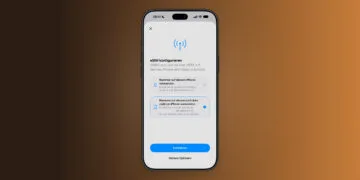
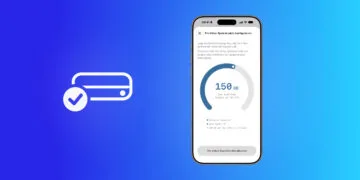
Private Relay is part of iCloud+ and protects your IP address and Safari traffic. It ensures that no one—not even your internet service provider or Apple—can see which sites you visit. This is especially helpful when using public Wi-Fi networks. You should also enable "Hide my email address." This generates temporary email addresses that forward to your real address. This way, you only reveal your real email address when you want to. You can find both under Settings > [Your Name] > iCloud > Private Relay and Hide my email address. An iCloud+ subscription is required, which starts at €0.99 per month for 50 GB of storage.
Enhanced privacy for iCloud data
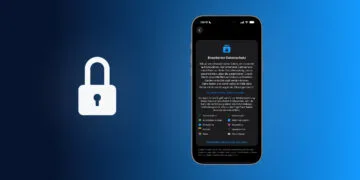
By default, not all iCloud data is end-to-end encrypted. This primarily affects backups, files, notes, photos, and Safari data. Advanced Data Protection changes this: Your iCloud data is then decrypted only on your devices. Apple cannot access this data, even if requested by a government agency. Important: If you enable this feature, you must either create a recovery key or specify a recovery contact. Apple cannot restore your data if you forget your password. You can find this feature under Settings > [Your Name] > iCloud > Advanced Data Protection.
Blocking mode for extreme security situations
Lockdown mode is designed for people who could be vulnerable to targeted cyberattacks, such as journalists, activists, or government employees. Lockdown mode disables many features: no message attachments, no FaceTime calls from unknown people, no unknown Apple service invitations, no shared albums, and no configuration profiles. The iPhone is restricted so severely that many entry points for attacks disappear. You can find Lockdown mode under Settings > Privacy & Security > Lockdown Mode.
Contact key verification for confidential communication
This feature allows you to ensure that you're really communicating with the person you think you're communicating with. You compare a verification code with that of your contact person, either in person or by phone. This prevents someone from later claiming to be that person. This feature is particularly useful for people in sensitive professions or in critical situations. It can also be found under Settings > Privacy & Security.
Your iPhone, your security – you decide
Apple provides a whole range of tools to significantly increase the security of your iPhone. Some features, like two-factor authentication or stolen device protection, are definitely worth enabling. Others, like Block Mode or Contact Key verification, are only needed in specific situations. The important thing is: You're in control. Use the security features that fit your daily life—and protect your data and privacy much better than with the factory settings alone. Time for fresh accessories? Visit our Amazon Storefront and discover a wide selection of products from leading manufacturers, including HomeKit-compatible ones! (Photo by Unsplash+ / Getty Images)
- Create unique images with Apple Intelligence on iPhone
- iPhone Tip: Stop lock screen access to Control Center
- Save iPhone battery: When is power saving mode worth it?
- Photos app: Easily stop endless video loops
- Visual Intelligence explains: How to use the iPhone camera
- Apple Intelligence: The best tips for your Photos app
- AirPods Pro 2 & AirPods 4: How to use Adaptive Audio