
This article may contain affiliate links. Learn more on our Partner Program page.
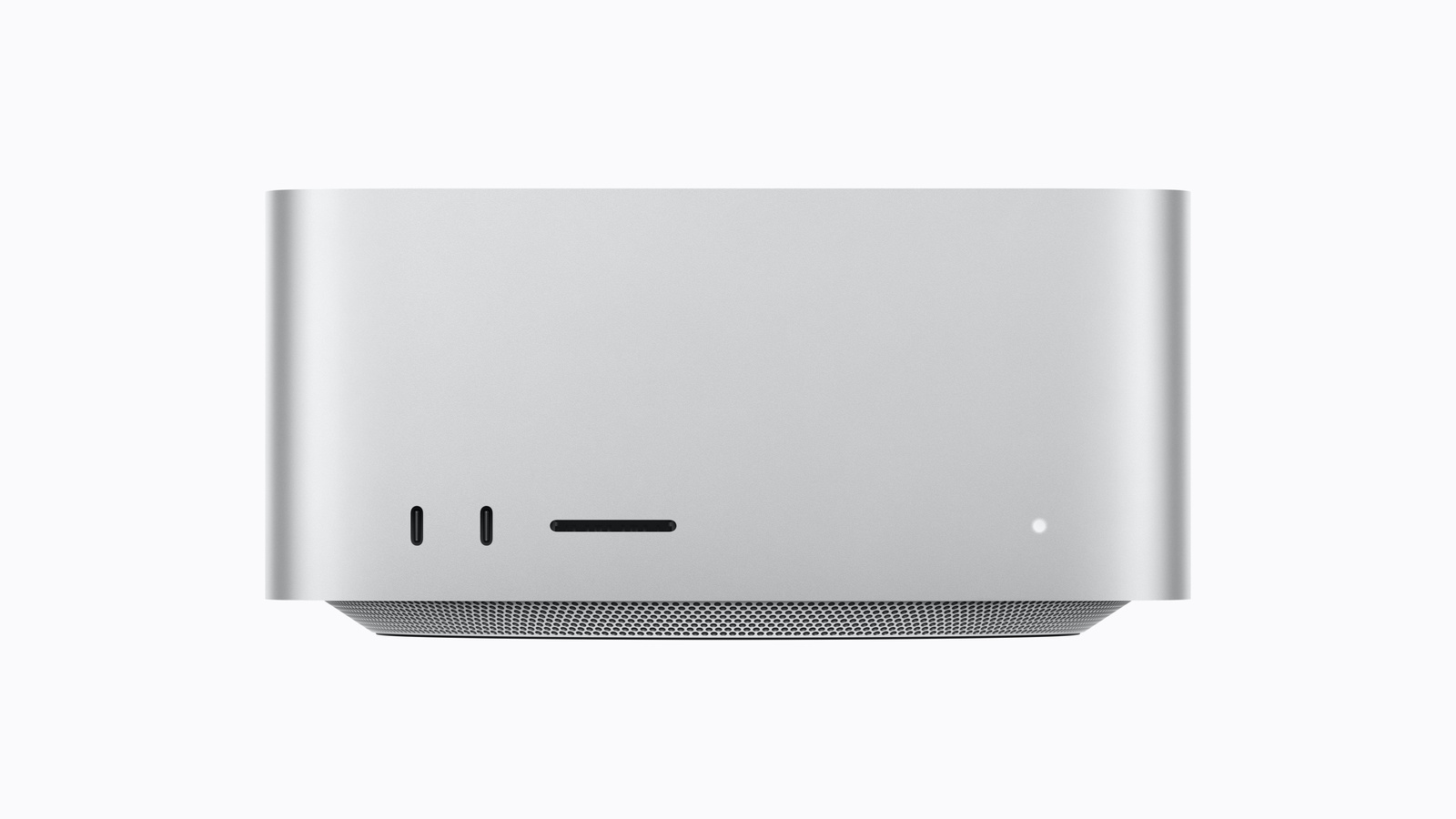
Apple introduces the Mac Studio with the M5 Max and the new M5 Ultra – featuring up to 80 GPU cores and memory configurations that had disappeared from the configurator earlier this year. Four units can now be linked together to form a computing cluster. However, the highest-end configuration will be released later than the others.
The Mac Studio was notable in 2026 primarily for what it could no longer do: For months, Apple gradually removed one memory tier after another from the M3 Ultra, until finally only 96 GB was available. With the new generation, this is reversed. The M5 Max and M5 Ultra bring Neural Accelerators to every GPU core, and the top-of-the-line configuration once again boasts 512 GB of Unified Memory. Our buying guide for the Mac mini, Mac Studio, and iMac shows how this device compares to the smaller desktops.
Key Facts at a Glance
- The Mac Studio comes with the M5 Max and the new M5 Ultra, Apple's most powerful chip to date.
- The M5 Ultra offers up to 36 CPU cores, up to 80 GPU cores, and up to 512 GB of unified memory.
- The storage bandwidth increases to 1.2 TB/s, around 50 percent more than the previous generation.
- Thunderbolt 5 and RDMA allow multiple devices to be connected to form a computing network.
- Pre-orders start today, delivery from September 22nd – the 512GB version will follow at the end of October.
The M5 Max is aimed at compact professional workstations
The smaller configuration features an 18-core CPU with six super cores and twelve performance cores. The GPU grows to up to 40 cores and, according to Apple, is up to 50 percent faster than the previous generation. RAM options range up to 128 GB with a bandwidth of up to 614 GB/s.
Apple claims 3.9 times faster prompt processing in LM Studio compared to the M4 Max, and 3.5 times faster image generation from text. The Magic Mask feature in DaVinci Resolve Studio is said to run three times faster. All comparisons are based on measurements Apple conducted in July 2026.
The M5 Ultra brings Neural Accelerators to the Ultra class for the first time
The top-of-the-line variant scales to up to 36 CPU cores with 12 Super cores and 24 Performance cores, as well as up to 80 GPU cores – according to Apple, the most powerful GPU ever in an Apple chip. Crucially, one innovation is the inclusion of Neural Accelerators within the GPU cores of an Ultra chip for the first time. This results in up to 4.3 times the AI computing power of the M3 Ultra and 9.8 times that of the M1 Ultra.
In traditional computing tasks, the improvement is smaller: Multithreaded performance is 1.3 times that of the M3 Ultra, and graphics performance is 1.8 times that. The Media Engine doubles the number of encode and decode blocks compared to the M5 Max; Apple specifies up to 33 simultaneous streams in 8K ProRes 422 at 30 frames per second.
| Feature | Mac Studio with M5 Max | Mac Studio with M5 Ultra |
|---|---|---|
| CPU | 18 kernels | up to 36 cores |
| GPU | up to 40 cores | up to 80 cores |
| RAM | up to 128 GB | up to 512 GB |
| Memory bandwidth | up to 614 GB/s | 1.2 TB/s |
| Price (Germany) | from 2,999 euros | from 6,599 euros |
The 512 GB are returning – after a year of being removed
This number has a history. Apple introduced the Mac Studio with the M3 Ultra in March 2025, offering up to 512 GB of RAM and advertising it as the largest amount of memory ever installed in a personal computer. A year later, the 512 GB option disappeared from the configurator, followed in April by order stops for further configurations in the German and US stores, and in May by the last remaining upgrade level. Ultimately, the M3 Ultra was only available with 96 GB. The reason was a global shortage of memory chips.
With the M5 Ultra, the top configuration is once again 512 GB, and the bandwidth, at 1.2 TB/s, is significantly higher than the 819 GB/s of the M3 Ultra. Our RAM recommendations for Apple Silicon can help you estimate which amount of storage is actually suitable for which workload – upgrading is not possible with integrated memory.
One caveat remains: This version will only be released at the end of October, which is about five weeks after the rest of the series.
Four devices as one computer
The Mac Studio now supports RDMA over Thunderbolt 5, enabling direct access to the memory of another system. This allows multiple devices to be linked to a shared memory pool. According to Apple, a cluster of four Mac Studios achieves up to three times the speed of a single device for distributed AI inference.
In addition, there's Core AI, a new framework for building, running, and deploying models on Apple Silicon that combines CPU, GPU, Neural Engine, and shared memory. Together with MLX, this is aimed at developers who want to run complete language models locally—without ongoing costs for compute time in the cloud.
Connectivity: Wi-Fi 7 makes its debut in the Mac Studio
The in-house N1 chip brings Wi-Fi 7 and Bluetooth 6 to this model for the first time. Thunderbolt 5 delivers up to 120 Gb/s, and the SSD architecture utilizes PCIe Gen 6, operating up to twice as fast as before. Also new is Genlock via USB-C for precise synchronization of the display and camera, such as with an iPhone 17 Pro.
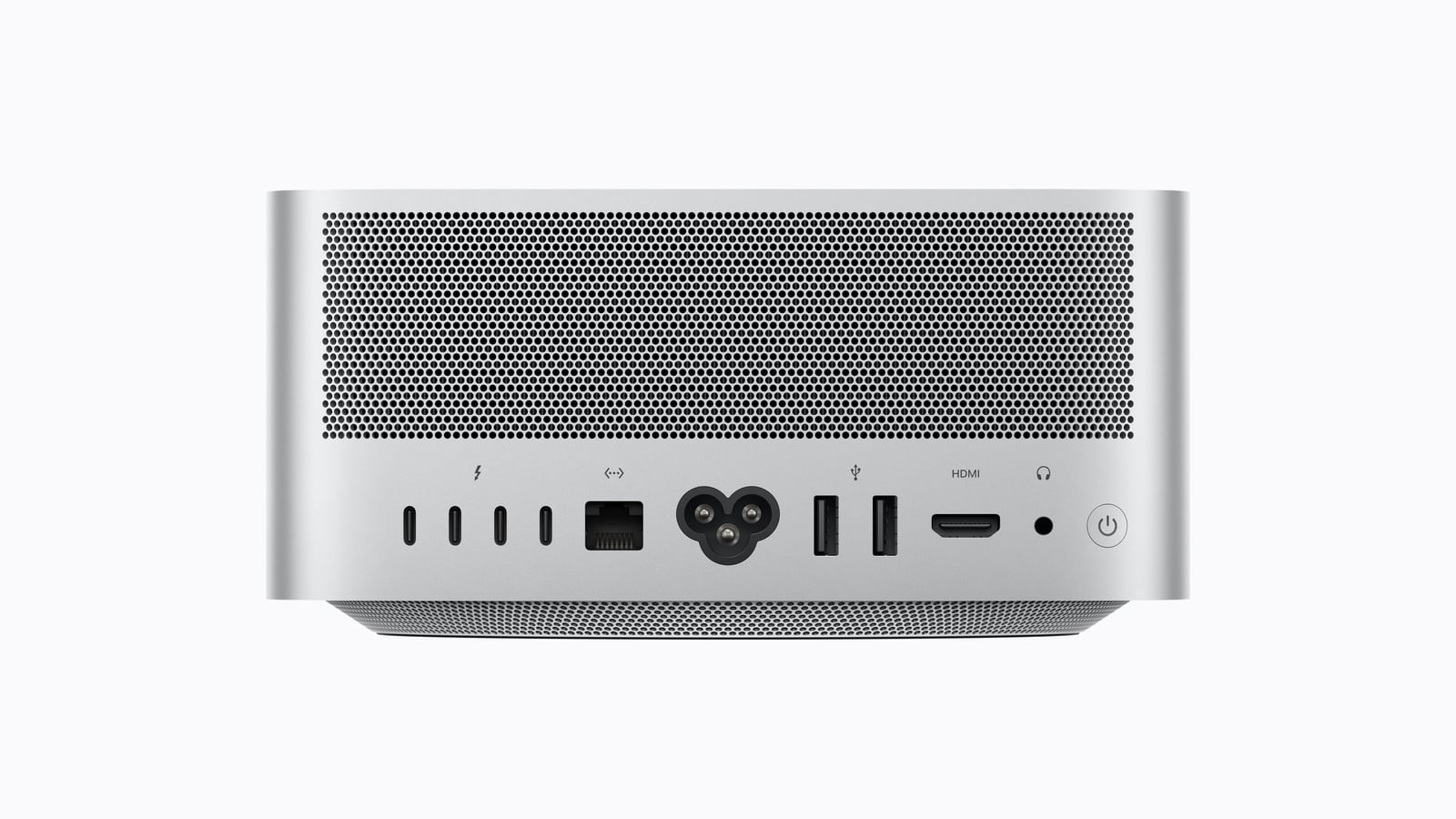
Up to eight displays can be connected, or alternatively, four Studio Display XDRs at full 5K resolution and 120 Hz. For information on how this compares to other models, see our overview of how many external displays a Mac supports.
It will ship with macOS 27, whose feature set has been finalized since June. Siri AI will appear later this year as a beta, initially for systems with an English language setting.
Prices and availability
Pre-orders are available from today in 30 countries and regions, with delivery starting on September 22nd.
In Germany, the M5 Max version starts at €2,999, while the M5 Ultra version starts at €6,599. In the US, the starting prices are $2,499 and $5,499 respectively, with education customers paying $2,299 and $5,099.
Apple states that 35 percent of the materials used are recycled, while the aluminum used in the casing and the rare earth elements in the magnets are both 100 percent recycled. Forty percent of the energy used in manufacturing comes from renewable sources.
A chip-based timetable that contradicts the logic of names
Anyone comparing this year's Mac lineup will find a remarkable pattern: The Mac mini gets the new M6 in its base model and the M5 Pro above it, while the Mac Studio gets the M5 Max and M5 Ultra. The generation number thus says little about the performance class. The reason lies in Apple's decision to discontinue the development of the M6 Pro and M6 Max in favor of the M7 series – there is simply nothing above the base chip in the M6 generation.
In practical terms, this means that the chip designation is no longer a reliable indicator when buying a Mac. The decisive factors are memory capacity, bandwidth, and the number of GPU cores. The accompanying quote comes from chief developer Johny Srouji, whose career path led him through Apple's chip development department.
The desk as a data center
It's striking how clearly Apple positions the Mac Studio as a local alternative to the cloud: a shared storage pool across multiple devices, a dedicated framework for local models, and a maximum capacity of 512 GB. This targets a small but affluent group – and answers the question of why Apple is bringing back the larger storage tiers despite the ongoing chip shortage.
Would a setup with multiple devices be of interest to you – or is a single Mac Studio with plenty of RAM sufficient? Let us know in the comments how you handle local computing.
- Mac mini with M6 and M5 Pro: Apple focuses on AI performance
- Apple HomePad: Camera should automatically switch profiles
- Hide email address: Apple scraps domain switching