
Apfelpatient
  • Home
  • News
  • Rumors
  • Tips & Tricks
  • Reviews
  • Insights
No result
View All Results
  • iPhone 18
  • iPhone 18 Pro
  • iPhone Duo
  • Apple Home
  • Siri AI
  • HomePod
  • HomePod mini
  • HomePod mini 2
  • MacBook Pro
  • Apple TV 4K
  • Apple Watch Series 12
  • Apple Watch Ultra 4
  • AirPods 5
  • iOS 27
  • iPadOS 27
  • macOS
  • MacBook Neo
  • iPhone 17e
  • AirTags
  • iOS 26
  • iPhone 17
  • iPadOS
  • iMac
  • Mac mini
  • Apple TV
  • iPad Pro
  • iPhone Air
  • Apple Vision Pro
  • iPhone 16
  • AirPods 4
  • Apple Watch Ultra
  • MacBook Air
  • iPad
  • AirPods Max
  • AirPods Pro 3
  • Mac Studio
  • Studio Display
  • iPad Air
  • iPad mini
  • watchOS 27
  • Apple CarPlay
  • Apple Pay
  • watchOS 26
  • Home
  • News
  • Rumors
  • Tips & Tricks
  • Reviews
  • Insights
No result
View All Results
Apfelpatient
No result
View All Results
  • iPhone 18
  • iPhone 18 Pro
  • iPhone Duo
  • Apple Home
  • Siri AI
  • HomePod
  • HomePod mini
  • HomePod mini 2
  • MacBook Pro
  • Apple TV 4K
  • Apple Watch Series 12
  • Apple Watch Ultra 4
  • AirPods 5
  • iOS 27
  • iPadOS 27
  • macOS
  • MacBook Neo
  • iPhone 17e
  • AirTags
  • iOS 26
  • iPhone 17
  • iPadOS
  • iMac
  • Mac mini
  • Apple TV
  • iPad Pro
  • iPhone Air
  • Apple Vision Pro
  • iPhone 16
  • AirPods 4
  • Apple Watch Ultra
  • MacBook Air
  • iPad
  • AirPods Max
  • AirPods Pro 3
  • Mac Studio
  • Studio Display
  • iPad Air
  • iPad mini
  • watchOS 27
  • Apple CarPlay
  • Apple Pay
  • watchOS 26

Apple Intelligence: Cooperation instead of in-house development

Milan Jovicic by Milan Jovicic
July 1, 2025 - 23:35 CEST
in Apple Insights
0
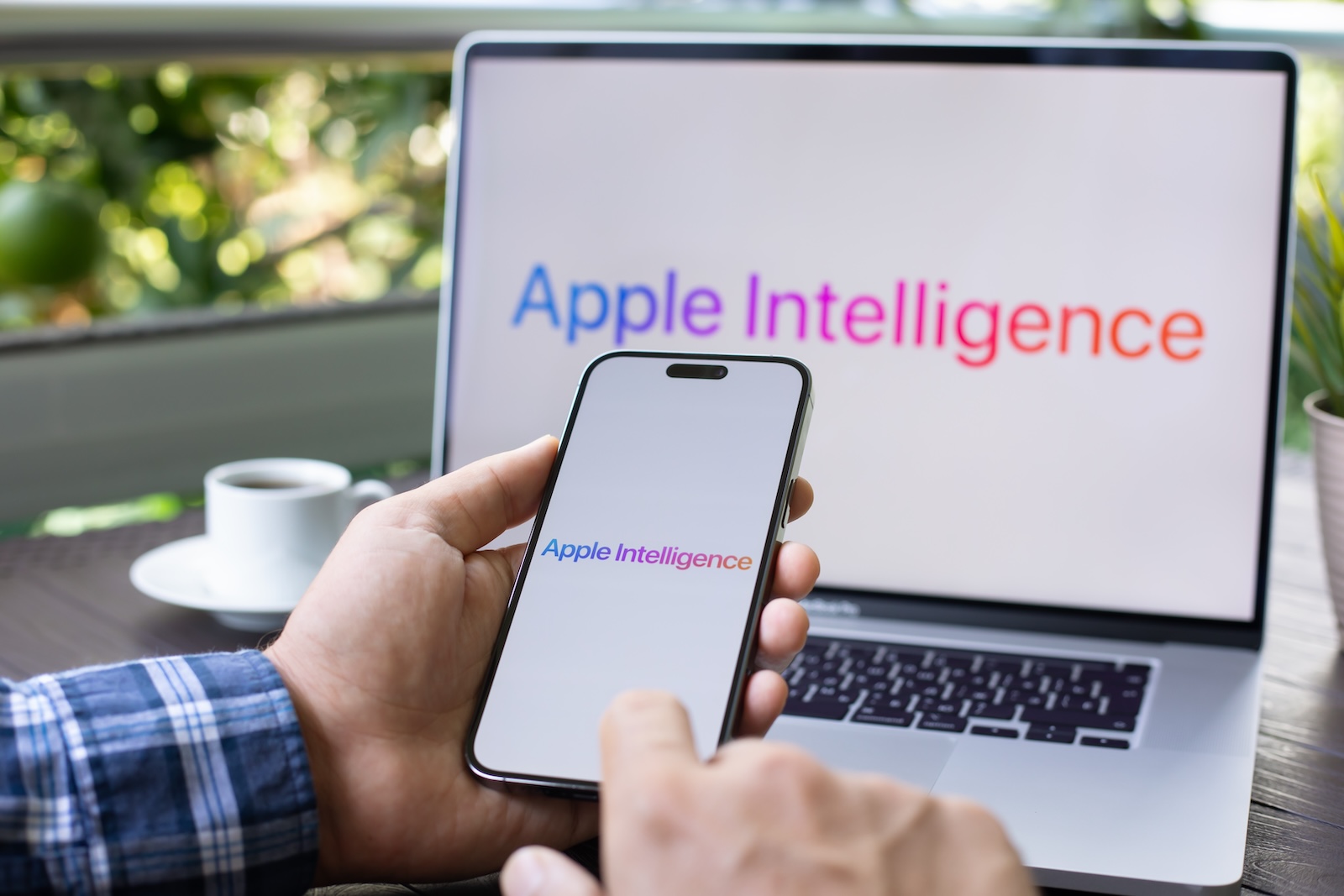
Apple Intelligence AI

Image: Shutterstock / DenPhotos

WhatsAppFacebookEmail
Threads

This article may contain affiliate links. Learn more on our Partner Program page.

Make Apfelpatient a preferred source One click – and you'll see us more often on Google

Apple has a problem. The AI world is evolving rapidly, but Siri and Apple's own "Apple Intelligence" seem outdated compared to ChatGPT, Gemini, or Claude. The big breakthroughs in generative AI are happening at other companies—OpenAI, Google, Anthropic. Apple is monitoring developments, trying to develop solutions internally, but apparently isn't making enough progress. Now Apple is exploring a new approach: integrating external AI models from OpenAI or Anthropic. This may sound uncharacteristic of Apple, but it could turn out to be the best decision for all parties.

Apple has built a strong ecosystem with its iPhone, iPad, Mac, and associated services. Hardware and software are seamlessly integrated, user experience is high, and the devices sell well. Apple was a pioneer in the smartphone era. But with the rise of generative AI, the company faces new challenges. While others are experimenting with AI-based assistants, tools, and platforms and creating real-world applications, Apple appears to be holding back. Siri, in particular, is technologically far behind today's standards. The great AI shift has begun—and Apple is under pressure to keep up.

Apple lags behind in AI

While the first features are already available under the name "Apple Intelligence," they are still a long way from what companies like OpenAI or Anthropic offer today. Features like contextual suggestions, text summaries, and intelligent corrections are useful, but not revolutionary. Most importantly, Siri lacks the ability to behave like a true language model—that is, to understand context, respond creatively, or complete complex tasks. Siri was actually supposed to receive a major upgrade this year. The goal was to make the voice assistant more powerful—comparable to ChatGPT or Gemini. But these upgrades have been postponed, presumably until 2026. This shows that Apple is not where it needs to be in terms of developing its own AI models to remain competitive.

Apple considers partnership with OpenAI or Anthropic

According to Bloomberg reporter Mark Gurman, Apple is currently considering whether to further develop the revamped Siri based on third-party AI. OpenAI and Anthropic are among those under discussion. This would allow Apple to draw on existing, powerful language models to advance its own AI. This would mark a departure from Apple's typical approach of developing everything in-house. From a technological perspective, this would be a smart solution. With GPT-4, OpenAI has already demonstrated what generative AI can achieve today. With Claude, Anthropic also provides a powerful model focused on security and contextual understanding. For Apple, this would mean no years of in-house development, but immediate access to cutting-edge AI technology. And for you as a user: a significantly more intelligent voice assistant – seamlessly integrated into your devices.

Why this step makes sense

While Apple isn't a leader in AI research, it does have two key strengths: extremely good product design and complete control over hardware and software. It's precisely this combination that could ensure that external AI models like GPT-4 or Claude work particularly well on Apple devices. While OpenAI or Anthropic provide the technology, Apple ensures user-friendly, privacy-friendly, and seamless implementation. This division of labor has worked well for Apple many times before. Examples include Apple Maps (as a replacement for Google Maps), its own 5G modem (following its partnership with Qualcomm), and the graphics chips in current Macs. In all cases, Apple initially worked with partners and later developed its own solutions. It could be similar with Apple Intelligence: a partnership with OpenAI or Anthropic in the short term, and the long-term development of its own AI infrastructure in the background.

What does this mean for you as a user

If Apple were to go down this path, you would benefit directly. You would no longer have to wait for half-baked Siri responses; instead, you could communicate with real, context-aware AI on your iPhone or Mac—without having to sign up for ChatGPT or install external apps. At the same time, the typical Apple user experience would be retained: clear, secure, and well-thought-out. So, you get state-of-the-art AI functionality—packaged in the familiar Apple design. And Apple could continue working on its own solutions in parallel, perhaps becoming more independent again later.

Why Apple should now rely on external AI

Apple has long tried to drive AI development on its own. But the lead held by OpenAI and others is currently too great. Instead of wasting time, a partnership with OpenAI or Anthropic would be a sensible step. Not as a stopgap measure, but as a strategic decision to make Apple Intelligence faster and more usable. For you as a user, this would mean more options, more intelligence, more benefits – on devices you already use. And for Apple, it would be a realistic opportunity to return to the forefront of innovation. The best products for you: Our Amazon Storefront offers a wide selection of accessories, including those for HomeKit. (Image: Shutterstock / DenPhotos)

  • Siri is set to get better – Apple promises big things
  • Apple introduces new technology for personalized AI
  • Apple must deliver – or buy external AI
  • Apple to launch new Siri features in spring 2026
  • Apple pursues new AI strategy in chip development
  • Siri as vaporware? What's behind the dispute with Apple

Was this article helpful?
YesNo
Tags: Apple ServicesApple IntelligenceSiri AI
SendShareSend
Share

Our Amazon Storefront

A handpicked selection of products for iPhone, Mac and more – sorted by topic and updated regularly.

Shop Now

This post contains affiliate links (including Amazon). We earn a small commission on qualifying purchases – at no extra cost to you. Learn more on our Partner Program page.

Previous Post

Apple TV+: New series with Jennifer Aniston announced

Next Post

Use iPhone Health app better: These 10 tricks will help you

Milan Jovicic

Milan Jovicic

Milan founded Apfelpatient in 2016 and has been responsible for all editorial content since 2018 – news, rumors, how-to guides and product reviews. Here, Apple devices aren't review units kept for two weeks, they're everyday tools: from iPhone to MacBook Pro, MacBook Air and iMac all the way to Apple Vision Pro, at least one device from every product category is in daily use, many of them replaced every year. Every menu path in a guide is checked on the device before it goes live.

Related posts

iPhone 18e: All the rumors at a glance

by Milan Jovicic
November 9, 2026 - 17:03 CET
Symbolic image for the iPhone 18e rumors: two entry-level iPhones stacked flat, the pink back with a single camera on top and a black housing with a glowing display below

iPhone 18e: Spring 2027, A20 chip, 6.3-inch display, larger battery, and Dynamic Island for the first time. All the rumors about the display, camera, and price.

Read moreDetails

Apfelpatient Weekly #31: Ternus Presents His First Results

by Milan Jovicic
November 8, 2026 - 4:18 PM CET
Cover image of the Apfelpatient Weekly showing illustrated stacked cards above the wordmark on a blue-to-cyan gradient

Record quarter under Ternus, iPhone Duo shortages, spyware warning in the Bundestag, and a Health app without German.

Read moreDetails

MacBook Neo 2: All the rumors at a glance

by Milan Jovicic
November 7, 2026 - 3:02 PM CET
MacBook Neo 2: the current MacBook Neo in Citrus seen from behind, opened on a grey table in front of a light wall

MacBook Neo 2: All the rumors about the A19 Pro, 12 GB RAM, colors, price and market launch – and why the touchscreen is off the table.

Read moreDetails

iPhone 18: All models, prices and release dates at a glance

by Milan Jovicic
November 7, 2026 - 13:17 CET
Five iPhone models side by side, one facing forward with visible Dynamic Island – the iPhone 18 generation launches in two waves

iPhone 18: Pro, Pro Max and Duo are available in stores, the base model will follow in spring 2027. All prices, dates and specifications of the series.

Read moreDetails

MacBook Pro vs. Studio Display XDR: OLED vs. Mini-LED

by Milan Jovicic
November 5, 2026 - 18:56 CET
MacBook Pro vs. Studio Display XDR: person using the touchscreen of a MacBook Pro at a desk, with large monitors in the background

MacBook Pro vs. Studio Display XDR: OLED vs. Mini-LED compared. Contrast, brightness, size, prices, and which is right for whom.

Read moreDetails
Load More

Categories

  • Apple Insights
  • Apple Rumors
  • Apple News
  • Apple Tips & Tricks
  • iPhone news, rumors and tips
  • Mac and MacBook News
  • Reviews
Make Apfelpatient a preferred source One click – and you'll see us more often on Google

About APFELPATIENT

APFELPATIENT brings you the latest Apple news, product updates, guides, reviews and tips across the entire Apple ecosystem — from the iPhone to the Mac to the Apple Vision Pro. From the first rumors to confirmed news: researched responsibly.

Follow Apfelpatient

Facebook Instagram YouTube Threads Threads

Company

  • About Apfelpatient
  • Contact
  • Author Profiles

Community

  • Netiquette
  • Push notifications
  • RSS feed

Legal

  • Legal Notice
  • Privacy Policy
  • Terms of Use
  • Cookie settings
  • Affiliate Program

Resources

  • Sitemap

© 2026 Apfelpatient. All rights reserved.

No result
View All Results
  • Home
  • News
  • Rumors
  • Tips & Tricks
  • Reviews
  • Insights

© 2026 Apfelpatient. All rights reserved. Site map

Change language to Deutsch