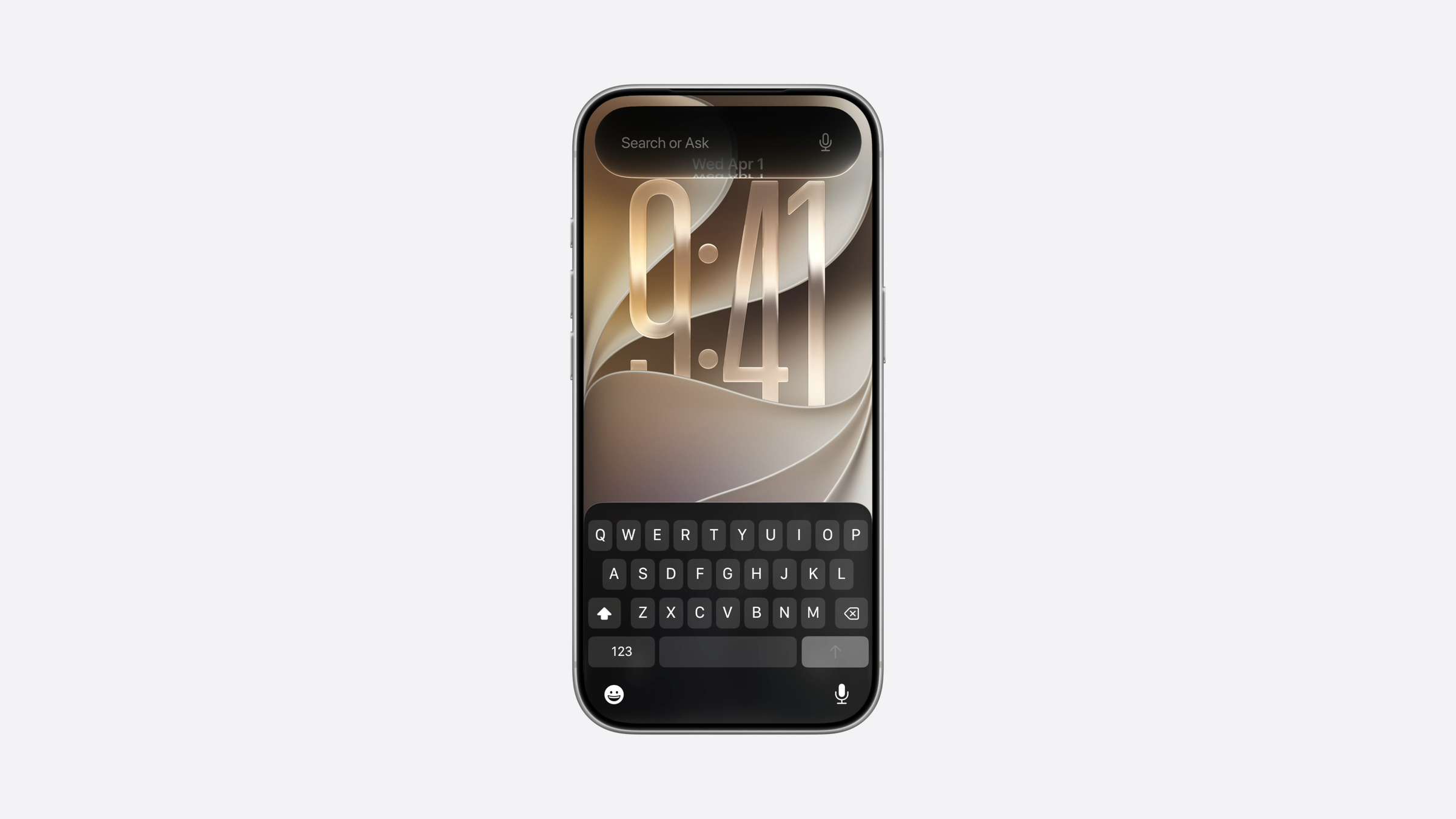
Siri AI has been running on iPhones in the US and even Switzerland for three weeks – but the iPhone remains excluded from the EU. Apple hasn't announced a date for its rollout. A recent assessment offers little hope for a quick solution: five months is considered the best-case scenario.
This assessment comes from Mark Gurman, who commented on the situation in the EU in his Bloomberg newsletter "Power On" on October 4th. According to him, a delay of around five months after the launch of iOS 27 would be the best-case scenario; he considers a longer wait possible.
Ironically, the very feature that iOS 27 revolves around is missing on the devices where most users interact with Siri. An overview of all Siri AI features in iOS 27 shows what the new assistant can do.
Key Facts at a Glance
- Gurman cites around five months from the launch of iOS 27 as the best possible timeframe for Siri AI on EU iPhones and iPads.
- He considers an even longer waiting period possible.
- Gurman suspects that Apple is also holding back Siri AI in order to put pressure on the EU Commission through disgruntled customers.
- According to Apple Intelligence, in 2024/25 there were 154 days between the US launch and the EU launch of the iPhone.
- Siri AI is already available on Mac and in Switzerland.
Five months is the best-case scenario
Gurman explicitly describes the roughly five-month timeframe as the most favorable scenario. According to him, the actual duration depends on how the negotiations between Apple and the European Commission regarding the interpretation of the Digital Markets Act progress. Talks between Tim Cook and the EU concerning Siri AI have been ongoing since the summer.
Another interpretation is that Apple is also withholding the upgrade to put pressure on the Commission. The expectation is that disappointed customers will push for a change of course in Brussels.
Gurman is among the most reliable sources for Apple's internal plans and timelines. However, here he offers an assessment of the negotiation status, not a specific date from Apple's schedule. The pressure theory is also his interpretation, not a documented fact.
The comparison with Apple Intelligence
Gurman compares the situation to the delayed EU launch of Apple Intelligence. The figures fit remarkably well:
| US launch | EU launch on the iPhone | Distance | |
|---|---|---|---|
| Apple Intelligence | October 28, 2024 (iOS 18.1) | March 31, 2025 (iOS 18.4) | 154 days |
| Siri AI | September 14, 2026 (iOS 27) | open | at best around five months |
Apple Intelligence released iOS 18.4 for iPhones and iPads in the EU at that time, and simultaneously in German. The gap of just over five months thus corresponds exactly to the value that Gurman now considers the best-case scenario.
Where Siri AI is already running in this country
Siri AI is blocked in the EU on iOS and iPadOS, both platforms covered by the DMA. In its announcement regarding the EU delay, Apple explicitly mentions macOS 27 and visionOS 27 as systems on which EU users can use Siri AI. The feature is missing on the Apple Watch because, under watchOS 27, it requires a paired iPhone with Siri AI.
The situation is different in Switzerland, which is not part of the EU. An Apple spokesperson confirmed back in June that the restriction only applies to the 27 EU member states. Swiss users can use Siri AI on their iPhones, but initially only in English.
Why five months is an ambitious target
I consider the five-month timeframe to be very optimistic, and that's due to Apple's own proposal. Apple wanted to launch Siri AI in the EU and then gradually roll out the Trusted System Agent – the interface through which other assistants would access the same functions – over 18 months. The Commission rejected this and publicly contradicted Apple's justification for the delay.
A Commission spokesperson has also clarified that there will be no exceptions to the DMA. For a launch within this timeframe, one side would have to make significant concessions: Apple with faster opening to third-party assistants, or the Commission with a transition period, which it has so far ruled out. The reason why the interoperability obligations are specifically tied to iPhones and iPads is related to why the DMA halts Siri AI on iPhones and iPads.
I expect that there won't be a release date for the iPhone until we get a signal from Brussels – and that it will likely take longer than five months until then. Anyone wanting to try out Siri AI until then will have to use a Mac.
In your opinion, who needs to take action first: Apple by opening up to other assistants more quickly, or the Commission by giving them more time for implementation? Share your prediction in the comments.