Headphones, watches, rings, glasses: The market for wearable technology is expected to generate more revenue in the next seven years than ever before. What's remarkable is not so much the total amount, but the ratio – revenue is growing twice as fast as the number of units sold. People aren't buying more devices, but rather more expensive ones.
Forecasts spanning seven years should be interpreted with caution, but this one describes a shift that is already evident in Apple's figures. The market research firm Counterpoint Research predicts that the global market for consumer wearables will generate cumulative sales exceeding one trillion US dollars between 2026 and 2032. More interesting than the total figure, however, is which device categories will contribute to this amount – and in which categories Apple is not yet represented.
Key Facts at a Glance
- Global wearables sales are expected to reach over one trillion US dollars cumulatively between 2026 and 2032.
- Sales are growing at twelve percent annually, twice as fast as unit sales at six percent.
- Smartwatches and wireless earbuds remain the largest categories, together accounting for $558 billion.
- Smart glasses are expected to account for around one fifth of sales by 2032 and are among the fastest growing sectors.
- Apple leads in the two largest categories – the company is not yet on the market for smart glasses.
More expensive instead of more
The most telling figure in the report is not a revenue figure, but a ratio. Twelve percent annual revenue growth contrasts with six percent in units shipped. The market is therefore growing primarily because buyers are opting for higher-quality devices, not because more people are buying wearables.
| Key figure | Report details |
|---|---|
| Cumulative revenue 2026–2032 | over 1 trillion US dollars |
| Smartwatches and earphones together | 558 billion US dollars |
| Annual revenue growth | 12 percent |
| Annual unit growth | 6 percent |
| Share of smart glasses in 2032 | about one fifth |
The report cites continuous health monitoring, integrated mobile connectivity, improved sensors, and on-device AI as key drivers. Counterpoint, however, sees growth in wireless earbuds slowing due to increasingly similar features and intensified price competition.
From fitness to preventative care
The report describes the real shift elsewhere: the intended use is changing from counting physical activity to preventative care – to devices that report a problem before the wearer even notices it. Anshika Jain, Principal Analyst responsible for this area, sees this as the reason why an accessory is becoming a device that is regularly replaced.
This ties in with a comment from Research Director Mohit Agrawal regarding the technology: For a device that sits directly on the skin and has to last a day, computing power isn't the decisive factor. Heat generation and battery life are. Whoever solves these limitations better will prevail – an argument that aligns with Apple's own chip development.
Two categories were listed, one was missed
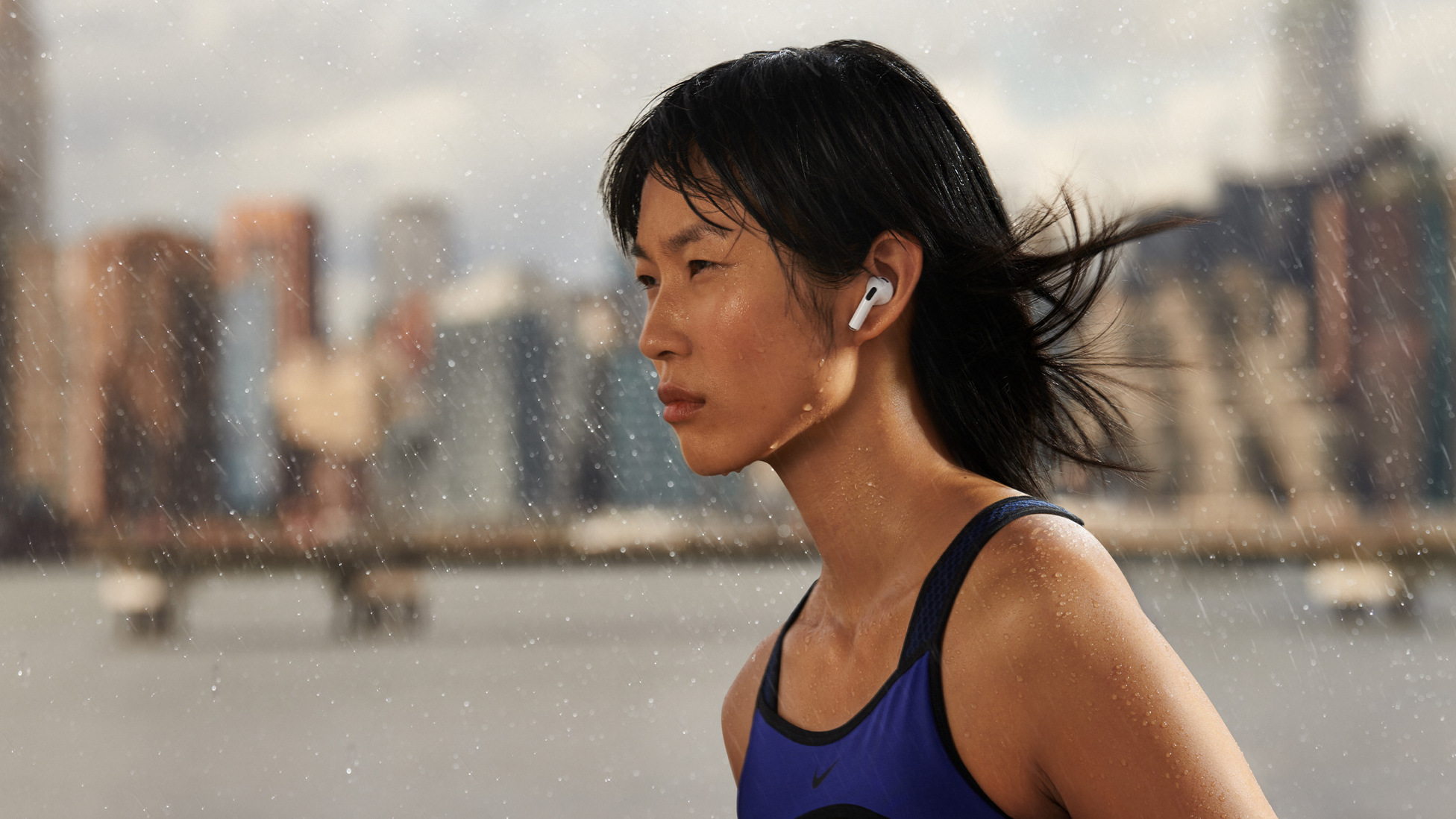
Apple's performance is a mixed bag. The company is the market leader in its two highest-grossing product categories, with AirPods and Apple Watch. Last quarter, the Wearables, Home & Accessories segment generated $7.88 billion in revenue, a 6.5 percent increase compared to the $7.40 billion in the same quarter last year. Apple saw record-high Apple Watch upgrades in the June quarter, with more than half of new buyers purchasing the watch for the first time.
The situation is different for smart glasses. This category is expected to account for roughly one-fifth of total wearables revenue by 2032 – and Apple currently sells nothing in this segment. Based on current expectations for Apple Glasses, the market launch is not expected until the end of 2027 at the earliest. Until then, growth will be concentrated among competitors who are already delivering.
Apple has also not yet addressed the smaller, rapidly growing categories. There are reports of a ring and pendants with sensors, but no product; a recent discovery of code in iOS 27 hinted at a wearable with cameras.
The competition is shifting away from the data sheet
The report's conclusion is the most favorable news for Apple: the advantage is shifting from individual device features to control over the ecosystem. Companies that manage software, data privacy, developer offerings, and partnerships together retain customers longer.
This pretty much explains why AirPods and Apple Watch maintain their position despite technically comparable competition. At the same time, it's not a free pass. A new category of smart glasses is emerging, and ecosystem integration only becomes relevant once a device actually exists. Our expectation: Apple's lag in the glasses market won't be the end of the game, because the category will change its form several times before 2032 – but it will still be costly, because competitors will shape user habits during this period.
For you as a buyer, this means one thing above all: The exciting devices of the next few years will not be those that count how much you move, but those that notice something before you do.
Do you trust a device on your wrist to give you a health warning before you even notice anything yourself – or is that too much responsibility for a sensor? Let us know in the comments where you draw the line between useful and intrusive.
- Bad Monkey: Season 2 starts on December 2nd
- Apple Smart Home Hub: Code shows the user interface
- tvOS 27: Code hints at Siri AI for Apple TV 4K