This article may contain affiliate links. Learn more on our Partner Program page.
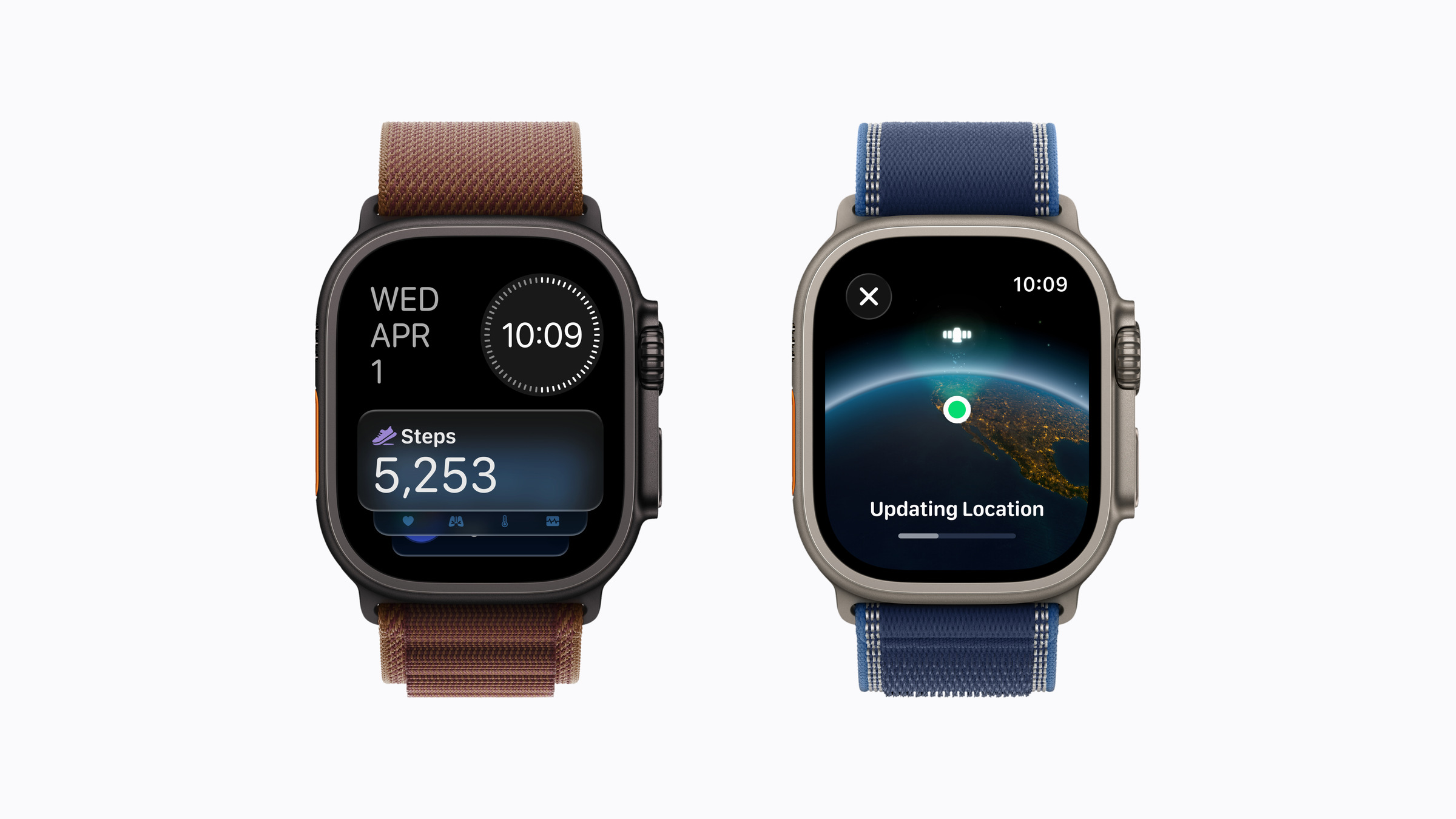
Same case, same display, same price: From the outside, the Apple Watch Ultra 4 is almost indistinguishable from its predecessor. The differences lie inside – in the chip, the sensors, and the battery life, which has increased by eight hours.
Apple unveiled the Apple Watch Ultra 4 on September 9th, and it will be available in stores starting September 18th. In Germany, it starts at €899, exactly the same price as the Ultra 3 a year ago. Those considering upgrading are therefore not deciding on a price premium, but rather on the value of the proceeds from selling their old device.
This comparison contrasts the two generations based on their data sheets – those of the Apple Watch Ultra 4 and the Apple Watch Ultra 3. The results are similar for the smaller series, where the differences between the Series 12 and Series 11 also lie almost entirely within the casing.
Key Facts at a Glance
- The casing, dimensions, display and storage space are identical between the Ultra 4 and Ultra 3.
- The S11 chip replaces the S10, and the RAM doubles from 2 to 4 GB.
- The battery life increases from 42 to 50 hours, and in power saving mode from 72 to 84 hours.
- New features include the health detection system, the daily form score, and more frequent measurements of heart rate and HRV.
- The starting price remains at 899 euros, and the satellite functions remain free for two years.
What has remained the same
The case still measures 49 × 44 × 12 millimeters and is made of Grade 5 titanium in natural or black. The display remains unchanged at 422 × 514 pixels with 326 ppi on a 1,245 mm² display area, with a peak brightness of 3,000 nits, a minimum brightness of 1 nit, and a flat sapphire crystal.
Much else remains unchanged: 64 GB storage space, Bluetooth 5.3, WLAN 4, second generation ultra-wideband chip, diving suitability up to 40 meters according to EN13319, water protection up to 100 meters according to ISO 22810:2010, IP6X and the tests according to MIL-STD 810H.
So, anyone who's been waiting for a new format, a larger display, or more storage space has no reason to switch. The wristband still fits wrists with a circumference of 130 to 210 millimeters – existing bands can still be used.
The S11 chip and double the RAM
The Ultra 4 uses the S11 chip, which Apple considers its most powerful wearable chip. The architecture remains familiar: a 64-bit dual-core processor and a quad-core Neural Engine. The Ultra 3 uses the S10 with the same number of cores.
In addition, there's a feature not listed in any datasheet: the Ultra 4 has 4 GB of RAM instead of 2 GB. This memory supports the audio features that Apple has announced for later this year: sound recognition for sirens, alarms, or doorbells, automatic music recognition via Shazam, and Live Rewind and Siri Recap for call transcripts and summaries.
In practical terms, this means that if you order now, you won't receive these features immediately. Siri AI launches with watchOS 27 as a beta in English, followed by French, Japanese, Korean, Portuguese, and Spanish in October. German is not on this list.
Sensor technology: the biggest hardware upgrade
The most significant leap is in health tracking. Apple groups the Ultra 4's sensors under the Health Tracking System: a third-generation electrical heart sensor, a always-on optical heart sensor, blood oxygen sensors, and a temperature sensor. The Ultra 3 features a third-generation optical sensor, while the electrical sensor has no generation designation.
The new sensor technology offers three functions that the Ultra 3 does not: background heart rate measurement every five seconds, HRV during recovery as a separate value, and the daily form score from 0 to 10, which combines activity, training load, vital signs, and sleep index to derive a recommendation – Recover, Conserve energy, Ready, or Go.
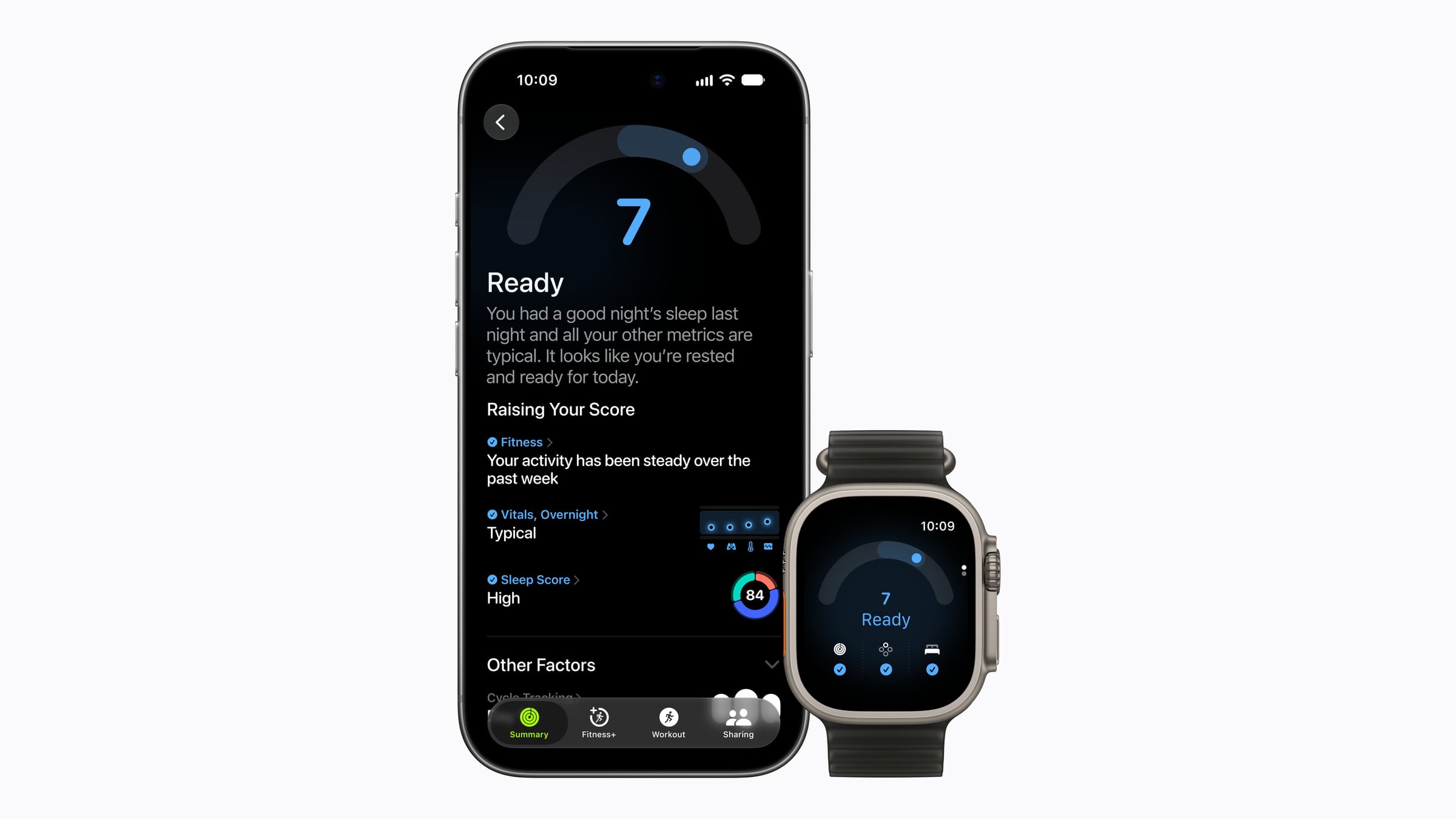
Everything else from the health sector – ECG, blood oxygen, sleep apnea and high blood pressure notifications, sleep index, cycle log – is available on both models.
Running time: eight hours more
| Info | Ultra 4 | Ultra 3 |
|---|---|---|
| Normal use | up to 50 hours. | up to 42 hours. |
| Power saving mode | up to 84 hours. | up to 72 hours. |
| Outdoor training | up to 18 hours. | – |
| Extended training | up to 25 hours. | – |
| Maximum extended training | up to 45 hours. | – |
| 15 minutes charging | Up to 18 hours of use | up to 12 hours of use |
| 5 minutes charging | Sleep tracking up to 10 hours | Sleep tracking up to 8 hours |
| Weight (Natural/Black) | 63.0 / 63.1 g | 61.6 / 61.8 g |
The eight additional hours of battery life under normal use represent an increase of approximately 19 percent. The Ultra 3 data sheet does not provide figures for the training modes, so a direct comparison is not possible.
More noticeable in everyday use than the pure runtime is likely to be the faster charging: a quarter of an hour on the charger provides 18 hours instead of 12. This gain comes at the cost of 1.4 grams of additional weight.
Prices and bracelet options
Both generations start at €899, always with cellular connectivity – there is no GPS-only version in the Ultra series. Apple also differentiates the price of the Ultra 4 based on the wristband.
| Execution | Price |
|---|---|
| Alpine Loop, Trail Loop or Ocean Bracelet | 899 euros |
| Milanese bracelet | 999 euros |
| Hermès with Scub'H Diving or En Mer | 1,699 euros |
| Hermès with Grand H Titane | 3,499 euros |
That the price remains unchanged this year is no small feat: memory is the component that drives up device prices. With the watch, Apple doubled the RAM and still kept the price the same.
The satellite function remains unchanged. Emergency SOS and "Where is?" calls via satellite are available after activation. two years free, Specifically, this applies to Ultra 3 and newer models. Those switching from Ultra 3 will not lose anything.
For whom the switch makes sense
Upgrading from the Ultra 3 to the Ultra 4 isn't a mandatory upgrade. The watch looks the same, has the same brightness, and the same battery life. What remains are eight hours of battery life, faster charging, and a health tracking system that provides significantly more detailed information. For those who actually use the daily fitness metrics and recovery data, this is a compelling feature – for everyone else, it's simply a convenience that a year's wait doesn't diminish.
The calculation is much clearer for the Ultra 2 or older models, and the same applies to newcomers: For the same price, you get newer sensors, double the RAM, and longer battery life. Anyone who is already undecided between generations should calculate the residual value of their old watch against the new one's price – if the starting price is identical, this difference alone should be the deciding factor.
The bet on the future lies in the RAM. It's reserved for features that will arrive later this year and initially run in English. Our expectation: This will allow the Ultra 4 to remain up-to-date with the latest features for longer than the Ultra 3, whose 2 GB of RAM is the limiting factor for the same audio functions.
All Ultra models are only available with cellular connectivity. What this means in everyday use and when the additional connection is worthwhile is explained in the comparison between the Apple Watch with GPS and with Cellular.
Are you switching because of the eight extra hours of battery life – or are you waiting until the new audio features are also available in German? Let us know in the comments where you draw the line.
Frequently Asked Questions: Apple Watch Ultra 4 vs. Ultra 3
Those who want to use the recovery data and daily performance indicator now have a real reason to do so with the new health monitoring system. For everyone else, eight more hours of battery life and faster charging remain – nice, but not essential after just one year.
Yes. Both models have a 49mm case with the same attachment system and are designed for wrists from 130 to 210mm. The Alpine Loop, Trail Loop, Ocean bracelet, and Milanese strap remain compatible.
No. The height, width, and depth are identical at 49 × 44 × 12 millimeters, and the titanium case is still available in natural and black. The display has the same 422 × 514 pixels at 3,000 nits behind flat sapphire glass. The Ultra 4 weighs 1.4 grams more.
Yes. Apple will release watchOS 27 on September 14th for the Apple Watch Series 9 and later, the SE 3, and the Ultra 2 and later. The Ultra 3 will therefore remain on the current software version, regardless of the chip change.
Apple offers a daily fitness tracker on the Apple Watch Series 12 and the Apple Watch Ultra 4, attributing its value to the new health detection system and the S11 chip. The Ultra 3 uses the S10 chip and the sensors of the previous generation.
No. The entire Ultra series is only available with mobile connectivity; this was also the case with the Ultra 3. Emergency SOS and "Where is?" via satellite are free for two years after activation, for the Ultra 3 and newer models.
Not at launch. Siri AI will initially run as a beta in English with watchOS 27; French, Japanese, Korean, Portuguese, and Spanish will be added in October. Apple has announced that the audio features, including noise recognition and conversation summaries, will be released later this year.