
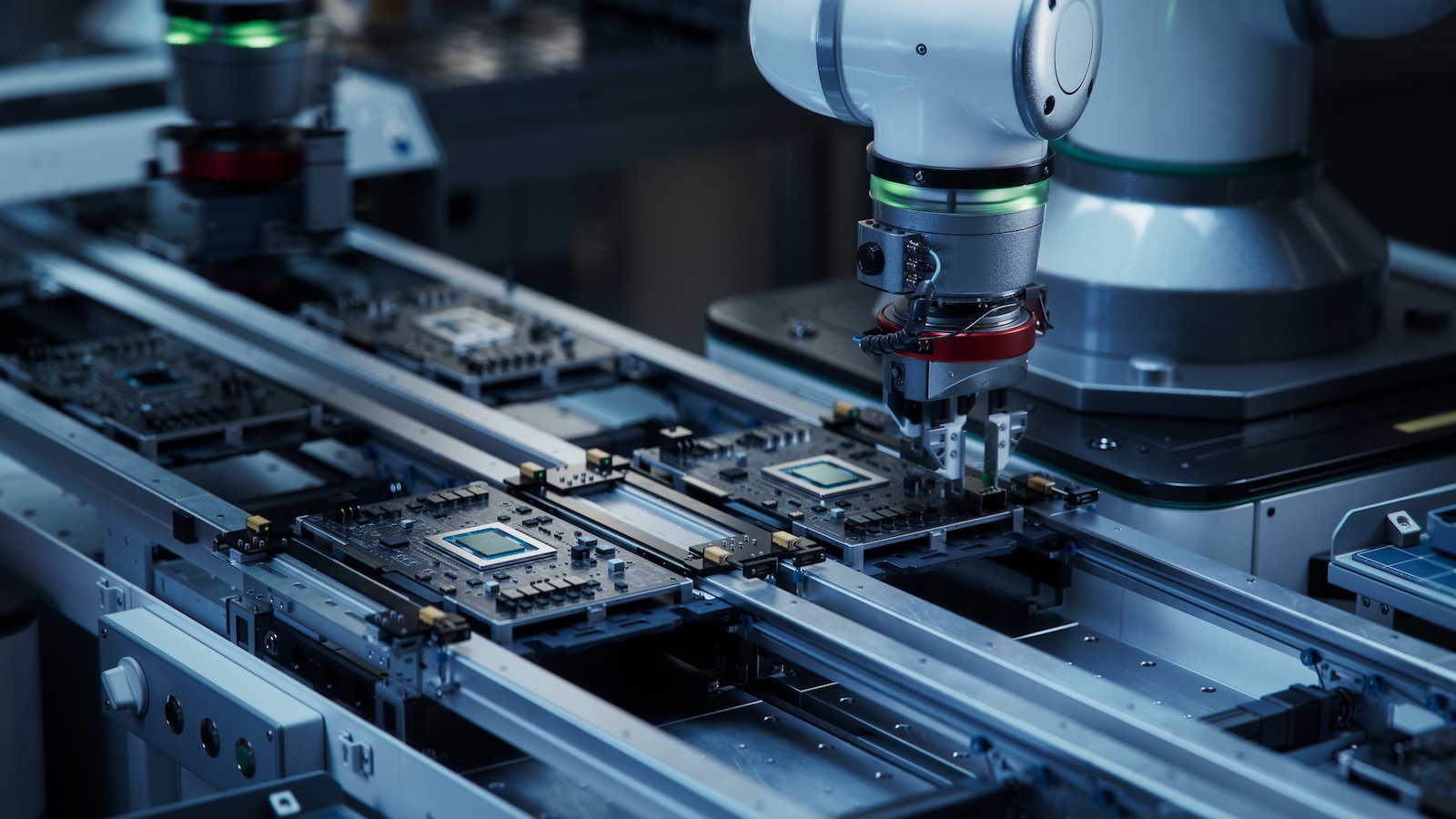
Apple is facing a new wave of cost increases in chip production. According to a report from Asia, its main supplier, the Taiwanese semiconductor manufacturer TSMC, has begun informing key customers like Apple about impending price hikes. These increases primarily affect the advanced sub-5-nanometer manufacturing processes on which Apple's current and future chips are based. This confirms that production costs for key components such as the A and M processors will rise significantly.
TSMC has been Apple's exclusive manufacturing partner for modern processors for years. The A-series chips in iPhones and the M-series in Macs are manufactured exclusively by TSMC. With each generation, Apple has benefited from smaller feature sizes – most recently with the 3-nanometer process used in the A17 Pro and M3 chips. But this technological leadership comes at a price. TSMC has now informed its largest customers about rising production costs, which could directly impact Apple's devices and their profit margins.
Price increases at TSMC directly affect Apple.
According to a report by informant "yeux1122," who summarized the news on the Korean platform Naver, TSMC is planning price increases of approximately eight to ten percent for chips manufactured using sub-5-nanometer processes. This affects all current and upcoming Apple processors, including the A16, A17, A18, A19, M3, M4, and M5, as well as subsequent generations. The new prices are expected to take effect next year.
The report follows up on earlier reports from the China Times, which in October stated that Apple's upcoming A20 chip could be significantly more expensive. The A20 is intended for next year's iPhone models and is expected to be the first widely adopted chip with a 2-nanometer manufacturing process. It is expected not only to boost performance but also improve energy efficiency – and simultaneously form the basis for the upcoming M6 chips in Macs.
The cost of progress
The transition to the 2-nanometer node involves significant investments for TSMC. According to current information, production costs for 2-nanometer nodes are expected to be around 50 percent higher than those for the previous 3-nanometer nodes. TSMC has apparently justified this increase with exceptionally high capital expenditures and the decision to forgo rebate programs. Furthermore, according to insiders, the profitability of the new production line is still in an early, but acceptable, phase.
Suppliers expect the unit price for high-end mobile chips based on the 2-nanometer process to reach approximately $280 after mass production begins. This would make the chip the most expensive single component in an iPhone. By comparison, the A18 chip cost around $45, according to a DigiTimes report, with total hardware costs of approximately $416 for a model sold at a retail price of $799. The chip thus accounted for roughly ten percent of the material costs and five to six percent of the retail price.
Impact on Apple's iPhone strategy
Should the reported prices prove accurate, it would hardly make economic sense for Apple to use the new 2-nanometer chips in all iPhone models. Industry analyst Ming-Chi Kuo had already warned in September that Apple might only introduce the new chip generation in the more expensive models. According to him, in 2026 only the iPhone 18 Pro and the iPhone 18 Pro Max could be equipped with the new A20 processor, while the standard models would continue to be based on 3-nanometer technology.
This approach would allow Apple to better distribute the higher costs while simultaneously securing its technological leadership in the premium models. A similar approach was taken with the A17 Pro, which was used exclusively in the Pro models of the iPhone 15.
A balancing act between innovation and profitability
TSMC's price increases present Apple with a difficult decision. On the one hand, the company wants to continue offering the most powerful and efficient chips on the market. On the other hand, higher production costs mean pressure on profit margins or the need to further raise sales prices.
TSMC remains indispensable for Apple. Alternative manufacturers currently offer no comparable manufacturing technology. This dependency is therefore stronger than ever. The move to the 2-nanometer era puts Apple back at the forefront technologically, but economically into a phase where every innovation becomes noticeably more expensive.
Apple between innovation and cost control
The announced price increases at TSMC illustrate how closely technological development and economic reality are now intertwined. Apple faces the challenge of offsetting rising production costs with a clear product strategy without jeopardizing the appeal of its iPhone models.
The move to 2 nanometers marks the next major leap in chip manufacturing – and simultaneously the beginning of a new cost structure. For Apple, this means that innovation will henceforth be determined not only by technological feasibility, but also by financial viability. (Image: Shutterstock / IM Imagery)
- iPhone Air 2026: Will the ultra-thin model come with a dual camera?
- Apple plans billion-dollar deal with Google for new Siri AI
- iPhone 18 Pro: Three colors tested – only one remains
- M5 Ultra chip: Apple's answer to the high-end processor question
- MacBook 2026: Apple opens up to price-conscious buyers
- Apple M5 Macs: These models are planned for 2026
- iOS 27 brings major updates for Apple Intelligence
- OLED MacBook Air: New display technology for the Air model
- Apple 2026: A year full of innovations, risks and opportunities
- Apple uses Google Gemini technology for Siri.
- iOS 26.2: Apple launches the beta as early as Tuesday
- New Apple TV and HomePod mini: Launch still in November?
- iPhone 18 Pro: New colors already known according to leaker
- iPhone Fold coming in 2026 – Apple begins sourcing materials
- iPad mini 2026: Apple plans waterproof design and OLED
- Apple plans major OLED offensive for iPad and MacBook
- iPhone 2027: Haptic buttons instead of mechanics
- iPhone 18: Apple plans simpler design for camera button
- iPhone 17e: Apple brings Dynamic Island to the entry-level model
- Apple will soon add four Pro apps to the iPad
- iPhone 2027 expected with new camera sensor
- iPhone 18 Pro: Apple plans camera with variable aperture