
This article may contain affiliate links. Learn more on our Partner Program page.
As of today, John Ternus is at the helm of Apple. The company's leadership lists him as CEO, Tim Cook now only appears on the board of directors – and a second change on the board has so far gone largely unnoticed.
September 1st had been set since April: On that day, Ternus was to take over the leadership, with Cook moving to the board of directors as executive chairman. The transition has now been completed, and it can be seen on Apple's leadership page, which has reflected the change since this morning. Cook's fifteen years at the helm ended on Monday – his legacy ranges from the Apple Watch to AirPods to Apple Silicon. His successor, with the company since 2001, has risen from product design to the top of the corporation in a quarter of a century.
Key Facts at a Glance
- John Ternus has been Apple's CEO since September 1st and is also a member of the board of directors.
- Tim Cook will lead the committee as Executive Chairman and will remain the contact person for governments and authorities.
- Arthur Levinson is stepping down as chairman after fifteen years and will become Lead Independent Director.
- The operational management team remains unchanged; hardware development has been handled by Johny Srouji since April.
- Ternus' first major appearance as CEO will follow in eight days at the keynote address on September 9th.
What the leadership page now shows
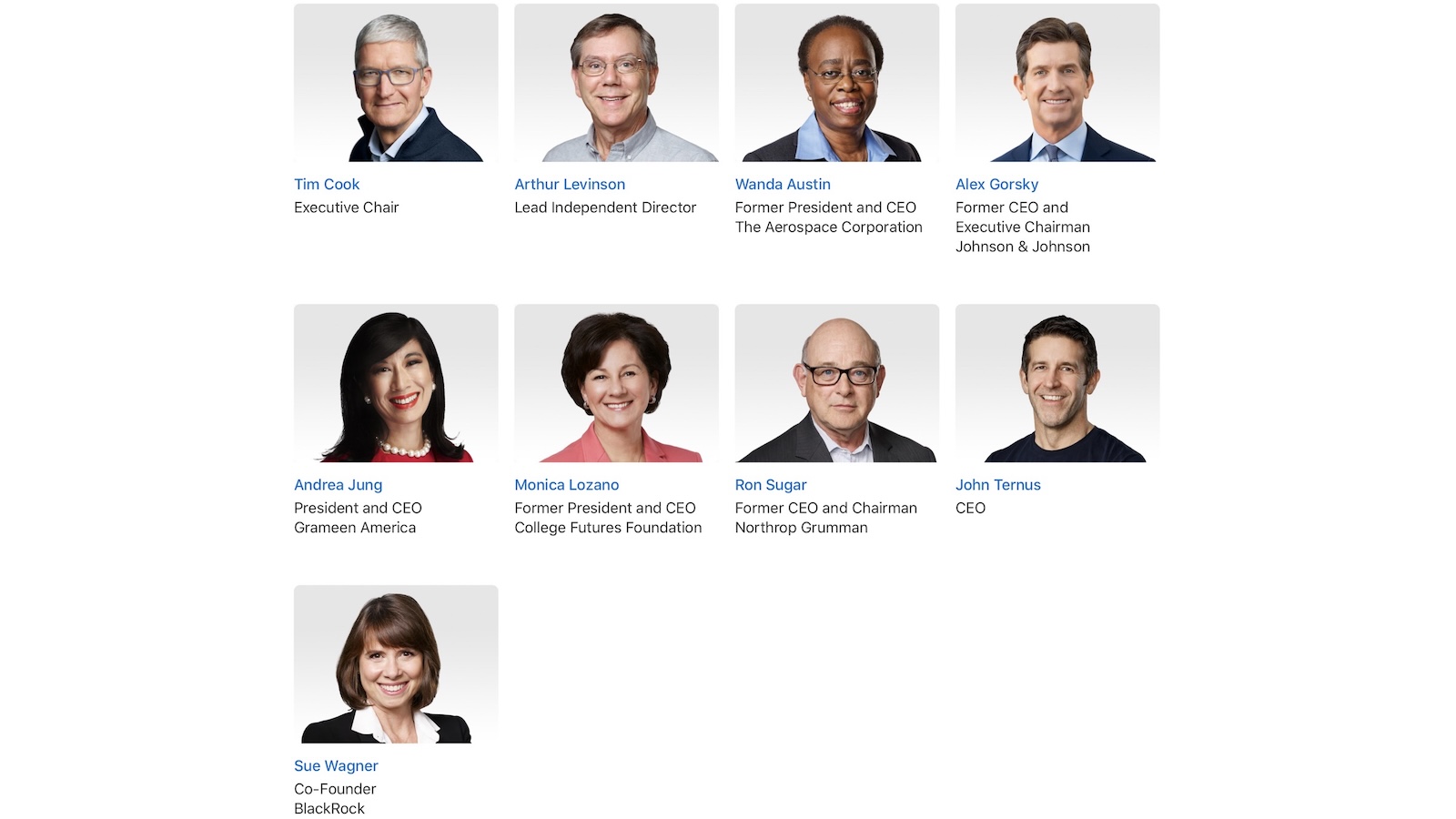
At the very top of the Executive Profiles is John Ternus, followed simply by the title CEO. Tim Cook no longer appears on this list – he is now listed in the section on the Board of Directors, the company's governing body, as Executive Chairman. Ternus himself is found in both sections because the position of CEO at Apple includes a seat on the board.
The board of directors thus consists of nine people: in addition to Cook, Levinson and Ternus, these are Wanda Austin, Alex Gorsky, Andrea Jung, Monica Lozano, Ron Sugar and Sue Wagner.
Levinson is stepping down as chairman after fifteen years
The second personnel change of the day concerns the board itself. Arthur Levinson has served as non-executive chairman of the board since 2011, essentially for Cook's entire tenure. This role ends today: Levinson will become Lead Independent Director, while Cook will assume the chairmanship. Apple had already announced this in its April press release, but it was largely overshadowed by the CEO change.
| Person | Roll until August 31st | Role from September 1st |
|---|---|---|
| John Ternus | Senior Vice President Hardware Engineering (until April) | CEO and member of the board of directors |
| Tim Cook | CEO and member of the board of directors | Executive Chairman |
| Arthur Levinson | Chairman of the Board of Directors | Lead Independent Director |
The change is more than just a title change. Unlike Levinson's previous role, an Executive Chairman is not an independent supervisory body, but rather a member of the management team. The Lead Independent Director is the usual equivalent: this role represents the voices of independent members to a chairman who is a company employee.
The team with which Ternus starts
At the operational level, nothing will change on the first day. Eddy Cue will continue to be responsible for Services and Health, Craig Federighi for Software Development, Greg Joswiak for Global Marketing, Sabih Khan as Chief Operating Officer for Day-to-Day Operations, Kevan Parekh for Finance, and Deirdre O'Brien for Sales and Human Resources.
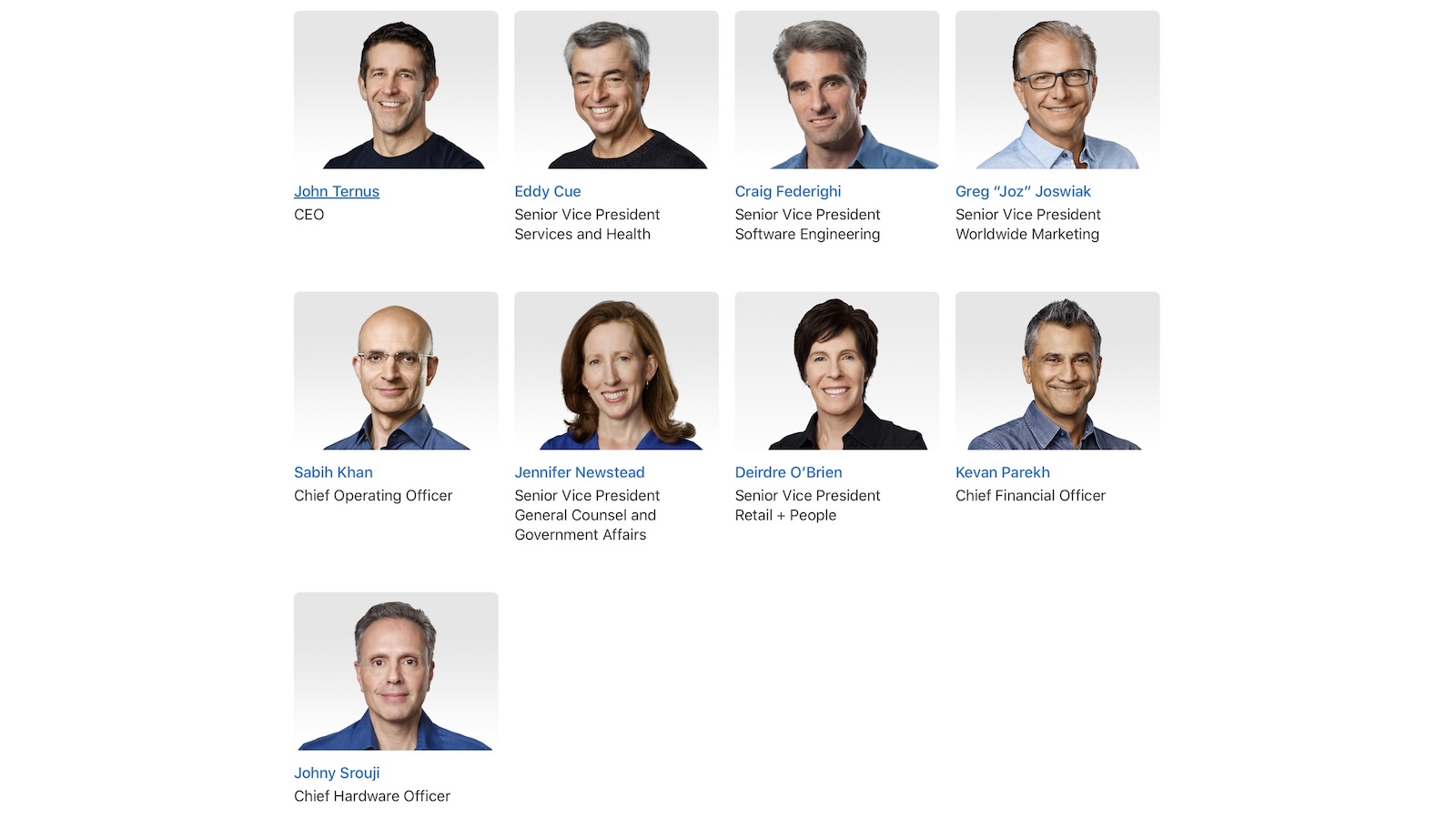
Apple already reorganized Ternus' former area of responsibility in April: Hardware development went to Johny Srouji, who serves as Chief Hardware Officer Now, chip and device development are combined, supported by Tom Marieb in day-to-day operations. The rise to the top therefore leaves no vulnerabilities. However, something else has recently changed: Phil Schiller gave up App Store and product events and is now only listed as an Apple Fellow on the management page.
Why Cook remains the contact for Europe
Apple has clearly defined Cook's new role from the outset: He is to support the company on specific issues, explicitly in discussions with political decision-makers worldwide. This is precisely where the practical difference lies for the German-speaking world. Cook has visibly fulfilled this role in recent months, for example in discussions with the EU Commission about Siri AI and in exchanges with the Bavarian Minister-President about Munich as a business location.
This is not a minor matter, as the regulatory front remains open. The revised App Store terms and conditions for the European Union take effect in October, and ongoing legal proceedings continue to tie up resources. Ternus is acquiring a company whose European business has been subject to regulations for years – but for the time being, its predecessor will continue to lead the negotiations.
The first real test is in eight days
On September 9th, Apple will unveil the new iPhones . It will be Ternus's first keynote, and it will offer little insight into his strategy: products in this line were finalized years before his handover, and he was involved in their development anyway. The fact that little is likely to change in the short term is due to these same long lead times. What will be more interesting is whether he opens the event himself – a role that Cook filled for more than a decade and which at Apple traditionally falls to the CEO.
A change that first appears on a subpage of apple.com, rather than on a stage, is precisely the quiet transition the board of directors has been preparing since April. Ternus can only truly be judged by the devices designed after he takes office – and those won't be in stores until 2028 at the earliest.



What would you judge the new CEO on after one year: the products, the handling of the AI project, or how Apple presents itself in Brussels in the future?