

This article may contain affiliate links. Learn more on our Partner Program page.
Apple filed a new lawsuit on Monday, basing it on the first forensic analysis of a laptop used by a former employee after joining OpenAI. Apple argues that the data proves company knowledge not only leaked but has already been incorporated into the employee's work at his new employer.
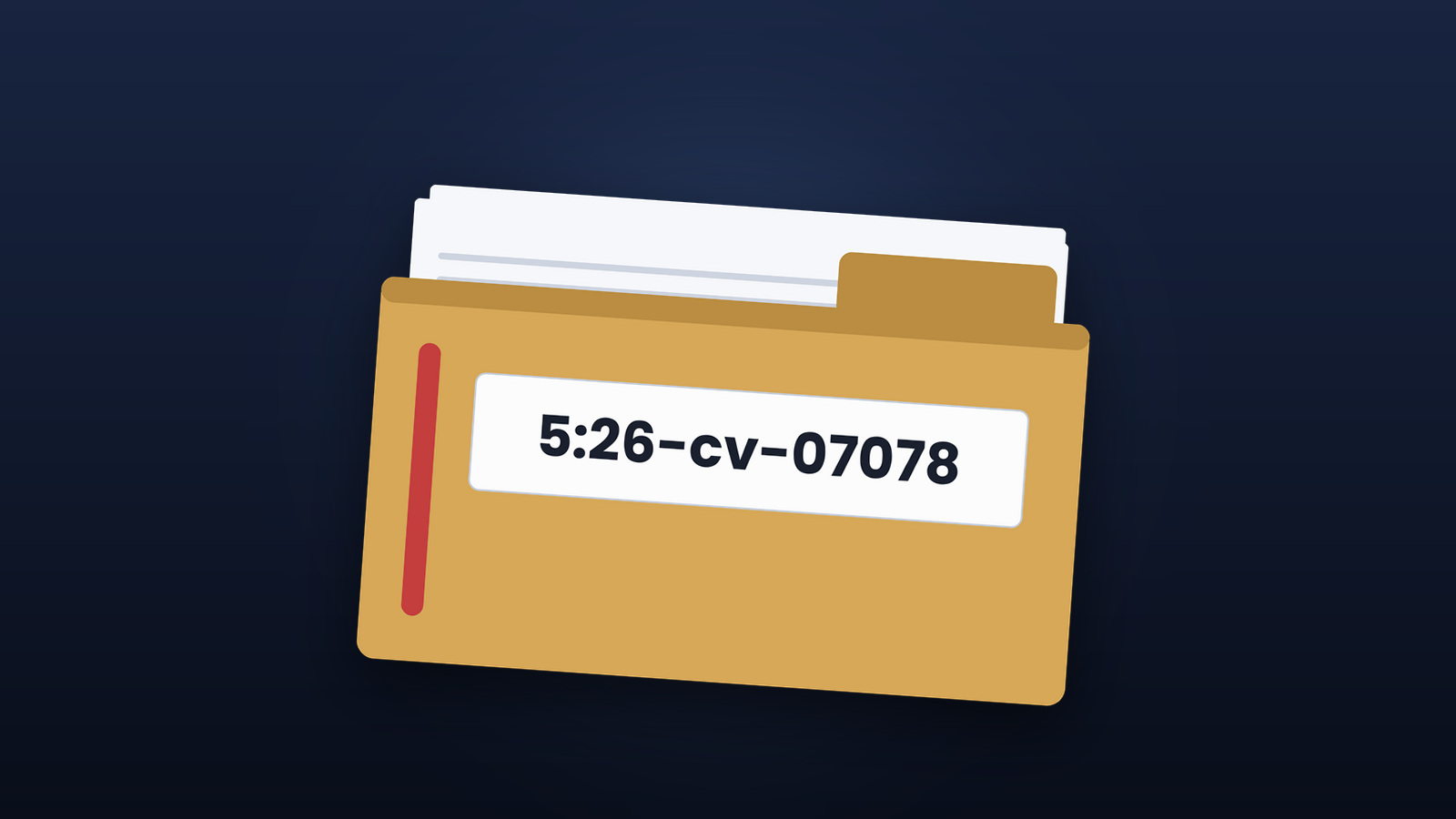
This matter is part of the legal proceedings Apple initiated in July for alleged breach of trade secrets. The new submission stems from the case Apple Inc. v. Liu et al., case number 5:26-cv-07078, document 94, filed in the Federal District Court for the Northern District of California. All events described therein are Apple's account; the court has not yet ruled on them, and the defendants are presumed innocent until proven guilty.
Key Facts at a Glance
- Apple has filed a new submission and continues to push for an accelerated evidentiary hearing.
- The basis is the first forensic evaluation of a MacBook that was handed over by the defendant's lawyers.
- Apple sees this as proof that a confidential circuit diagram was used at the new employer.
- Another charge is providing instructions for the destruction of evidence.
- The hearing regarding the injunction is scheduled for October 1st.
What the evaluation is said to have revealed
According to Apple, the initial evaluation leads to four points. First, the defendant allegedly not only downloaded a confidential circuit diagram but also used it in his work for his new employer. Second, the access to Apple's cloud storage by a third-party provider did not go unnoticed but was known to him and other individuals at OpenAI.
Third, according to Apple's internal investigation, he allegedly sent instructions for destroying evidence to a colleague, who agreed to carry them out. Fourth, he allegedly used a tool that bears the same name as an internal Apple development application.
Specifically, Apple cites a simulation from March that was allegedly run using the circuit diagram in the analysis software LTspice. In messages from the same period, the defendant described how his AI agent had learned to operate LTspice and evaluate the results.
How the dispute has progressed so far
The proceedings have been ongoing for almost two months and have taken several turns during this time.
| Date | Procedure step |
|---|---|
| 10.07.2026 | Apple files lawsuit against two former employees, OpenAI and io Products |
| 04.08.2026 | OpenAI counters with emails and chat logs and requests a rejection. |
| 26.08.2026 | Apple is pushing for an accelerated evidentiary hearing. |
| 27.08.2026 | OpenAI demands final rejection |
| 31.08.2026 | Apple presents the forensic findings from the notebook |
| 01.10.2026 | Hearing regarding the injunction in San José, 6:00 PM CEST |
One noteworthy detail from the submission is that the opposing party declined to have the device itself examined. Apple describes the findings as shocking and cites them as an argument for not searching for materials at random.
Why Apple is targeting the AI model
The most legally interesting point in the submission concerns not the notebook itself, but the technology behind it. Apple argues that trade secrets fed into an AI agent or model, and learned from by it, can create irreversible and ongoing use.
This shifts the focus of the dispute. In classic cases of confidentiality breaches, the aim is to retrieve files and prohibit their use. However, when knowledge has been incorporated into model weights, this approach no longer works – a model cannot be selectively forgotten. This is precisely why Apple is so hurried: the longer the evidentiary hearing takes, the less can be reversed.
For you as an industry observer, this is the real point of this news. Should a court follow this line of reasoning, the consequences would extend far beyond this specific case – to every company whose employees switch to an AI provider, and to the question of what a claim for removal against a trained model can actually mean.
Things will get serious in October
It remains to be seen whether the court will allow the expedited taking of evidence. The court in San Jose will hear the preliminary injunction case on October 1st, and Apple must provide more than just an initial analysis by that date. The opposing side has so far rejected all allegations and requested that the lawsuit be dismissed.




Do you consider Apple's argument valid that company knowledge cannot be retrieved from a trained AI model – or is this a legal construct primarily intended to increase time pressure?