This article may contain affiliate links. Learn more on our Partner Program page.
Apple is unwilling to wait for the legal proceedings against OpenAI to proceed as usual. The company is demanding answers within 30 days and a company hearing within 50 days, arguing that the opposing side is developing its own hardware in the meantime. A written submission filed on August 25th reveals the vast gap between the two sides regarding the pace of the proceedings.
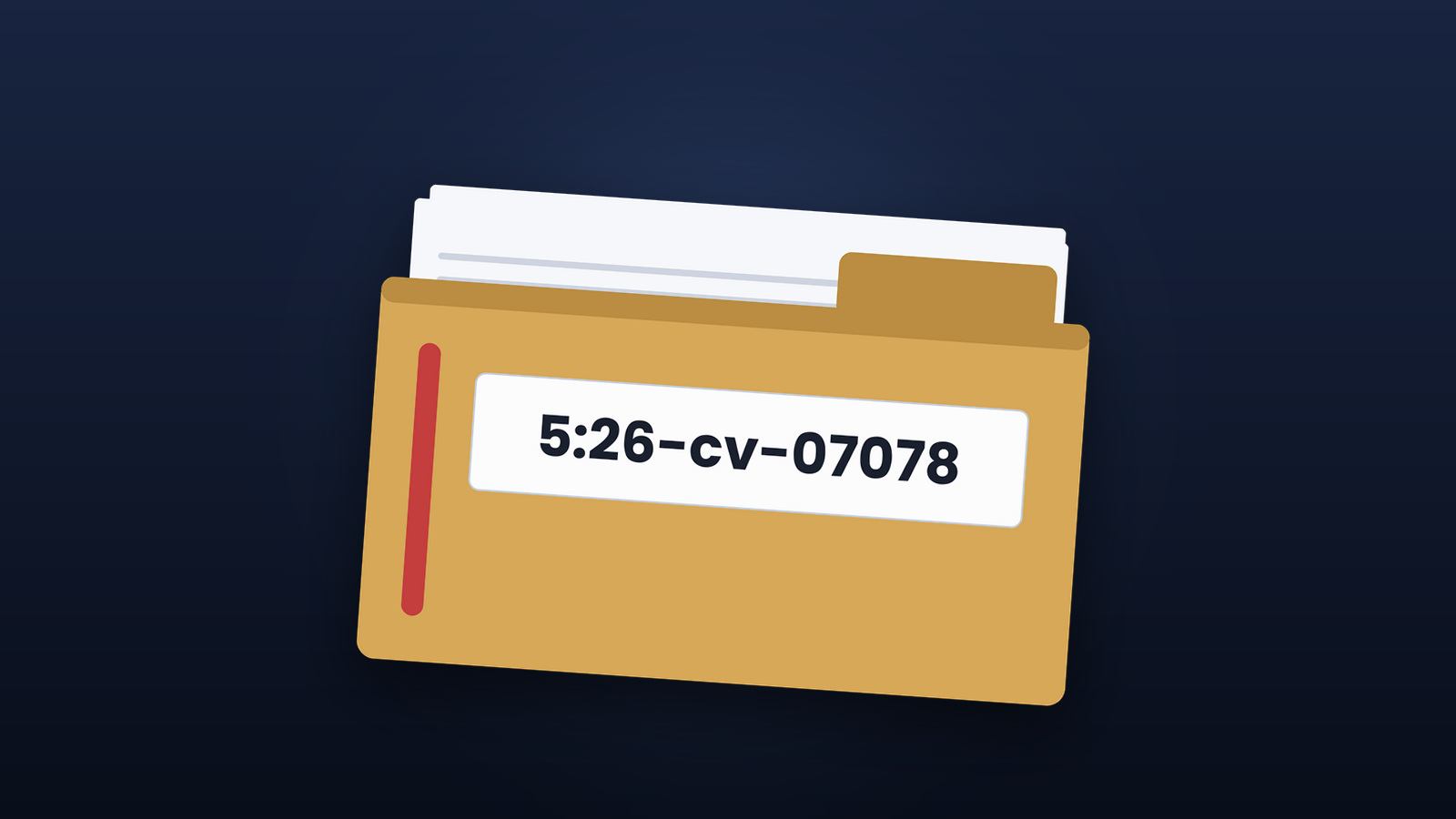
Since July, a lawsuit has been underway in the Federal District Court for the Northern District of California, in which Apple accuses two former employees, as well as OpenAI and the hardware company io Products, of betraying trade secrets. The conflict began with a lawsuit concerning AI hardware and has since branched into several parallel disputes. One of these revolves not around the allegations themselves, but solely around the calendar – and it is precisely on this point that Apple has now filed a further complaint. The complaint bears the case number 5:26-cv-07078-EJD and is available as document 90 in the court file.
Key Facts at a Glance
- Apple demands substantial responses to written requests for information within 30 days and a company hearing from OpenAI within 50 days.
- They are also requesting forensic images of devices and accounts, as well as 20 hours of questioning time for five witnesses.
- The defendants consider the application moot because the regular taking of evidence will begin soon anyway, and accuse Apple of wanting to obtain product plans.
- Apple is now limiting its document requirements to August 1, 2023, and later.
- Judge Edward J. Davila will hear the application on October 1, 2026; a decision without an oral hearing is possible.
What Apple wants to force through in 30 and 50 days
The request for expedited evidence was filed in early August and followed one day after Apple's request for a preliminary injunction to prohibit the defendants from further use of the disputed documents. The two requests are related: the injunction aims to halt the ongoing damage, while the expedited evidence is intended to determine the extent of that damage.
Specifically, Apple is demanding the early release of documents and communications, forensic images of devices and accounts, and the questioning of key witnesses. The figures are detailed in the written submission: six requests for information to each of the two individual defendants, seven to the companies involved, and 20 hours of questioning time distributed among five witnesses.
Apple justifies the haste with a time constraint that cannot be rectified later. If the hearing were to take place only at the end of the regular evidentiary hearing, the company claims it would have to wait months or years to even be able to question witnesses about the allegations – while OpenAI would be working on its own device during that time.
The dispute over two definitions
The defendants had in their Response to the application The defendants are not so much challenging the subject matter of the requests for information as they are objecting to two terms in the definition section. One objection concerns "Apple Originated Information," meaning any information created for or by Apple that has not been fully published. The defendants argue that this is too broad because the term is not limited to trade secrets.
Apple counters that this very restriction is what created the dispute in the first place: Linking the term to "trade secrets" shifts the core substantive issue of the lawsuit to the taking of evidence. Regarding the second term, "Certain Former Apple Employees," Apple refers to its preliminary letter to OpenAI dated July 10, in which the individuals concerned are listed by name.
A new restriction, imposed by Apple itself, is now in place: The document requirements will apply to material submitted from August 1, 2023 onwards. This date is not a coincidence, but according to Apple, it is roughly six months before the transition from Tang Yew Tan to OpenAI.
Six applications against 34
The most interesting part of the brief is at the end. The defendants had alternatively requested that, in the event of an acceleration of the proceedings, they themselves also receive expedited information – and submitted 34 of their own document requests to Apple for this purpose. Apple counters this with its own six to seven requests per defendant.
The objection, however, is initially of a formal nature: According to Apple, a request for a court order belongs in a separate application, not in a paragraph at the end of a response. Substantively, Apple considers the counterclaims too broad, such as the request for access to Apple's iCloud policies – a process by which the company does not even allege any breach of confidentiality.
In a footnote, Apple then remarkably backtracks: The company declares its willingness to grant the defendants a reasonably expedited evidentiary hearing and announces its intention to coordinate the scope with them. The sharp rejection in the main text is therefore directed at the form and scope, not at the underlying idea.
A case study from 2011 serves as a template
To justify its rejection, Apple is resorting to a procedure it itself has used. In the 2011 lawsuit against Samsung, the opposing party had also requested reciprocal expedited disclosure of information during the oral proceedings, after Apple had filed a corresponding motion. The court found the request inadmissible because it had not been submitted as a separate motion.
When Samsung later filed its own lawsuit, the company demanded samples of unreleased Apple products – and failed because this had nothing to do with the accusation of copying existing devices. Apple derives two principles from this, both of which are intended to argue against the current counterclaims.
What the written statement reveals about the allegations
To justify the urgency, Apple summarizes the allegations again, and some details become clearer than before. Thousands of pages of material are cited concerning development programs for display power supplies, architectural analyses, manufacturing decisions, and technical data for an unannounced product.
Furthermore, there are allegations regarding the procedures used: Applicants were allegedly asked to bring components, prototypes, and design data to "show and tell" sessions. An internal codename for an unannounced Apple product was allegedly used to coerce employees into handing over information. A supplier was allegedly deceived in order to gain access to a protected metal finishing process.
The indictment becomes most specific in the case of one of the defendants: Chang Liu allegedly explained to a former Apple employee how to copy files from Apple workstations without getting into trouble with the security team, and redirected her to a messaging service to conceal the communication from detection. Nine sworn affidavits support this claim, based, among other things, on personnel files and messages left behind on company devices.
The course of the proceedings since July
| Time | Occurrence |
|---|---|
| July 10, 2026 | Preliminary letter to OpenAI with a list of the affected persons |
| July 2026 | Lawsuit against two former employees, OpenAI and io Products |
| Early August 2026 | Application for an interim injunction, one day later application for expedited taking of evidence |
| Early August 2026 | The defendants request that the action be dismissed. |
| August 20, 2026 | Apple responds to the dismissal request |
| August 25, 2026 | Apple responds to objections to the accelerated evidence gathering process. |
| October 1, 2026 | Hearing before Judge Edward J. Davila |
The access to documents belonging to dozens of OpenAI employees demonstrates how comprehensively Apple has protected evidence from the outset. Meanwhile, the dispute over the admissibility of the lawsuit continues, with Apple rejecting the opposing party's motion to dismiss.
Why it's about weeks, not blame
Anyone who reads the written submission as an interim report in the dispute over the allegations is misinterpreting it. The court decides on the pace of the proceedings based on five criteria, none of which say anything about whether Apple is right. Nevertheless, the matter is crucial for the outcome: If Apple is granted the deadlines, the opposing party must respond substantively early on, instead of simply raising objections and promising to provide further information later.
For you, as an observer of the dispute, the timeline is therefore less important than the sharpness of the wording. If the application is rejected, the resolution will be delayed for months – and during this time, OpenAI will continue working on a device described as a speaker with a camera. This is precisely the point of Apple's argument that the damage becomes harder to reverse with each passing day.
The footnote expressing a willingness to provide counter-information is noteworthy. It takes some of the edge off the dispute and suggests that both sides expect some form of order.
The timetable will determine the rest of the process
On October 1st, the court will be faced with two related questions: whether Apple will be granted the requested deadlines and whether the opposing party will simultaneously receive its own. It is also possible that a decision will be reached earlier, without an oral hearing – Apple explicitly points to this possibility and cites a case in which a court proceeded in precisely this manner.
Accelerated proceedings provide early clarity regarding the extent of an alleged breach of confidentiality, but also offer an early glimpse into a competitor's documents. Do you prioritize the speed of clarification, or is the other side's concern justified that they are primarily interested in product plans? Let us know in the comments whose side you side in this assessment.
- 40W Dynamic Power Adapter now also available in Germany
- Apple polishing cloth: New version now costs only 10 euros
- M6: Apple switches to 2 nm, M5 Ultra to four dies