
Apfelpatient
  • Home
  • News
  • Rumors
  • Tips & Tricks
  • Reviews
  • Insights
No result
View All Results
  • iPhone 18
  • iPhone 18 Pro
  • iPhone Duo
  • Apple Home
  • Siri AI
  • HomePod
  • HomePod mini
  • HomePod mini 2
  • MacBook Pro
  • Apple TV 4K
  • Apple Watch Series 12
  • Apple Watch Ultra 4
  • AirPods 5
  • iOS 27
  • iPadOS 27
  • macOS
  • MacBook Neo
  • iPhone 17e
  • AirTags
  • iOS 26
  • iPhone 17
  • iPadOS
  • iMac
  • Mac mini
  • Apple TV
  • iPad Pro
  • iPhone Air
  • Apple Vision Pro
  • iPhone 16
  • AirPods 4
  • Apple Watch Ultra
  • MacBook Air
  • iPad
  • AirPods Max
  • AirPods Pro 3
  • Mac Studio
  • Studio Display
  • iPad Air
  • iPad mini
  • watchOS 27
  • Apple CarPlay
  • Apple Pay
  • watchOS 26
  • Home
  • News
  • Rumors
  • Tips & Tricks
  • Reviews
  • Insights
No result
View All Results
Apfelpatient
No result
View All Results
  • iPhone 18
  • iPhone 18 Pro
  • iPhone Duo
  • Apple Home
  • Siri AI
  • HomePod
  • HomePod mini
  • HomePod mini 2
  • MacBook Pro
  • Apple TV 4K
  • Apple Watch Series 12
  • Apple Watch Ultra 4
  • AirPods 5
  • iOS 27
  • iPadOS 27
  • macOS
  • MacBook Neo
  • iPhone 17e
  • AirTags
  • iOS 26
  • iPhone 17
  • iPadOS
  • iMac
  • Mac mini
  • Apple TV
  • iPad Pro
  • iPhone Air
  • Apple Vision Pro
  • iPhone 16
  • AirPods 4
  • Apple Watch Ultra
  • MacBook Air
  • iPad
  • AirPods Max
  • AirPods Pro 3
  • Mac Studio
  • Studio Display
  • iPad Air
  • iPad mini
  • watchOS 27
  • Apple CarPlay
  • Apple Pay
  • watchOS 26

Google is focusing on AI-powered smart glasses and plans to launch them in 2026

Milan Jovicic by Milan Jovicic
December 9, 2025 - 01:58 CET
in Apple News
0
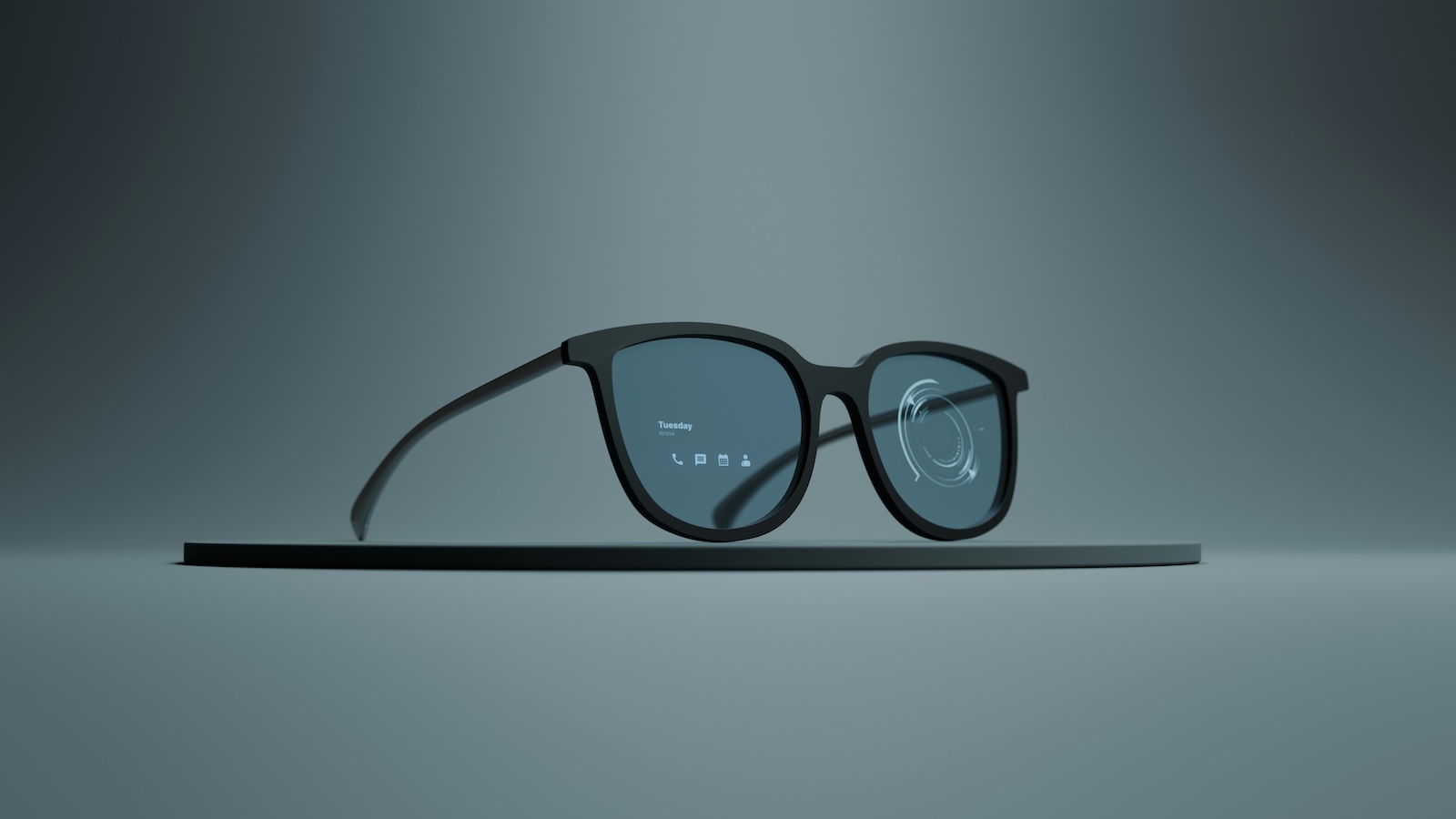
Google AI smart glasses

Photo by Unsplash+ / A Chosen Soul

WhatsAppFacebookEmail
Threads

This article may contain affiliate links. Learn more on our Partner Program page.

Make Apfelpatient a preferred source One click – and you'll see us more often on Google

Google's entry into the AI smart glasses market is taking concrete shape. Two models are planned for 2026, designed to bring artificial intelligence into everyday life. Both glasses will run on Google Gemini, use Android XR, and be powered via a smartphone. With this move, Google is positioning itself against Meta and Apple, who are also working on their own AI glasses.

The wearables market is growing steadily. After smartwatches and fitness trackers, smart glasses are once again coming into sharper focus. This time, the emphasis isn't on augmented reality, but rather on practical support through AI. Google aims to take a leading role in this field and is focusing on technology that integrates seamlessly into everyday life. At the same time, design plays a crucial role, as smart glasses can only be successful in the long term if they look like regular glasses and are comfortable to wear all day.

Two pairs of glasses, one approach: Making AI usable in everyday life

Google is working on two AI smart glasses that share the same core technology but address different needs. Both models utilize the power of a connected smartphone, where the actual processing takes place. They run on Android XR, a platform Google developed specifically for XR and wearable devices.

The first glasses without a display

The first pair of glasses deliberately forgoes a display. It focuses on the idea of using AI assistance without visible digital overlays in front of the eyes. To achieve this, it incorporates several integrated elements: cameras for photos or real-time environmental recognition, speakers, and microphones for interacting with Google Gemini.

Photos can be taken directly from your own perspective. Afterwards, you can ask questions about your surroundings, such as about objects, buildings, or situations. Google Gemini then provides context-related information or explanations. The idea is to use assistive glasses that function similarly to smart speakers, but with a direct view of your environment.

The second pair of glasses with an integrated display

The second version offers the same AI functions but goes a step further. A display in the lens shows additional information, including detailed directions, live translations, brief descriptions of locations or objects, and other context-related overlays. This makes these glasses more suitable for users who not only want to use voice input but also need visual information directly in front of their eyes.

The display turns the glasses into a lightweight AR device that supports everyday applications without becoming the size of a full-fledged headset.

Collaborations for technology and design

Google isn't working alone on the development. Samsung is supporting the technical setup, encompassing both hardware and manufacturing processes. For the design, Google is drawing on the expertise of two eyewear brands: Warby Parker and Gentle Monster. Both are known for modern, lightweight, and stylish frames. Their influence is intended to ensure that the AI glasses don't look like technical accessories, but rather like regular eyeglasses that are comfortable enough to wear all day.

Google emphasizes that a comfortable fit and an unobtrusive design are key requirements. The glasses should be wearable in everyday life without appearing too heavy or bulky.

Competition with Meta and Apple

Google's plans face stiff competition. Meta already offers several smart glasses, including Ray-Ban models with AI features and Oakley glasses. Meta also already has a pair of glasses with an integrated display. Apple is also reportedly working on launching its first AI-powered smart glasses in 2026.

Google must therefore compete with products that are technically sophisticated but also more user-friendly than some competing models. For Google, this is a strategically important step to secure a firm foothold in the growing market of AI wearables.

Google's strategy for the 2026 market launch

Google's AI smart glasses demonstrate how the company aims to integrate artificial intelligence into everyday life. The first pair of glasses focuses on discreet use without a display, while the second enhances the experience with a built-in AR display. Both models are based on Google Gemini and Android XR and, thanks to collaborations with Samsung, Warby Parker, and Gentle Monster, are designed to be both technically reliable and comfortable to wear. The planned market launch in 2026 coincides with a period when Meta and Apple are also increasingly active in this field. This presents Google with the opportunity to help define the standard for AI glasses and clearly position its products in the market. (Photo by Unsplash+ / A Chosen Soul)

  • Netflix guarantees: Warner will continue producing for Apple TV
  • Apple and Google simplify switching between devices
  • The iPhone 16 was the number one phone worldwide in the third quarter of 2025
  • Paramount is fighting against the sale of Warner Bros. to Netflix
  • Apple TV receives 14 nominations at the 2026 Golden Globes
  • Apple remains stable: Johny Srouji confirms he will stay with the company
  • Apple Fitness+ introduces German and much more
  • Apple with new AI focus: Wedbush raises price target
  • Apple TV reveals new features for the F1 streaming experience
  • Evercore has higher expectations for Apple and raises its price target to $325
  • India plans to permanently activate A-GPS, sparking renewed criticism
  • Apple's new design era is generating internal enthusiasm despite major upheaval
  • Apple is struggling with talent exodus to OpenAI and internal resignations
  • Netflix acquires Warner Bros. and HBO Max for 83 billion
  • Sam Altman and Jony Ive lose the io trademark dispute
  • Apple confirms departure of two more executives

Was this article helpful?
YesNo
Tags: GoogleTechPatient
SendShareSend
Share

Our Amazon Storefront

A handpicked selection of products for iPhone, Mac and more – sorted by topic and updated regularly.

Shop Now

This post contains affiliate links (including Amazon). We earn a small commission on qualifying purchases – at no extra cost to you. Learn more on our Partner Program page.

Previous Post

Netflix guarantees: Warner will continue producing for Apple TV

Next Post

Apple Arcade announces fresh content for January 2026

Milan Jovicic

Milan Jovicic

Milan founded Apfelpatient in 2016 and has been responsible for all editorial content since 2018 – news, rumors, how-to guides and product reviews. Here, Apple devices aren't review units kept for two weeks, they're everyday tools: from iPhone to MacBook Pro, MacBook Air and iMac all the way to Apple Vision Pro, at least one device from every product category is in daily use, many of them replaced every year. Every menu path in a guide is checked on the device before it goes live.

Related posts

Apple TV: Sign language is coming to the app

by Milan Jovicic
November 10, 2026 - 18:57 CET
Apple TV sign language: A screen shows a scene from "Being Heumann" with an on-screen interpreter, in front of it Apple TV 4K and the Siri Remote.

The Apple TV app is getting sign language support: Starting November 13th, the feature will launch with "Being Heumann", initially only in ASL and BSL instead of DGS.

Read moreDetails

Apple: Class action lawsuit over Google deal allowed in Canada

by Milan Jovicic
November 10, 2026 - 1:34 PM CET
Apple class action Canada: unfolded iPhone Duo on a wooden table, the Settings app shows Google selected as the search engine, with Yahoo, Bing, DuckDuckGo and Ecosia below

A court in Canada has allowed a class-action lawsuit against Apple. The allegation: Apple accepted payment from Google to avoid competition.

Read moreDetails

iOS 27.2.1 closes a vulnerability in iMessage group conversations

by Milan Jovicic
November 9, 2026 - 23:23 CET
iOS 27.2.1 security vulnerabilities: Messages app icon with a speech bubble on a graphite gradient

Strangers could join iMessage group conversations: iOS 27.2.1 closes the vulnerability and fixes pairing errors with Bluetooth and AirPlay.

Read moreDetails

Claude Fable 5.2: Anthropic lowers the price by a fifth

by Milan Jovicic
November 9, 2026 - 21:06 CET
Claude Fable 5.2: Claude icon on a dark, warm gradient background

Claude Fable 5.2 is here: faster, ahead of Opus 5.5 in almost all tests, and 20 percent cheaper. Plus, Mythos 5.2 for security researchers.

Read moreDetails

Apple plans to open five Developer Academies in Turkey

by Milan Jovicic
November 9, 2026 - 8:52 PM CET
Apple Developer Academy Türkiye: students and developers with MacBook and iPad at an Apple developer program in Indonesia

Apple plans five Developer Academies, a Developer Center in Istanbul, and in 2028 the first Manufacturing Academy outside the USA.

Read moreDetails
Load More

Categories

  • Apple Insights
  • Apple Rumors
  • Apple News
  • Apple Tips & Tricks
  • iPhone news, rumors and tips
  • Mac and MacBook News
  • Reviews
Make Apfelpatient a preferred source One click – and you'll see us more often on Google

About APFELPATIENT

APFELPATIENT brings you the latest Apple news, product updates, guides, reviews and tips across the entire Apple ecosystem — from the iPhone to the Mac to the Apple Vision Pro. From the first rumors to confirmed news: researched responsibly.

Follow Apfelpatient

Facebook Instagram YouTube Threads Threads

Company

  • About Apfelpatient
  • Contact
  • Author Profiles

Community

  • Netiquette
  • Push notifications
  • RSS feed

Legal

  • Legal Notice
  • Privacy Policy
  • Terms of Use
  • Cookie settings
  • Affiliate Program

Resources

  • Sitemap

© 2026 Apfelpatient. All rights reserved.

No result
View All Results
  • Home
  • News
  • Rumors
  • Tips & Tricks
  • Reviews
  • Insights

© 2026 Apfelpatient. All rights reserved. Site map

Change language to Deutsch