
No account for those under 13, a parent-managed mini-account for 13- and 14-year-olds, and a personal account only from age 15: The EU Commission has presented its legislative proposal for the KIDS Act. However, the age limits are only the visible part. The larger part of the text stipulates how platforms, games, AI chatbots, and app stores must be designed if minors are to use them.
On Wednesday, Ursula von der Leyen announced the age restrictions in her State of the Union address; the legal text followed on Thursday, September 17. The Commission published the proposal for the KIDS Act as a proposal for a regulation, together with a communication and an impact assessment. The name stands for "EU Keeping Internet Digital Spaces Accountable and Trustworthy".
The groundwork for this was laid by a panel of experts who recommended in July that social media access for children under 13 be restricted across the EU. The text now presented goes further, setting a uniform age of 15 for independent accounts. However, nothing is yet decided: the European Parliament and member states must approve the proposal and can amend it.
Key Facts at a Glance
- Under 13 years of age, accounts on social networks and video platforms with risky features are prohibited; at 13 and 14 years of age, there is only a mini-account set up by parents with a maximum of one hour per day.
- Having your own account is possible from the age of 15, on services that must be designed to be safe for minors.
- Endless scrolling, autoplay without pauses, intrusive notifications and streak mechanics are prohibited for minors; this also applies to games and AI chatbots.
- App stores must rate each app, disclose their rating method, block age-inappropriate apps for children, and allow the EU age verification app in the store.
- The regulation would come into force six months after its entry into force; prior approval is required from the EU Parliament and member states. It does not apply in Switzerland.
Three age groups instead of one limit
The commission describes its model as a staircase that follows age. The age-related rules apply to social networks and video platforms with demonstrably risky features. Games and AI chatbots are subject to the same design requirements, but do not have their own separate account level.
| Age | What the proposal entails |
|---|---|
| under 13 | No account; on video platforms for young children, access is only possible via a parent's account, without a personal feed or search function, for a maximum of one hour per day. |
| 13 and 14 | Mini account set up by parents; parental tools permanently active, time limit of one hour per day, new contacts only with approval, number of contacts can be limited. |
| from age 15 | own account on services that must be designed to be safe for minors |
The exception for children under 13 ends on their 13th birthday; after that, the rules of the next level apply.
What platforms need to change
The commission devotes the majority of its text not to age, but to the design. According to the commission's questions and answers, the following are prohibited for minors: endless autoplay and endless scrolling without real breaks, notifications that lure users back into the app without any apparent reason, rewards for posts in front of large audiences, and streaks that penalize taking a break. In addition, time limits and usage breaks are implemented to protect sleep and school time.
Recommendation algorithms for minors must prioritize safety over dwell time. Content a child has subscribed to should appear first, tracking-based personalization should be disabled by default, and at least one feed option must be completely free of profiling.
Strangers cannot send messages to children without prior approval. Children do not appear in contact suggestions; their messages are only visible to confirmed contacts and cannot be downloaded or saved as screenshots. Livestreams are blocked for minors by default.
AI companions and chatbots must not simulate a human relationship that could create emotional dependency, and they must not automatically transfer a child's previous conversations into later ones. Children under 13 may only use them with parental controls enabled. If a chatbot is integrated into a platform or game, it must not activate itself and must be easily deactivated.
App stores must rate every app
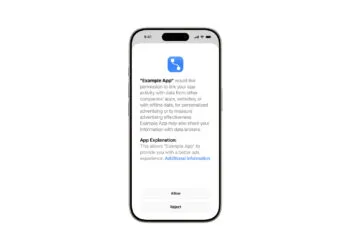
The proposal explicitly includes app stores in its obligations, regardless of their size. They must assign an age rating to every app they offer and prevent minors from accessing and purchasing apps that are unsuitable for their age. They must publicly describe the method, criteria, and sources of their rating system.
Two further obligations apply. Children under 13 may only use the store via parental controls, and the EU age verification app must be approved in the store. Uniform criteria for age ratings will be provided by codes of conduct, which should be available within one year of their entry into force.
Apple already uses a tiered system. Since iOS 26, according to Apple's developer guidelines, the App Store assigns age ratings of 4+, 9+, 13+, 16+, and 18+ per country or region, based on a questionnaire completed by developers. In certain markets, such as Australia, Brazil, and Singapore, Apple already requires age verification for apps rated 18+ before they can be downloaded.
This is how the age verification is supposed to work
Under the proposal, a self-entered age statement will no longer be sufficient. Verification will be carried out using certified procedures that operate independently of the platforms, including a free EU app and, later, the European digital identity wallet. The platform will only learn whether someone is above or below the age limit.
The text stipulates zero-knowledge proofs that cannot identify, locate, or profile anyone. Each member state must offer at least one free method, including for people without a digital identity.
Existing accounts are not exempt. Within six months of the regulation's effective date, platforms must check whether account holders are under 15 and block these accounts, as well as accounts whose age cannot be verified. Where a platform can already identify adults with a high degree of certainty based on signals such as account age or credit card details, no further verification is required.
Burden of proof lies with the platforms
Social networks and video platforms classified as very large platforms under the Digital Services Act (i.e., those with 45 million or more monthly active users in the EU) must submit a detailed implementation plan to the Commission. Those already classified have 30 days from the date the plan comes into effect to do so. The providers must have their plans assessed at their own expense by independent auditors, who must submit a final report within two months. If the Commission identifies deficiencies, a corrective action plan will follow.
The Commission is thus responding to the demand of the chair of the expert panel for a reversal of the burden of proof. AI companions and chatbots may only be placed on the market once their providers can demonstrate compliance.
The oversight is based on the Digital Services Act and, in the case of chatbots, on the AI Act. The Commission directly supervises the largest services, with preliminary results within 30 days and a final decision to be issued within 90 days. Fines can reach up to 6 percent of global annual revenue.
Germany, Austria and Switzerland
As a regulation, the KIDS Act would apply directly in Germany and Austria. The Commission explicitly justifies the proposal by stating that it aims to replace diverging national rules with a uniform age. According to the recitals, higher national age limits remain possible only for specific content, such as pornography or gambling. Austria submitted its own draft law with a minimum age of 14 to Brussels for review at the end of July.
The regulation does not apply in Switzerland because it is not an EU member. Families with iPhones should also consider Apple's own restrictions: According to Apple's support document on regional rules, an Apple account can only be created without parental consent from the age of 16 in Germany, 14 in Austria, and 13 in Switzerland.
| Country | Apple account without parental consent | Own social media account according to the proposal |
|---|---|---|
| Germany | Ages 16 and up | from age 15 |
| Austria | from age 14 | from age 15 |
| Switzerland | from age 13 | The regulation does not apply |
In Germany, Apple's limit is therefore above the proposed EU limit, while in Austria it is below. Those whose children fall below this limit need an Apple account for their children via Family Sharing.
Why nothing will change on the child's iPhone for now
The regulation would enter into force 20 days after publication in the Official Journal and become applicable six months later. Parliament and the Council must reach an agreement beforehand, so a specific date has not yet been set. The review of existing accounts would only be due six months after the regulation comes into effect, meaning at the earliest one year after it enters into force. Until then, the proposal will not create any new obligations.
The tools on the device side, however, are already there. With iOS 27, usage times can be set separately for different categories, including social networks, and parents can control purchases and installations via parental controls in Screen Time. The difference with the KIDS Act lies elsewhere: it shifts the responsibility from parents to the providers.
In practical terms, this means that if you have a child with their own iPhone, screen time will remain your most important control for the foreseeable future. The age verification, which will be linked to account creation in the future, does not replace these settings, but is added on top of them.
Do you think 15 is the right age for a separate account, or would you prefer 16, the age at which Apple requires Family Sharing in Germany anyway? Let us know in the comments where you would draw the line.