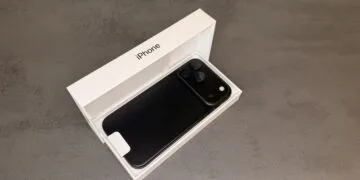

An analyst firm that has previously paid little attention to Apple has raised its price target by $140 and upgraded the stock to a "buy" rating for the first time. The reason is a product that no one has yet seen. However, one crucial detail in their calculations differs from recent reports about the price of the foldable iPhone.
Rothschild & Co. Redburn has upgraded Apple from Neutral to Buy and raised its price target from $260 to $400. The upgrade was overseen by Timm Schulze-Melander, who is responsible for analyzing technology hardware and semiconductors at the firm. The trigger is the anticipated entry into the foldable device market – a topic whose development has been closely followed for months by the firm's collection of all the facts about the iPhone Ultra.
Key Facts at a Glance
- Rothschild & Co Redburn raises its price target from $260 to $400 and upgrades its rating from Neutral to Buy.
- The calculation is based on a selling price of $2,199 for the foldable iPhone – not the $2,325 from other reports.
- 14 million units are expected to be sold in fiscal year 2027, of which only 4 million will be at the expense of other iPhone models.
- The company expects 12 percent annual iPhone growth through fiscal year 2030, up to 14 percent above the market consensus.
- A price target of $400 is not new: Wedbush already announced the same target in May.
The calculation behind the jump
The core argument is that a foldable iPhone wouldn't redistribute revenue, but rather increase it. Of the expected 14 million units in fiscal year 2027, only about a quarter are projected to come at the expense of other iPhone models. The rest would represent additional business.
In addition, there is the effect on the average price. Because the device is significantly more expensive than anything before it, the average selling price of the entire iPhone series is expected to rise by 11 percent by June 2027 – even without high sales volumes.
A second key element concerns software. The company considers Apple's current AI strategy disappointing and anticipates a realignment. Apple pays around one billion dollars annually for access to Google's Gemini models while simultaneously earning 27.5 billion dollars annually for search engine rankings. A greater reliance on open-source models could reduce this dependency.
Where the price assumption differs
The selling price warrants closer examination. The analysis anticipates a price of $2,199, which would represent an 83 percent premium over the iPhone 17 Pro Max. However, reports also cite a figure of $2,325 – this comes from other sources and is not the basis for this valuation.
The difference of $126 may sound small, but it determines the viability of the calculation: the higher the price, the greater the effect on the average price, but the smaller the potential buyer group. Combining these two figures leads to a different conclusion than the research firm itself.
No Euro price can be derived from this for the German-speaking market. Apple sets prices independently for each market – during the adjustment round in June, the price increases differed between the US and Germany. Converting the dollar amount regularly leads to misleading results.
A house that Apple has barely pursued so far
What's noteworthy is who's speaking here. Rothschild & Co. Redburn rarely appears in Apple reporting; price targets have only been publicly available since Rothschild & Co.'s acquisition of Redburn. The most recent increase was from $230 to $260 in September 2025.
Jumping from $260 to $400 and simultaneously changing the property rating is an unusually large step for a house with this history. In an interview with CNBC, Schulze-Melander called the foldable iPhone an ideal addition for Apple and added that they were already quite conservative with the valuation.
How the price target fits in
| House | Course objective | Status |
|---|---|---|
| Rothschild & Co Redburn | $400 | August 17, 2026 |
| Morgan Stanley | $360 | July 31, 2026 |
| Goldman Sachs | $360 | July 31, 2026 |
| JP Morgan | $340 | July 31, 2026 |
| Jefferies | $263.66 | August 10, 2026 |
The $400 mark isn't new. Wedbush already announced it in May. What is new is that a second house has reached that price point – and from a significantly more cautious starting point.
The opposite trend is also striking: Morgan Stanley and Goldman Sachs lowered their targets at the end of July, the latter explicitly citing potential supply bottlenecks in the current quarter. This very point is omitted from the new analysis.
What the bill doesn't cover
For you as a reader, the interesting part isn't so much the number itself, but the underlying assumption. It presupposes that the first foldable iPhone will find 14 million buyers right off the bat – at a price higher than that of a well-equipped MacBook Pro. For comparison, market researchers expect Apple to capture 25 percent of the entire foldable market in its first year.
The research firm itself cites production problems as a risk, and these are documented: Issues with the hinge and display were reported in July. Our assessment is that the unit volume forecast is the real bet behind this price target – not the price and not the AI strategy.
Four weeks until the first practical test
Whether the plan works out can only be assessed after the keynote in September, and reliably only with the sales figures for the Christmas quarter.
Would you pay over 80 percent more for a foldable iPhone compared to the largest Pro model – or is that a price at which you'd rather wait and see how the market develops? Let us know in the comments where your pain threshold lies.
- AirPods 5: Code names appear in macOS update
- Apple counters in DOJ proceedings: Application is baseless
- AirPods with camera: Apple's own code shows the demo video