

This article may contain affiliate links. Learn more on our Partner Program page.
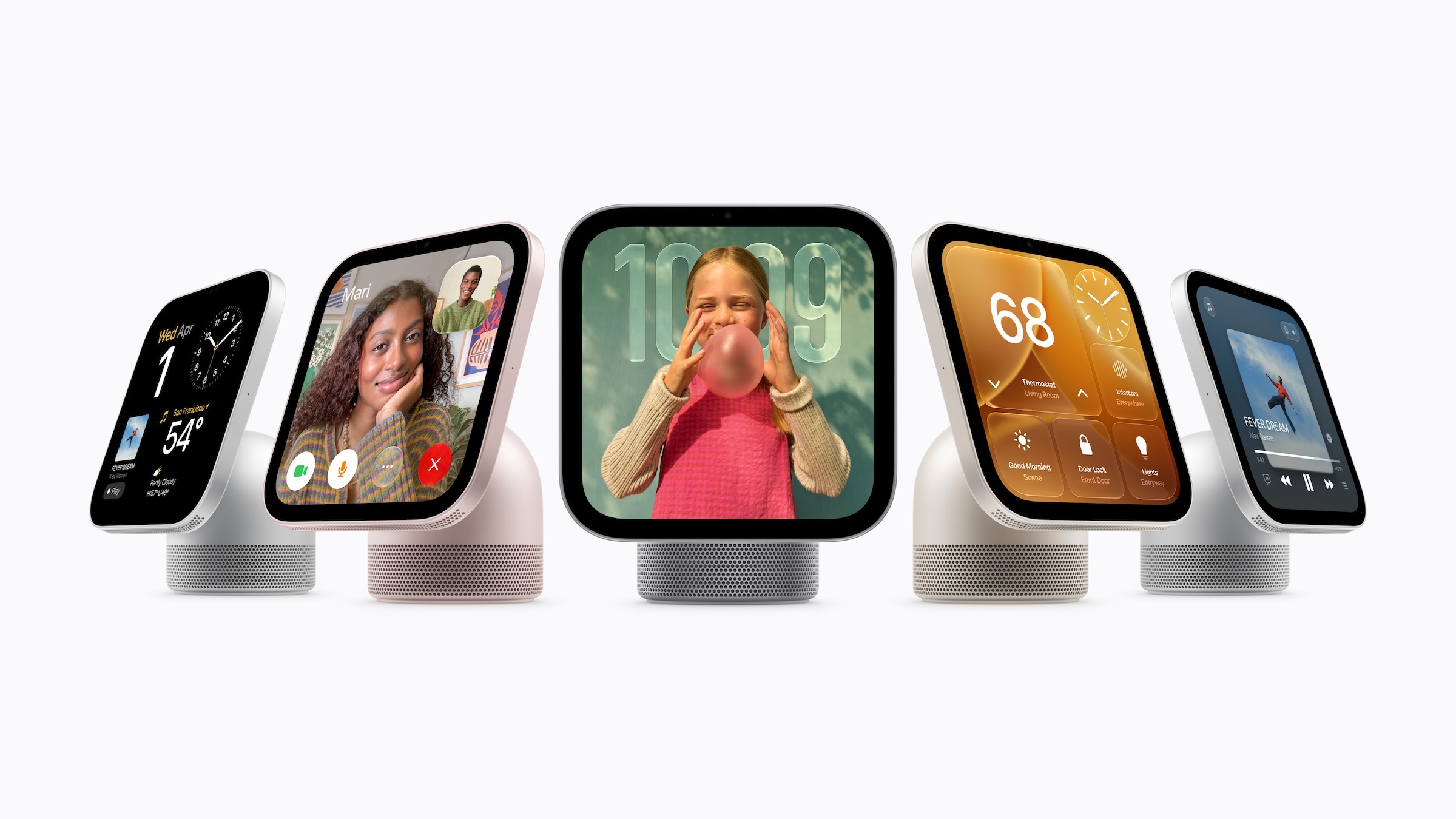
One day before its release, the first reviews of Apple's first smart display have been published. The reviewers agree on one point: the casing, display, and sound are impressive. However, opinions vary widely on whether the thin software ruins this, ranging from two and a half to four stars.
Apple will sell Home View starting November 13th as a tabletop and wall-mounted model, both for $299 and £299 respectively. At launch, the device will be available in eight countries, including the US and the UK. Germany, Austria, and Switzerland are not among them.
Before its launch, several English-language news outlets tested the device in their own homes for a week to ten days. TechRadar used two devices for eight days, Tom's Guide placed HomeView directly next to an Echo Show 15 for a week, and 9to5Mac used it in their kitchen for about ten days.
Key Takeaways
- The reviews praise the design, display, and sound, especially of the desktop model.
- Criticisms include the lack of an app store, limited streaming services, restricted customization, and the absence of volume buttons.
- Siri AI responds noticeably slower than usual to personal and complex requests.
- The ratings range from 2.5 to 4 out of 5 stars.
- HomeView is not available in Germany, Austria and Switzerland.
The tests at a glance
| Test | Test duration | Rating | Key verdict |
|---|---|---|---|
| AppleInsider | – | 2.5 out of 5 | Great potential, but too thin for the start. |
| Tom's Guide | one week | 2.5 out of 5 | Well-built, but weaker as a smart display than Amazon's devices. |
| Stuff, British technology magazine | – | 4 out of 5 | Powerful hardware, software, and Siri with quirks |
| TechRadar | 8 days, two devices | 4 out of 5 | Strong start for the first generation |
| Bloomberg | about a week | – | Nothing groundbreaking, but the integration into the Apple ecosystem is convincing. |
| 9to5Mac | approximately 10 days | – | Used daily in the household, not just by smart home enthusiasts |
The range shows that the testers see the same strengths and weaknesses, but weigh them differently. Those who view HomeView as a companion to the iPhone judge it much more favorably than someone who compares it to an Echo Show.
What the tests unanimously praise
The hardware performs well in all tests. The aluminum casing with its tilting 7-inch display reminds several testers of the iMac G4. The square display has a resolution of 1088 x 1088 pixels, reaches 500 nits, and can be dimmed down to 0.3 nits for use in the bedroom. According to 9to5Mac, the perceived crampedness of the 7-inch display is generally not an issue in everyday use; only long recipes require a lot of scrolling.
The tabletop model comes out on top in terms of sound. TechRadar describes a powerful, wide sound for its size, filling the kitchen and living area, while the wall-mounted model falls noticeably short in the bass. 9to5Mac places the sound between the HomePod mini and the HomePod, and Stuff considers it decent, but limited by its size.
The facial recognition, which displays a separate home screen for up to six people, receives high praise. 9to5Mac calls it surprisingly reliable, although switching between profiles can sometimes take a few seconds. The camera with Center Stage in FaceTime, the recipe view for Safari pages, and its role as a control center for Apple Home are also commended. TechRadar tested HomeView with devices from various manufacturers, including Philips Hue, Nest, and Eve, and created voice-activated automations.
Where HomeView falls short
The criticism is directed almost exclusively at the software. HomeView has no app store, and third-party apps are only available in exceptional cases. According to Tom's Guide, widgets from Disney+, YouTube, or Eufy only link to the iPhone, and videos are only natively played on Apple TV. 9to5Mac particularly misses the notes app, where many users collect their recipes.
According to Tom's Guide, the home screen cannot be expanded to accommodate family photos, weather, and the doorbell camera simultaneously; a smaller Echo Show 8 displays more information. HomeView lacks a physical switch to turn off the camera and microphone. Volume buttons are also missing, a feature noted by both Tom's Guide and 9to5Mac as a drawback in everyday use.
Siri AI receives mixed reviews. TechRadar measures 10 to 15 seconds for responses to complex queries, and around 2 seconds for smart home commands. 9to5Mac reports that personal requests take a few seconds longer than on the iPhone and that Siri occasionally freezes. Compared to Alexa+, Siri performs worse with Tom's Guide: A pizza order with Siri ends with an offer to make a call, while Alexa+ guides the user through to placing the order.
Why waiting costs little in this country
Apple explains the lack of sales in the EU by stating that Siri AI is not available on the iPhone in the EU. Switzerland is also missing from the eight launch countries; Home View will not be sold there at launch either. Furthermore, Siri AI will only be available in English at launch.
I therefore interpret the tests more as reassurance for readers in Germany, Austria, and Switzerland. What the testers are missing are not hardware issues, but rather apps, customization options, and Siri's speed—things that Apple can easily address with software updates. I expect that Home View, when it launches later in these regions, will be more refined than the device that US customers will be unboxing on Friday. Until then, the alternatives of the HomePod and iPad remain the most practical way to create a control center with a display.
Would you have bought HomeView immediately despite the lack of an app store if it were available here, or would the limited app selection be a reason for you to wait? Let us know in the comments which app HomeView absolutely needs.