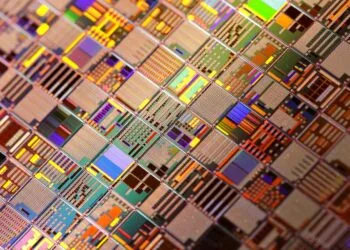
Apple's secret business: How defective chips become a multi-million dollar cost-saving model
Apple uses recycled chips in the MacBook Neo, iPhone Air, and many other devices. How the process works and what it entails...

Apple silicon is the umbrella term for Apple's own ARM-based chip families that today power virtually every device coming out of Cupertino. The iPhone and more affordable MacBooks use A chips, the Mac, iPad Pro and Vision Pro rely on the powerful M chips with Pro, Max and Ultra variants, the Apple Watch runs on compact S chips, AirPods on specialized H chips, and Vision Pro additionally uses the R chip for sensor processing. With the Mac's transition from Intel to Apple silicon starting in 2020, Apple aligned its entire hardware strategy around a unified, energy-efficient architecture – with high performance per watt, an integrated Neural Engine for AI calculations, and unified memory between CPU and GPU.
The Apple silicon reporting on apfelpatient.de runs under this tag: background on every new M, A, S, H and R generation, benchmark comparisons between generations, detailed reports on architecture and TSMC manufacturing, reporting on supply chains and new US manufacturing initiatives, context on the Pro, Max and Ultra differentiation, comparisons with Qualcomm, AMD, Intel and Nvidia, and all rumors and reports about upcoming chip generations and their role in future iPhones, iPads, Macs and headsets.
Anyone wanting to understand Apple's chip strategy from the technical side, place performance jumps between generations in context or follow the long-term hardware roadmap has their technical control room right here.
Apple uses recycled chips in the MacBook Neo, iPhone Air, and many other devices. How the process works and what it entails...
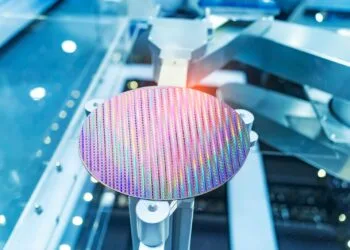
Intel has begun initial production of chips for iPhone, iPad and Mac – thus ending Apple's exclusive era with TSMC...
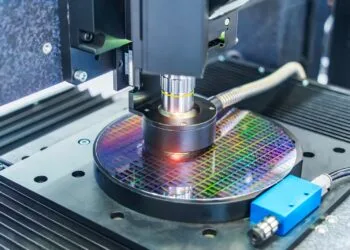
Apple and Intel have reached a chip manufacturing agreement, according to the Wall Street Journal. Here's what that means for Apple devices.
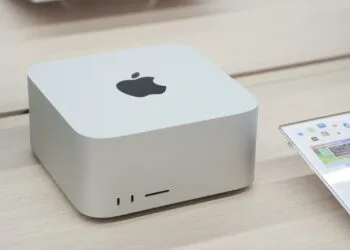
Apple has removed the 256GB version of the Mac Studio with M3 Ultra from the configurator. Only one RAM size remains.
Memory and 3nm manufacturing are keeping Macs in short supply. TSMC's 2-nanometer leap could ease the situation for Mac mini, Mac Studio, and MacBook.
China is intensifying its attacks on TSMC through poaching, cyberattacks, and election interference. Apple's dependence on the company is increasing.
Apple is setting new standards with the M5 Max: Initial benchmarks show record values for CPU and GPU in the 16-inch MacBook Pro.

Apple is fully committed to Apple Silicon for Studio Display & XDR. Intel Macs are excluded. Learn more now.
Apple introduces the M5 Pro and M5 Max: More CPU and GPU performance, powerful AI, and a new Fusion architecture for the MacBook...
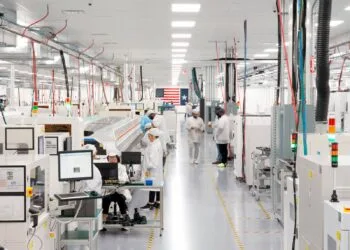
Apple provides insights into its US chip production with TSMC, GlobalWafers, and Foxconn, revealing how the new supply chain is being built step by step.
You are currently viewing a placeholder content from Facebook. To access the actual content, click the button below. Please note that doing so will share data with third-party providers.
More InformationYou are currently viewing a placeholder content from Instagram. To access the actual content, click the button below. Please note that doing so will share data with third-party providers.
More InformationYou are currently viewing a placeholder content from reCAPTCHA. To access the actual content, click the button below. Please note that doing so will share data with third-party providers.
More InformationYou are currently viewing a placeholder content from X. To access the actual content, click the button below. Please note that doing so will share data with third-party providers.
More Information