

Apfelpatient
  • Home
  • News
  • Rumors
  • Tips & Tricks
  • Reviews
  • Insights
No result
View All Results
  • iPhone 18
  • iPhone 18 Pro
  • iPhone Duo
  • Apple Home
  • Siri AI
  • HomePod
  • HomePod mini
  • HomePod mini 2
  • MacBook Pro
  • Apple TV 4K
  • Apple Watch Series 12
  • Apple Watch Ultra 4
  • AirPods 5
  • iOS 27
  • iPadOS 27
  • macOS
  • MacBook Neo
  • iPhone 17e
  • AirTags
  • iOS 26
  • iPhone 17
  • iPadOS
  • iMac
  • Mac mini
  • Apple TV
  • iPad Pro
  • iPhone Air
  • Apple Vision Pro
  • iPhone 16
  • AirPods 4
  • Apple Watch Ultra
  • MacBook Air
  • iPad
  • AirPods Max
  • AirPods Pro 3
  • Mac Studio
  • Studio Display
  • iPad Air
  • iPad mini
  • watchOS 27
  • Apple CarPlay
  • Apple Pay
  • watchOS 26
  • Home
  • News
  • Rumors
  • Tips & Tricks
  • Reviews
  • Insights
No result
View All Results
Apfelpatient
No result
View All Results
  • iPhone 18
  • iPhone 18 Pro
  • iPhone Duo
  • Apple Home
  • Siri AI
  • HomePod
  • HomePod mini
  • HomePod mini 2
  • MacBook Pro
  • Apple TV 4K
  • Apple Watch Series 12
  • Apple Watch Ultra 4
  • AirPods 5
  • iOS 27
  • iPadOS 27
  • macOS
  • MacBook Neo
  • iPhone 17e
  • AirTags
  • iOS 26
  • iPhone 17
  • iPadOS
  • iMac
  • Mac mini
  • Apple TV
  • iPad Pro
  • iPhone Air
  • Apple Vision Pro
  • iPhone 16
  • AirPods 4
  • Apple Watch Ultra
  • MacBook Air
  • iPad
  • AirPods Max
  • AirPods Pro 3
  • Mac Studio
  • Studio Display
  • iPad Air
  • iPad mini
  • watchOS 27
  • Apple CarPlay
  • Apple Pay
  • watchOS 26

Russia blocks FaceTime and tightens digital pressure

Milan Jovicic by Milan Jovicic
December 4, 2025 - 8:21 PM CET
in Apple News
0
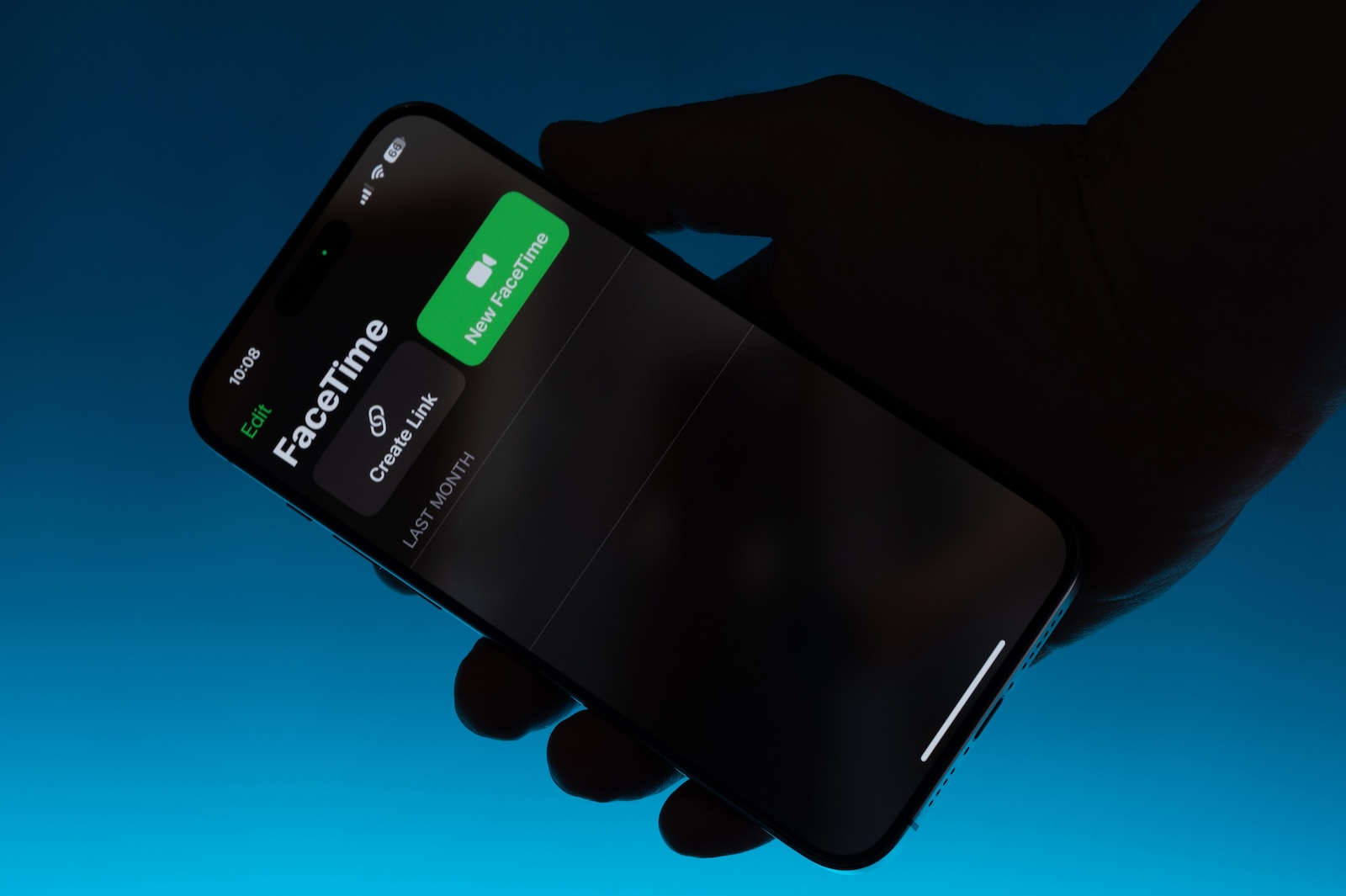
Apple FaceTime Russia

Image: Shutterstock / PixieMe

WhatsAppFacebookEmail
Threads

This article may contain affiliate links. Learn more on our Partner Program page.

Make Apfelpatient a preferred source One click – and you'll see us more often on Google

The blocking of FaceTime in Russia demonstrates the extent to which the state is putting pressure on encrypted communication. FaceTime is one of the most important video calling services, and it is precisely this secure connection that is now subject to sweeping restrictions. The measure is part of a broader strategy to make digital communication controllable and to eliminate alternative, unmonitored channels.

Russia has blocked the video calling app FaceTime nationwide. The government claims FaceTime is being used for criminal purposes. According to Roskomnadzor, the security services provider, the app was allegedly used to plan terrorist attacks, recruit perpetrators, commit fraud, and carry out other crimes. The ban is presented as a legitimate law enforcement measure.

At the same time, the government points out that the Federal Security Service has no way of monitoring FaceTime calls. End-to-end encryption prevents government access. Apple has refused to install surveillance tools or weaken the encryption. This stance is considered a key reason for the action.

Part of a comprehensive crackdown on encrypted apps

The blocking of FaceTime is not an isolated incident. In recent years, Russia has blocked or severely restricted numerous social networks, communication services, and platforms. These include Facebook, Instagram, Twitter, Discord, and LinkedIn, which are inaccessible without a VPN. YouTube is heavily throttled and virtually unusable. Since 2022, TikTok has only displayed a feed curated specifically for Russia, which contains no content from abroad.

In addition, there is a growing list of banned or severely restricted messaging apps. Viber and Signal are blocked. Since the beginning of the year, voice and video calls via WhatsApp and Telegram have been prohibited in Russia, and messaging is also restricted.

Many users switched to FaceTime after these restrictions. This made the app one of the last popular options for stable, encrypted communication. It was precisely this trend that brought FaceTime into the focus of the authorities' attention.

Official reasons

In a statement to Reuters, Roskomnadzor emphasized that FaceTime had been used to organize and carry out terrorist attacks, recruit perpetrators, and commit fraud. This assertion follows the recurring argument that encrypted apps supposedly pose a security risk because they make state surveillance more difficult.

Authorities see the FSB's lack of access as the central problem. Apple has not created an interface for surveillance and has not allowed any compromises in encryption. In such cases, Russia is increasingly resorting to network blocks.

Technical implementation of the closure

FaceTime can still be installed, opened, and activated. The app has not been removed from the app stores. The restriction likely occurs at the network level, similar to previous blocks of other services. When attempting to initiate a call, the message "User not available" frequently appears. This message typically appears when a connection cannot be established for technical reasons.

As with many blocked services, it's possible that FaceTime will continue to work via VPN. However, Russia is simultaneously attempting to block VPN connections or restrict their distribution.

FaceTime as a consequence of earlier bans

The blocking follows a clear pattern. First, widely used messaging apps like WhatsApp and Telegram were restricted by blocking voice and video calls. In response, many people used FaceTime as an alternative. This shift in communication towards an app with strong encryption made FaceTime a logical next target for government action.

The blocking demonstrates that the state intervenes where communication channels become uncontrollable. The more popular a service, the more likely it is to be restricted if it offers encrypted connections.

FaceTime at the center of the conflict between security and privacy

The blocking of FaceTime is another element in a comprehensive strategy by the Russian government to monitor or control digital communication as completely as possible. Officially, the block is intended to combat terrorism and crime. At the same time, the context of recent years shows that encrypted apps, in particular, become targets as soon as they are used by many people.

The decision illustrates how strongly the state is trying to push secure encrypted communication channels out of everyday life. FaceTime is therefore not just a technical target, but a symbol of the conflict between private digital freedom and state control. (Image: Shutterstock / PixieMe)

  • iPhone Air is rapidly losing value according to current market analysis
  • The lack of Night Mode in Portrait mode on the iPhone 17 Pro is drawing criticism
  • Apple announces the winner of the 2025 Podcast Awards
  • Apple presents the winners of the App Store Awards 2025
  • Apple: Why Alan Dye's departure is seen as an opportunity
  • Apple celebrates creativity with glowing projections in London
  • Apple loses UI chief designer Alan Dye to Meta
  • iOS 26.2 RC released: All new features at a glance
  • Apple TV expands its offerings with Your Friends & Neighbors S2
  • Following Apple's opposition, India scraps its mandatory app plans
  • Apple study shows potential of modern heart sensor technology
  • Apple in focus: EU allows antitrust lawsuit from the Netherlands
  • iPhone Air benefits from new firmware for MagSafe battery
  • The iPhone 17 has Apple celebrating significant global sales records
  • Apple and app tracking are in the spotlight of German antitrust authorities
  • Apple Health and ChatGPT: New leak reveals possible integration
  • Samsung presents a triple-folding smartphone

Was this article helpful?
YesNo
Tags: Apple ServicesFaceTime
SendShareSend
Share

Our Amazon Storefront

A handpicked selection of products for iPhone, Mac and more – sorted by topic and updated regularly.

Shop Now

This post contains affiliate links (including Amazon). We earn a small commission on qualifying purchases – at no extra cost to you. Learn more on our Partner Program page.

Previous Post

iPhone Air is rapidly losing value according to current market analysis

Next Post

Apple TV surprises with release date for Tehran Season 3

Milan Jovicic

Milan Jovicic

Milan founded Apfelpatient in 2016 and has been responsible for all editorial content since 2018 – news, rumors, how-to guides and product reviews. Here, Apple devices aren't review units kept for two weeks, they're everyday tools: from iPhone to MacBook Pro, MacBook Air and iMac all the way to Apple Vision Pro, at least one device from every product category is in daily use, many of them replaced every year. Every menu path in a guide is checked on the device before it goes live.

Related posts

Apple TV: New Fraggles special starts on December 4th

by Milan Jovicic
November 10, 2026 - 7:25 PM CET
Fraggles special on Apple TV: Key art for "Fraggle Rock: A Holiday Gift" with five Fraggles gathered around a glowing snow globe in a wintry cave.

Apple TV is showing the trailer for „Fraggle Rock: A Big Gift“. The holiday special starts on December 4th, also with a German dub.

Read moreDetails

Apple Arcade: Football Manager 27 and LEGO DUPLO

by Milan Jovicic
November 10, 2026 - 7:15 PM CET
Apple Arcade Football Manager 27 and LEGO DUPLO: Artwork for LEGO DUPLO Playtime with two figures, a dog, a red car and colourful DUPLO bricks.

Apple Arcade: Football Manager 27 Touch is here, and on December 3rd LEGO DUPLO, Prince of Persia and two other games will follow in German.

Read moreDetails

Apple TV: Sign language is coming to the app

by Milan Jovicic
November 10, 2026 - 18:57 CET
Apple TV sign language: A screen shows a scene from "Being Heumann" with an on-screen interpreter, in front of it Apple TV 4K and the Siri Remote.

The Apple TV app is getting sign language support: Starting November 13th, the feature will launch with "Being Heumann", initially only in ASL and BSL instead of DGS.

Read moreDetails

Apple: Class action lawsuit over Google deal allowed in Canada

by Milan Jovicic
November 10, 2026 - 1:34 PM CET
Apple class action Canada: unfolded iPhone Duo on a wooden table, the Settings app shows Google selected as the search engine, with Yahoo, Bing, DuckDuckGo and Ecosia below

A court in Canada has allowed a class-action lawsuit against Apple. The allegation: Apple accepted payment from Google to avoid competition.

Read moreDetails

iOS 27.2.1 closes a vulnerability in iMessage group conversations

by Milan Jovicic
November 9, 2026 - 23:23 CET
iOS 27.2.1 security vulnerabilities: Messages app icon with a speech bubble on a graphite gradient

Strangers could join iMessage group conversations: iOS 27.2.1 closes the vulnerability and fixes pairing errors with Bluetooth and AirPlay.

Read moreDetails
Load More

Categories

  • Apple Insights
  • Apple Rumors
  • Apple News
  • Apple Tips & Tricks
  • iPhone news, rumors and tips
  • Mac and MacBook News
  • Reviews
Make Apfelpatient a preferred source One click – and you'll see us more often on Google

About APFELPATIENT

APFELPATIENT brings you the latest Apple news, product updates, guides, reviews and tips across the entire Apple ecosystem — from the iPhone to the Mac to the Apple Vision Pro. From the first rumors to confirmed news: researched responsibly.

Follow Apfelpatient

Facebook Instagram YouTube Threads Threads

Company

  • About Apfelpatient
  • Contact
  • Author Profiles

Community

  • Netiquette
  • Push notifications
  • RSS feed

Legal

  • Legal Notice
  • Privacy Policy
  • Terms of Use
  • Cookie settings
  • Affiliate Program

Resources

  • Sitemap

© 2026 Apfelpatient. All rights reserved.

No result
View All Results
  • Home
  • News
  • Rumors
  • Tips & Tricks
  • Reviews
  • Insights

© 2026 Apfelpatient. All rights reserved. Site map

Change language to Deutsch