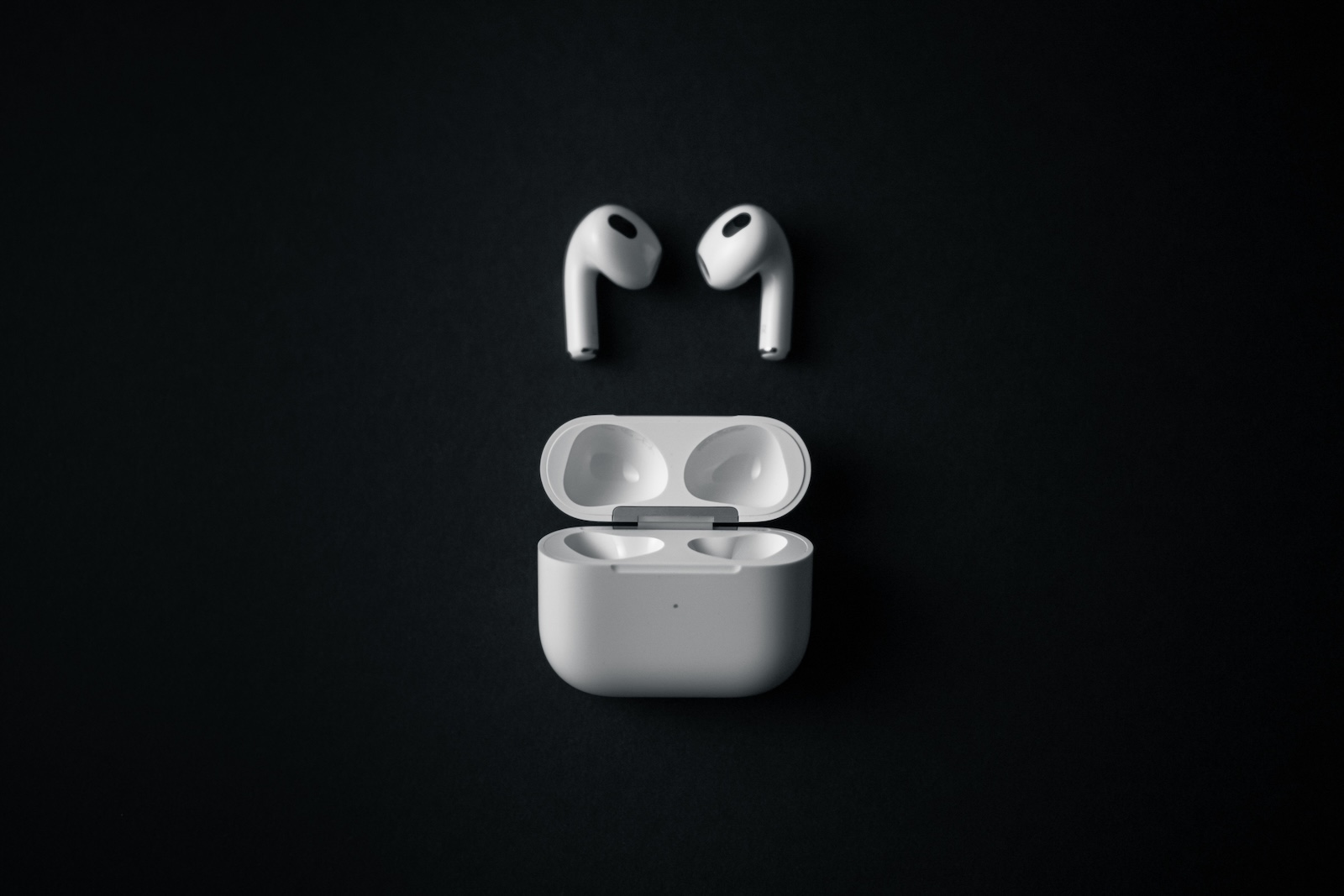
Apple is developing a new technology that will allow AirPods to be controlled with silent commands. This technology doesn't involve simple voice commands, but rather the detection of lip movements, skin deformations, and muscle vibrations – completely silently. The basis for this is a new patent that describes how so-called "silent gestures" can be recognized using laser sensors.
Apple has been working on equipping AirPods with gesture recognition for years. It's already possible to use a nod or shake of the head as a control command with AirPods Pro. The new patent, titled "Wearable skin vibration or silent skin gesture detector," shows that Apple wants to take this idea much further. The goal is to precisely detect facial movements—such as whispering or silent lip movements—and translate them into concrete actions. The technology is based on self-mixing interferometry, a process that detects changes in light reflections on the skin.
How the new AirPods technology works
At its center is a vertically emitting surface emitter laser, or VCSEL for short. This component is also used in Face ID. It emits a beam of light that hits the skin or the inside of the ear. When muscles or skin move there—for example, when speaking, nodding, or moving the lips—the reflection of the light changes. A sensor measures these changes and interprets them. The sensor can detect the smallest movements. This includes not only obvious gestures like nodding, but also minimal muscle contractions, such as those caused by whispering or mouthing words. A smile or other facial expressions could also be registered.
Possible uses of the technology
A practical example is accepting or rejecting a call with a simple nod or shake of the head. This is already possible with the current AirPods Pro. The new technology could add significantly more functions. A silent "next track" or a lip movement could be enough to control the music. Activating Siri would also be possible without having to audibly say "Hey Siri." Another point is user identification. Since skin and muscle movements vary from person to person, the AirPods could recognize whether a command really comes from the owner. If no suitable vibrations are measured even though a voice command has been received, the AirPods could ignore the command. This significantly increases safety during use.
Technical details from the patent
The patent proposes that VCSEL transmitters and sensors be built into the device's frame. In the case of traditional in-ear AirPods, the sensor could be aimed directly at a point in the ear. The laser's reflections on skin or tissue can be used to detect movements triggered by speech, facial expressions, or head movements. Apple describes that the system could be used not only in AirPods, but also in other wearable devices such as glasses. However, the focus is clearly on earbuds, where voice control, gesture recognition, and biometric authentication are particularly useful.
Advantages over previous controls
Current devices rely primarily on voice control, touch inputs, or physical buttons. These methods have limitations—for example, in noisy environments or when both hands are unavailable. The new technology offers an alternative. It allows silent control, even when the user cannot or does not want to speak. It can also help prevent unintentional commands because only the actual user's movements are taken into account.
Silent control as the next step for AirPods
With this new technology, Apple aims to make controlling AirPods more intuitive and versatile. The recognition of silent lip movements and skin vibrations significantly expands the range of possible uses. At the same time, security is increased because the devices can better identify who is controlling them. It's still unclear when or if this technology will actually be incorporated into AirPods. However, both the patent and previous developments in gesture recognition demonstrate that Apple is working hard on it. (Image: Shutterstock / Wirestock Creators)
- Apple patent shows: iPhone could soon control everything automatically
- New research: Apple develops hinges for foldable iPhone
- Magic Mouse: Apple is working on touchless control
- Apple Patent: More action buttons for iPhones and more
- iPhone: Face ID under the display is within reach
- Apple Vision Pro: Patent shows display in the headband
- Apple is getting closer to the foldable iPhone