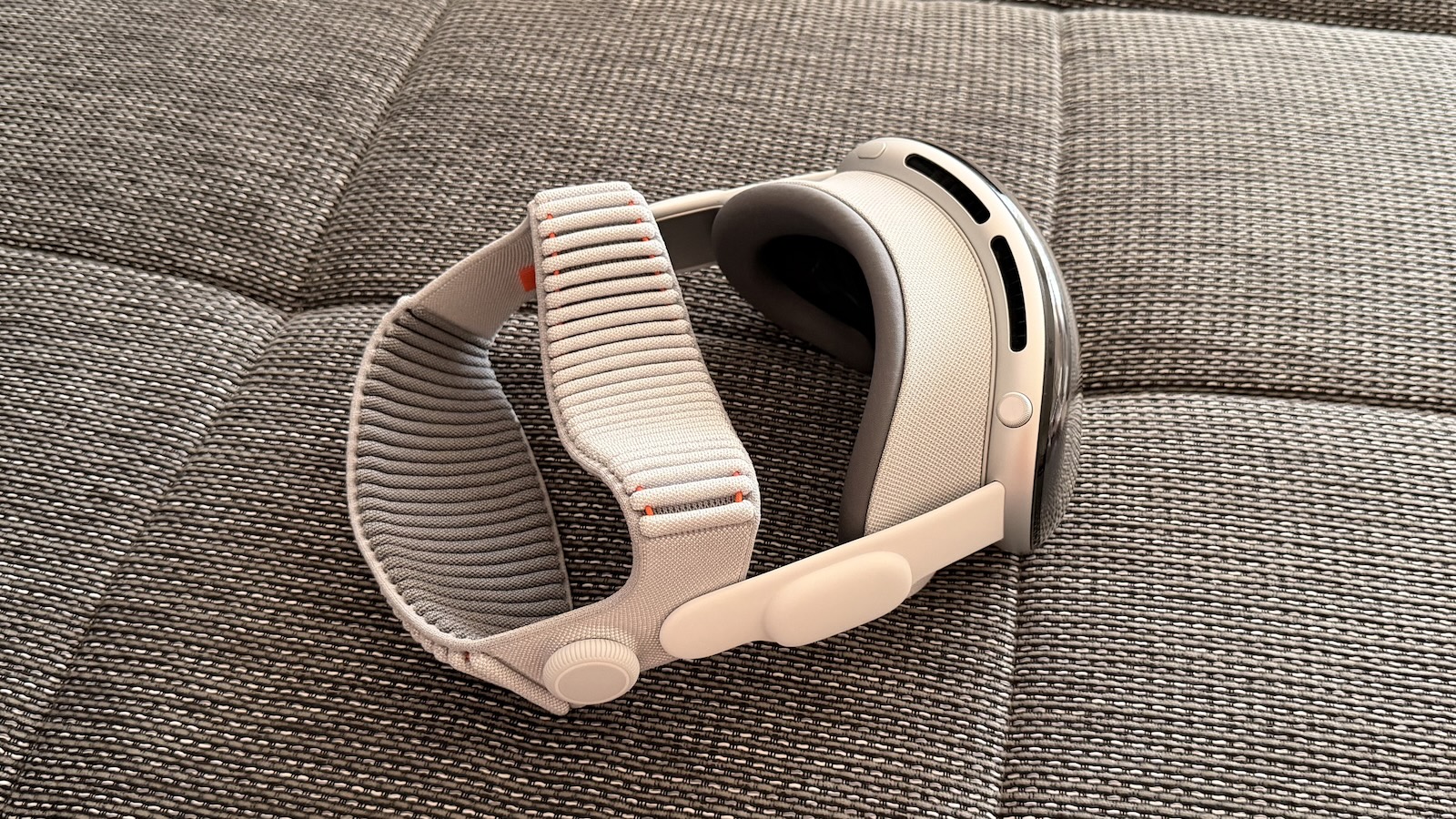
Twelve days before the change at the top of the company, Apple is parting ways with part of the team that developed the headset. At least 60 employees from the Vision Products Group and related departments are affected. The report is based on a single source – and contains a contradiction that has not yet been resolved.
This development is part of a series of conflicting reports since spring. At the end of April, it was reported that Apple had largely halted further development of the headset and disbanded the responsible team. Nearly two weeks later, a counter-statement emerged, indicating that work on the Vision Pro continued despite the restructuring. These two conflicting accounts remain to this day, and this latest report adds a third layer to the mix rather than resolving the issue.
AppleInsider reported the staff reduction, citing its own source. Author Wesley Hilliard describes the cuts as a sign that the category is losing priority – not its end.
Key Facts at a Glance
- At least 60 employees from Apple's VR division are said to have lost their jobs, including employees of the Vision Products Group.
- The report is based on a single, unnamed source; the number was added later in the evening.
- The same text states that the group has not been completely dissolved and that work on future models continues.
- The priorities are to be Siri AI and the smart glasses, which will be shown no earlier than 2027.
- John Ternus, who will take over as CEO on September 1, publicly defended the headset in April.
What is being reported about the staff reduction
According to the source, Apple eliminated positions within the VR team, the Vision Products Group, and similar roles. A breakdown by location, function, or date is not available. It is also unknown whether the affected employees were offered alternative roles internally - a practice Apple has employed in previous restructurings.
The text does not specify the group's personnel size against which the figure could be compared. Without this reference point, it remains unclear whether 60 positions represent a small segment or the majority of the team.
The internal inconsistency in the presentation itself is striking: The report speaks of a complete team, but a few paragraphs later states that the group has not been completely dissolved and that work on the Vision Pro and on future smart glasses with visionOS will continue. These two statements stand side by side without any connection.
How reliable is the information?
The basis is a single source without publicly verifiable evidence – no document, no job posting, no figure from an official reporting obligation. A second, independent report is not yet available.
Furthermore, there's the history of how the figure came about: The first version of the report didn't mention any figures at all; only a later revision added the order of magnitude of at least 60. Such additions are common in the news business when a source provides supplementary information. However, they mean that the figure is based on an additional reference from the same source and not on a second confirmation.
We consider the basic premise – that Apple is downsizing its VR division – plausible because it fits into a restructuring process documented over months. However, we view the specific figure as preliminary.
The backstory extends back to spring 2025
The restructuring began long before this announcement. The split of the Vision Products Group was first reported in March 2025, when Mike Rockwell moved from headset development to head the Siri transformation. Since then, the picture has changed several times:
| Time | Occurrence |
|---|---|
| March 2025 | Group split reported, Rockwell takes over Siri |
| April 2026 | Reports of a complete dissolution of the group |
| May 2026 | Counterstatement: The group still exists, development continues. |
| June 2026 | Roadmap shrinks to two glasses models |
| June 2026 | The group's hardware chief is moving to OpenAI |
| August 2026 | At least 60 jobs cut |
In June, evidence mounted that Apple's vision roadmap was shrinking to just two glasses models and that Ternus was putting the category on hold. A few weeks later, Apple lost Paul Meade, the group's head of hardware – OpenAI poached him for its own device division.
Where the resources should go
The reallocation of resources is said to target Siri AI and Apple's smart glasses. Their timeline has recently been pushed back: the unveiling is now expected at WWDC 2027, with a sales launch planned for the second half of the same year. Reports indicate that the decisive factor was unresolved data privacy concerns, which also continue to influence rumors surrounding Apple's smart glasses.
This creates a gap of roughly a year and a half during which Apple is unlikely to unveil a new product in the head-worn device category. The current headset will remain the only device in this category during this time – and it became more expensive at the end of June, along with Macs and iPads.
What Ternus themselves said about Vision Pro
The timing of the announcement makes it sensitive, because it comes immediately before John Ternus takes office on September 1st and he is held responsible for the dismantling.
This contradicts his own statement. In April, Ternus described the Vision Pro as an exceptional product and stated that they were only at the beginning – citing growing applications in business and medicine. The validity of this claim is demonstrated, among other things, by the fact that its use in the operating room reduces procedures by 19 percent.
Both can be true simultaneously. Continuing with a platform while simultaneously reducing the size of the team working on a new generation of devices is not a contradiction – it's the obvious decision as long as the technical prerequisites for a lighter and cheaper model are lacking.
The timing is more important than the number
We expect that the features of existing devices will remain unchanged in the short term. The established basis for this is the software: visionOS 27 was introduced in June and will be released as a free update in the fall. A company that discontinues a platform doesn't release a new major version.
What is remarkable is something else: that a personnel decision of this kind is announced twelve days before a CEO change. It establishes the initial framework for an era that hasn't even begun – and specifically for the product that Ternus, as head of hardware, was partly responsible for.
If you already own a Vision Pro, this won't change anything about your device. However, regarding the question of when a successor will arrive, this announcement is the clearest signal in months: the answer is being pushed back.
Two numbers are missing for a complete picture
Until the size of the group and a second report are available, the announcement remains an indication of a direction, not a definitive statement. Both of these points will likely only become clear through the job postings that Apple publishes—or perhaps doesn't publish—for this area in the coming weeks.
Do you think a smaller team signals the end of the Vision Pro as a standalone device – or is it a sensible response to the fact that a lighter model isn't technically feasible yet? Let us know your thoughts in the comments.
- AirPods with cameras: Market launch remains at 2027
- Apple Watch: Ceramic case set to return
- iPhone 18 Pro Max: Variable aperture is said to be exclusive