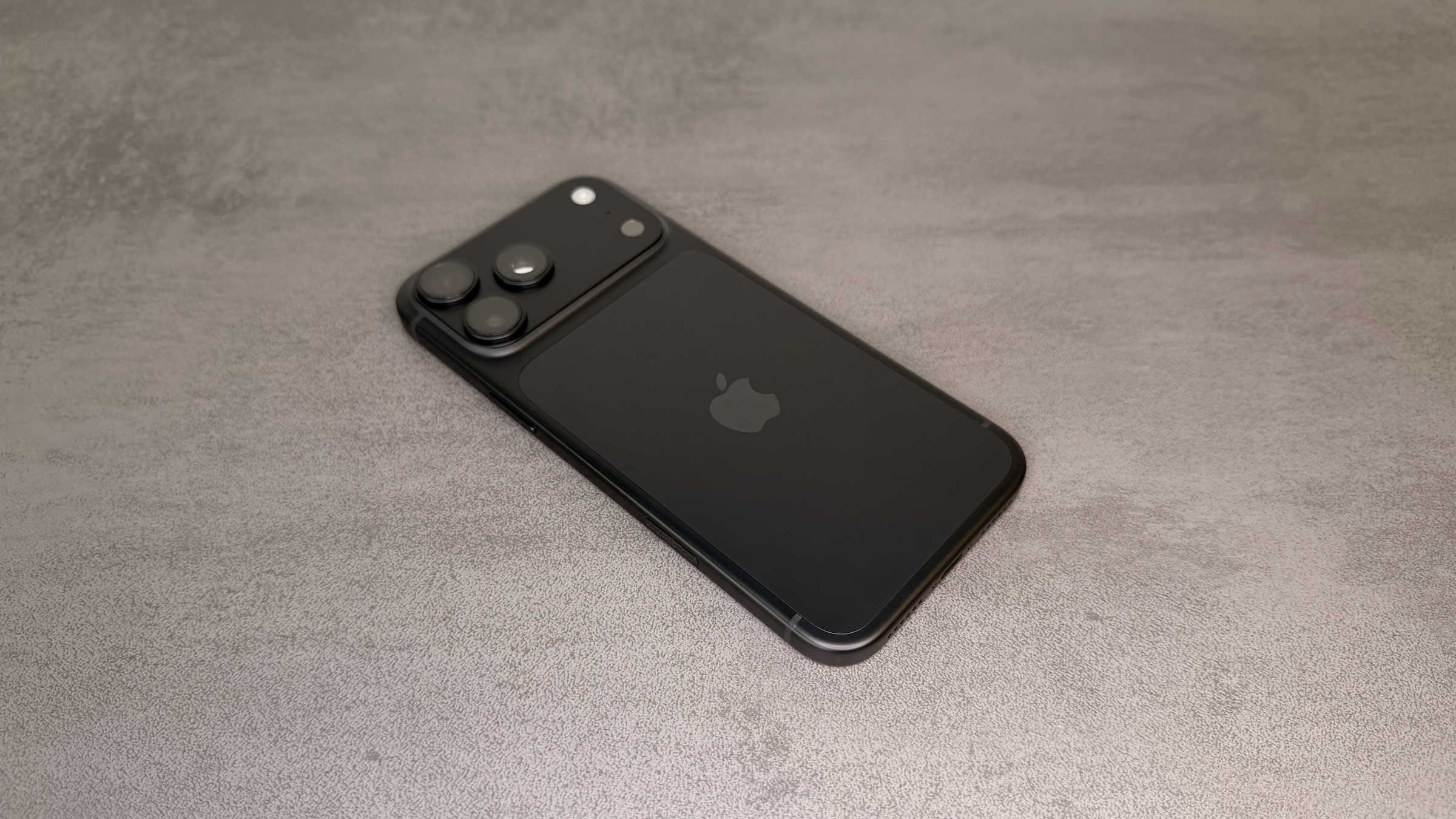
Every iPhone display contains a layer that absorbs a large portion of the generated light. A Korean market researcher expects Apple to remove this layer from the Pro models. However, not in the next iPhone, but rather in 2029.
The forecast comes from UBI Research, a Seoul-based market research company specializing in displays. In an analysis dated September 16, analyst Junho Kim writes that Apple is expected to use a technology called Color Filter on Encapsulation (CoE) in its iPhone Pro and Pro Max models for the second half of 2029.
UBI Research sees the entry point in the foldable iPhone Duo, which will be released on October 23rd. From there, the technology is expected to migrate to the classic Pro models.
Key Facts at a Glance
- UBI Research expects the 2029 iPhone Pro models to feature OLED displays without a polarizer.
- The technology is intended to enable more brightness with the same power consumption or less power consumption with the same brightness, and to make the display thinner.
- The market research firm sees Samsung Display and LG Display as the first suppliers; BOE would first have to qualify.
- This is an industry forecast, not a report on specific orders.
What changes the technology
In a conventional OLED display, a polarizer sits above the panel. It suppresses reflections from ambient light but also absorbs a significant portion of the light generated by the pixels. In the CoE (Color Illumination) technology, this layer is eliminated. Instead, a color filter is applied directly to the panel's encapsulation.
This results in two possibilities: The display becomes brighter with the same power consumption, or it requires less power while maintaining the same brightness. Because one layer is eliminated, the overall design also becomes thinner. UBI Research considers this a particular advantage for the Pro Max model, which has to accommodate the large display, camera system, battery, and chip.
What Samsung's figures show
The technology isn't new. Samsung Display first used it in the Galaxy Z Fold3 under the name Eco² OLED. According to Samsung's own statement, a conventional polarizer reduces light transmission by more than 50 percent. In internal tests, the panel without a polarizer allowed 33 percent more light through and consumed up to 25 percent less power than previous versions with a polarizer.
According to UBI Research, Samsung is now also using the technology in traditional smartphones, including the Galaxy S26 Ultra. Apple would therefore not be the first to adopt it, but several years after its competitor.
Why Apple is taking its time
Without a polarizer, reflections are more difficult to control. Color filters, a black pixel boundary, and low-reflection coatings must take over its function without compromising contrast, viewing angle, or color accuracy. UBI Research sees this as a possible reason why Apple is waiting until 2029 for the Pro models and is first testing the technology with smaller production runs.
The Pro models involve entirely different quantities. The market research firm estimates the annual demand for panels for the two Pro models at 90 to 100 million units. According to UBI Research, the panels for the iPhone 18 Pro and Pro Max are sourced entirely from Samsung Display and LG Display. Both are expected to be the initial suppliers for the Center of Excellence (CoE); BoE would first have to meet Apple's quality and yield requirements.
A long-term forecast
The 2027 and 2028 iPhone models will follow before then. UBI Research bases this expectation on the industry situation and Apple's pattern of introducing new technology first in new device categories. The analysis does not cite a source from the supply chain or a specific order, and the use of this technology in the iPhone Duo is described as expected, not confirmed.
For buyers, the forecast therefore has no direct relevance. It is interesting, however, as an indication of where Apple might focus its efforts with the Pro models: UBI Research sees CoE as a way to improve both battery life and outdoor readability simultaneously.
Would a thinner iPhone or longer battery life be more important to you if Apple had to divide the profits from the new display? Let us know your prediction in the comments.