A second blood pressure monitoring feature for the Apple Watch has been with the US Food and Drug Administration since May. It wasn't presented at WWDC, two new watches are scheduled for release in September – and for the German-speaking market, the American approval isn't the deciding factor anyway.
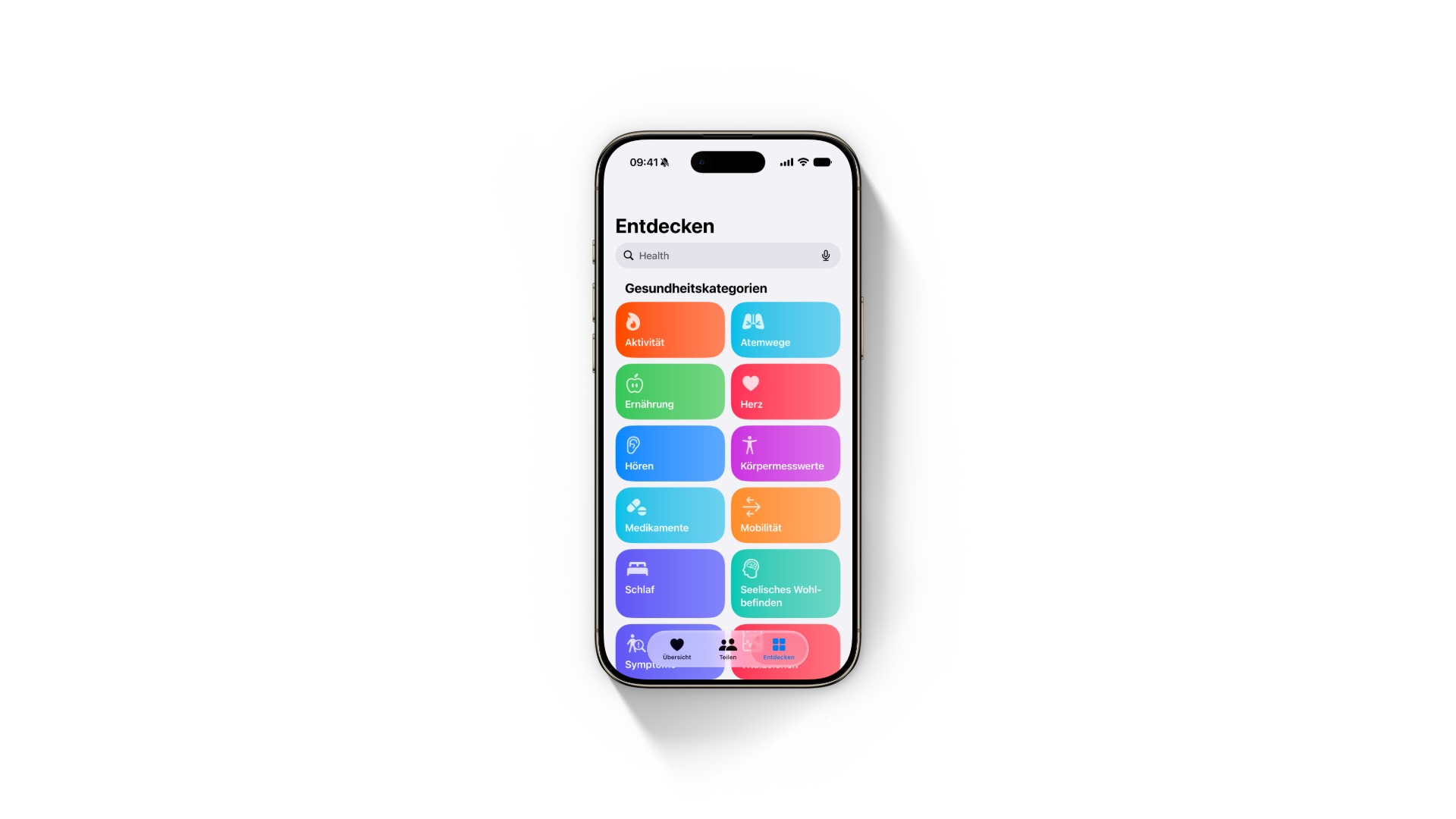
The situation has been known since spring: A report from Asia in May mentioned a second hypertension feature, currently under FDA review, which is intended to go beyond the existing hypertension warnings. How to set up the current feature and what a notification means in everyday life is described in the Apple Watch's explanation of hypertension alerts. Since then, Apple has introduced watchOS 27 without mentioning the enhancement. Three months later, the fall keynote is approaching, and with it the question of whether the enhancement will be included – or whether the process will be shelved for the time being.
Key Facts at a Glance
- A second, more advanced function for high blood pressure has reportedly been in the US approval process since spring.
- At WWDC, watchOS 27 was shown without any changes to the hypertension notifications.
- Apple Watch Series 12 and Ultra 4 will be released in September; Apple regularly reserves health features for the fall keynote.
- In Germany, Austria and Switzerland, high blood pressure notifications have been running since watchOS 26.
- According to Apple's own study data, the existing function only recognizes a portion of the cases – around four out of ten.
What is proven and what remains interpretation
The available sources are scarce and have not improved since May. The original report comes from a Taiwanese industry service specializing in supply chains, whose success rate regarding Apple-related topics is mixed. It mentions two points: Apple has integrated a new high blood pressure notification, and it has not yet been released due to the ongoing legal proceedings.
Everything else is open to interpretation. The fact that the feature might appear with watchOS 27 is suggested by the timing, but this isn't mentioned anywhere in the report. Nor is it stated how the new feature will differ from the existing one. Possible explanations include more precise warnings, concrete measurements instead of mere trends, or approval for additional medical indications – none of these possibilities are confirmed.
A second point is worth noting: An approval process alone doesn't mark a leap forward. The existing hypertension warnings followed the same path in September 2025 before Apple rolled them out with watchOS 26.
The FDA is not responsible for the German-speaking region
American approval does not determine what an Apple Watch displays in Germany, Austria, or Switzerland. Here, the European compliance process applies. Switzerland also follows this process, even though it is not part of the EU – which is why blood pressure notifications were available there from the beginning.
In practical terms, this means that anyone in German-speaking countries wearing a compatible watch has been using the existing function since September 2025. A pending review in the US says little about the launch date of an expansion in Germany. It could just as easily foreshadow it as it could delay it.
| Requirement | Condition |
|---|---|
| Apple Watch | Series 9 or newer, Ultra 2 or newer |
| Not supported | Apple Watch SE, all generations |
| iPhone | iPhone 11 or newer |
| Minimum age | 22 years |
| exclusion | existing hypertension diagnosis, registered pregnancy |
| Preliminary | 30 days of data collection until the first possible report |
In its support document for hypertension notifications, Apple also mentions activated wrist detection as a condition.
Four out of ten: the weakness of the existing function
The most telling figure is contained in the approval documents: According to Apple's own study data, the function only works for a portion of those affected – around four out of ten cases are detected.
This isn't a flaw in the process, but rather in its design. The watch doesn't measure blood pressure; instead, it uses an optical heart sensor to analyze how the blood vessels react to the heartbeat. A pattern, not a specific value, can be derived from this indirect signal. Apple itself points out that the absence of a notification is not a sign that there's nothing to worry about – and that the feature does not replace a medical examination.
This is precisely where the benefit of an expansion lies. A higher hit rate would transform the function from a random finding into a reliable indicator. More warnings with the same accuracy, on the other hand, would primarily create more uncertainty.
Why September remains the likely date
The fact that the feature wasn't presented at WWDC doesn't speak against it. Even in the current betas of iOS 27 and watchOS 27, the blood pressure notifications remain unchanged – the menu path, the 30-day logic, and the setup are identical to those in watchOS 26. However, Apple regularly holds back health features until the fall keynote, where they receive greater prominence alongside new hardware. It is known, however, that watchOS 27 will drop support for five Apple Watch models.
The corresponding hardware will follow in September. What to expect from the Apple Watch Series 12 and the Apple Watch Ultra 4 is compiled in separate overviews – the Ultra 4 is expected to feature a major sensor upgrade, while the Series 12 is expected to see a smaller one.
Whether an expanded warning system would be tied to new sensors is therefore the real open question. With previous health features, Apple usually added new ones later, as long as the existing sensors were sufficient. However, the fact that the AI health coach for watchOS 27 was already delayed argues against a quick launch – Apple's health roadmap isn't reliable in keeping to its schedule.
What a second warning level should achieve
The Apple Watch currently serves as a rudimentary early warning system for blood pressure. It doesn't replace a blood pressure cuff, doesn't provide precise readings, and misses more cases than it detects. Nevertheless, it's valuable as a nudge to finally see a doctor – especially since high blood pressure often remains asymptomatic for a long time.
An expansion would therefore only be a real improvement if it focused on accuracy rather than the number of notifications. As long as this remains unresolved, the same applies to you as before: activate the function if your watch supports it, and take a notification as a reason to take a measurement with a blood pressure cuff – not as a diagnosis, and not as an all-clear if it doesn't occur.
Until the keynote address, it remains speculation
No date has been given, the functionality hasn't been described, and Apple generally doesn't comment on ongoing approval processes. The only confirmation is that a process is underway. Whether this will lead to an announcement in September or whether the extension won't appear until 2027 will be decided at the earliest at the fall keynote. (Image: Apfelpatient)
- OpenAI speakers: Report names price and form factor
- iPhone 18 Pro: Delivery times could be excessive at launch
- iPhone 20: All models are expected to get larger displays