
Apple is on the verge of launching its next generation of chips for iPhone and Mac. While the semiconductor industry is engaged in a fierce race for the most advanced manufacturing processes, Apple appears to be taking a comparatively pragmatic approach. Recent reports suggest that the company is deliberately not opting for TSMC's latest available 2-nanometer chip. Instead, Apple is sticking with a more technically conservative, but more predictable, solution.
According to the China Times, Apple plans to use TSMC's 2-nanometer N2 process for its upcoming A20 and M6 chips. The more advanced N2P variant is expected to be left out for now. The A20 chip is anticipated to debut with new iPhone models this fall. The M6 family of Apple silicon chips could be introduced later this year in redesigned MacBook Pro models with OLED displays. Despite available alternatives, Apple appears to be prioritizing stability over maximum innovation.
Apple's chip roadmap for iPhone and Mac
For Apple, the schedule is crucial. New iPhones and Macs follow a fixed annual cycle. The A20 chip is considered the heart of the next iPhone generation, while the M6 chips are intended for high-performance MacBook Pro models. Both chip lines are expected to be based on the N2 process, although TSMC is already working on improved versions.
The report makes it clear that Apple has no plans to switch to N2P in these generations. This is noteworthy, as N2P is considered a more powerful version of N2. Nevertheless, Apple is sticking with the base version to minimize risks related to development, costs, and availability.
What distinguishes the 2-nanometer process
TSMC's 2-nanometer family marks a fundamental technological shift. For the first time, the manufacturer is moving away from traditional FinFET transistors and towards gate-all-around transistors. This design enables higher chip density as well as better scaling of performance and energy efficiency.
TSMC had already announced that the N2 process would enter mass production in 2026. Improved variants like N2P, as well as the A16 process, specifically designed for very powerful and complex chips, are expected to follow in the second half of the year. This timeframe is apparently too short for Apple to reliably integrate it into new products.
Why Apple is foregoing N2P
According to current estimates, the performance difference between N2 and N2P is manageable. N2P is expected to deliver about five percent more performance at the same power consumption. However, this is offset by significantly higher manufacturing costs. For Apple, this doesn't result in a clear advantage, especially for A- and M-series chips, where efficiency, yield, and production volume play a major role.
Furthermore, Apple traditionally doesn't focus solely on raw performance. The close coordination between hardware, software, and energy consumption is a central component of Apple's strategy. In this context, the N2 process is sufficient to achieve noticeable improvements over previous generations.
Competitors are focusing on more aggressive manufacturing
Other chip designers are taking a different approach. Qualcomm and MediaTek are expected to use N2P for their upcoming flagship mobile chips. The goal is to achieve higher clock speeds and measurable performance gains that can also be effectively leveraged for marketing purposes.
TSMC itself expects the 2-nanometer generation to have a long lifecycle. It could even scale more effectively than the existing 3-nanometer family. Besides Apple, AMD, Google, and Amazon are also considered future users of 2-nanometer processes for CPUs, GPUs, and AI chips.
Production capacities as a key factor
An often underestimated factor is the availability of manufacturing capacity. Demand for 2-nanometer chips has apparently exceeded TSMC's expectations. A large portion of the initial N2 capacity is said to have been reserved early on by key customers, including Apple.
This early securing of supply gives Apple a clear advantage. It reduces the pressure to switch to N2P simply to secure production volumes. For the upcoming A and M chips, this means stable supply chains and more predictable costs.
Apple prioritizes planning certainty over risk with its new chips
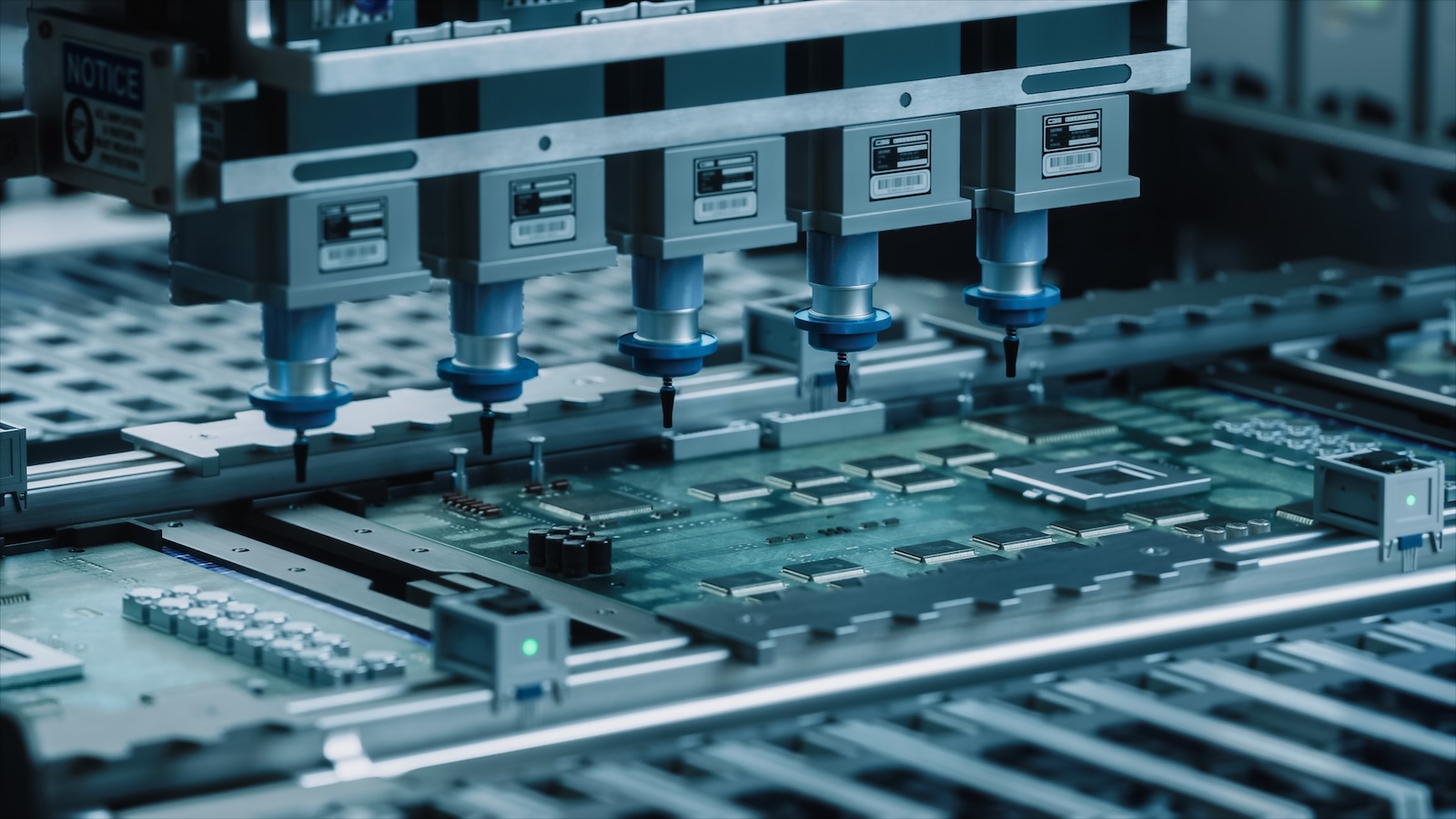
Apple is pursuing a deliberately cautious strategy with its A20 and M6 chips. The decision to forgo N2P is not a sign of technical weakness, but rather an expression of clear priorities. Reliable timelines, controlled costs, and secured production capacity are paramount. For next-generation iPhones and Macs, this translates to solid performance gains based on modern technology, without taking unnecessary risks. Apple thus remains true to its approach of implementing technological innovations only when they fit the overall product. (Image: Shutterstock / Gorodenkoff)
- Report: OLED MacBook Pro expected to be released at the end of 2026
- iPhone Fold: New leak reveals detailed device architecture
- Apple is shaking up the global smart glasses market
- Apple plans strategic move away from TSMC exclusivity
- Studio Display Update planned: Here's what we know so far
- Apple is moving towards more subscriptions and upsells
- iPhone Fold: Leak promises exceptional battery life
- iPhone Flip: Apple's answer to the Galaxy Z Flip and Razr?
- CarPlay Ultra is expected to launch in new cars by 2026
- MacBook Pro with M5 Pro and Max: Release likely in February
- Apple pushes ahead with Siri expansion despite staff losses
- Apple is planning a new Siri with Google – Claude almost got the chance.
- Apple changes iPhone strategy and splits the release cycle
- iPhone 18 Pro: New camera leaks regarding aperture and zoom
- Apple keeps iPhone 18 prices stable despite rising storage costs
- iPhone Fold forces Samsung to develop new foldables
- iPhone Air 2: Leak reveals new details about Face ID hardware
- Apple is planning its next chip: Will the M6 arrive sooner than expected?
- Tim Cook in focus: Resignation rumors and Apple's plans
- Apple plans to deeply integrate Siri into core apps in the future
- A new MacBook Pro generation is expected, but not immediately
- Apple will reveal new Siri features in just a few weeks
- Apple plans to manufacture some of its own chips with Intel
- iPhone 18 Pro: This is how much the new Dynamic Island is shrinking