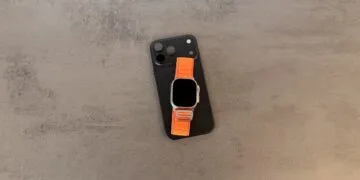

Three weeks before its launch, production of the iPhone Duo is apparently still not running smoothly. According to a report from the Chinese supply chain, final assembly is barely managing to produce more than six out of ten devices without defects. By Apple's own standards, it could take another six months to a year before normal operations resume.
The information comes from a report published by the Chinese business news outlet Jiemian on September 21. A source close to the Foxconn supply chain told the editorial staff on September 17 that the final assembly yield was just over 60 percent. This information also included details about bottlenecks in the display and hinge components, as well as the planned production volumes.
That supplies might be limited at launch became apparent as early as mid-September, when there was talk of limited pre-order quantities. Germany, Austria, and Switzerland are part of the first wave: pre-orders are possible from October 16th, with deliveries starting on October 23rd. The specifications, prices, and release dates for the iPhone Duo are confirmed; the only remaining question is how many devices will be available.
Key Facts at a Glance
- Final assembly at Foxconn is expected to have reached a yield of around 60 percent by mid-September.
- According to Apple's current quality standards, it could take six to twelve months until production is fully developed.
- Displays from Samsung Display and parts of the hinge are also said to have been delivered late or of insufficient quality.
- Apple reportedly plans to have six to eight million devices in stock by 2026, with sales targets for retailers reportedly exceeding five million.
- The supply chain is apparently waiting to see if Apple will relax its quality requirements.
Approximately 60 percent and up to one year until maturity
The yield indicates what percentage of assembled devices pass all tests. A good 60 percent means that roughly four out of ten devices need to be reworked or rejected. According to the source, under Apple's current standards, it takes six months to a year for the production line to reach a mature level.
The supply chain is therefore awaiting a decision from Cupertino on whether quality requirements will be relaxed. Only then will faster mass production be possible. The source does not see a single unresolved technical flaw: it is Apple's first foldable phone, and the production line must be constantly adjusted to the devices, work processes, and settings during operation.
Display and hinge as a bottleneck
The problems didn't begin at Foxconn. According to Jiemian, there were insufficient yields, delayed deliveries, and design changes with Samsung Display's foldable OLED panels and hinge components. Every delay further up the chain leaves the assembly plant less time to shut down its own line.
Apple reportedly tested liquid metal for some parts of the hinge and re-evaluated the approach before mass production. This contradicts earlier reports: a leak in early June stated that the hinge was made of liquid metal and the material choice had been decided. The new report, however, describes liquid metal as an option under review and reassessment, not as the final solution. Apple itself lists more than 100 individual parts for the hinge.
Yield or quantity
A second report, originating from the Weibo account Fixed Focus Digital and republished on September 23, claims that the contract manufacturer presented Apple with a choice: higher yield or increased quantity. Speeding up the production line would result in more saleable devices, but also more defective units, the costs of which Apple would have to bear.
Fixed Focus Digital is a well-known leaker account with a fluctuating track record. In the spring, it contradicted the claim that the hinge was the main cause of the manufacturing problems – current reports identify precisely that as one of the bottlenecks. The post does not cite any supporting document.
Jiemian is an established business publication from Shanghai, but relies on a single, unnamed source for its findings. An assessment by Mizuho Bank from September 3rd, according to the report, points in the same direction: the hinge and fold are hindering mass production.
What figures are being discussed?
The reports mention different sizes that cannot be directly compared:
| Key figure | Value | Source |
|---|---|---|
| Final assembly yield (as of September 17th) | about 60 percent | Jimian, source from the Foxconn supply chain |
| Quantity held in reserve for 2026 | 6 to 8 million | Jiemian, source from the supply chain |
| Sales target for retailers 2026 | over 5 million | Jiemian, source from trade |
| Typical amount per Pro or Pro-Max model over the entire cycle | 20 to 30 million | Jiemian, source from the supply chain |
| Foldable smartphones worldwide by 2025 | 18.2 million | Omdia, quoted by Jimian |
The quantity in reserve describes how many devices should be available, while the sales target describes how many retailers should sell. Neither of these are delivery figures. If you compare the sales target of over five million to the total market for foldable smartphones in 2025, that would represent more than a quarter of it – from Apple's first model alone.
An unusually long lead-up
There's significantly more time than usual between the announcement and the sales launch of the Duo. The keynote was on September 9th, pre-orders began 37 days later, and sales started 44 days later. Jiemian counts from September 10th Beijing time, which is why he arrives at 36 and 43 days, respectively.
According to Jiemian's analysis, for the fall iPhones of the past five years, there were on average only about 3 days until pre-orders opened and around 10 days until the sales launch. The report cites the delivery of the display and hinge as the main reason for the late release date.
Why October 16th counts
For buyers in Germany, Austria, and Switzerland, the good news is that they are part of the first wave. The bad news: Final assembly with a yield of just over 60 percent and a production ramp-up that isn't expected to be ready for another six to twelve months leave little room for a large initial volume.
I therefore expect delivery times for the Duo to quickly extend beyond October 23rd, starting as early as October 16th. Anyone wanting the device at launch should mark their calendars for 2 PM. It will be particularly interesting to see whether Apple relaxes its standards – more devices would then arrive faster, but under conditions that Apple has not previously accepted.
Would you order directly on October 16th, even though production is still experiencing delays, or would you rather wait until the first devices have arrived with customers? Share your prediction in the comments about how long the delivery time will be on the first day.