Shortly before the crucial hearing, Apple submitted five expert opinions and new messages from a former employee. OpenAI and the other defendants are trying to persuade the court to disregard some of these documents altogether. And Chang Liu himself explains for the first time the significance of the messages Apple is using against him.
Since July, legal proceedings have been underway in which Apple accuses two former employees, as well as OpenAI and the hardware company io Products, of stealing confidential hardware information. Apple is seeking an injunction to prohibit the defendants from accessing and using Apple information. Just a few days ago, the two sides were arguing about Apple's access to forensic data and hardware files.
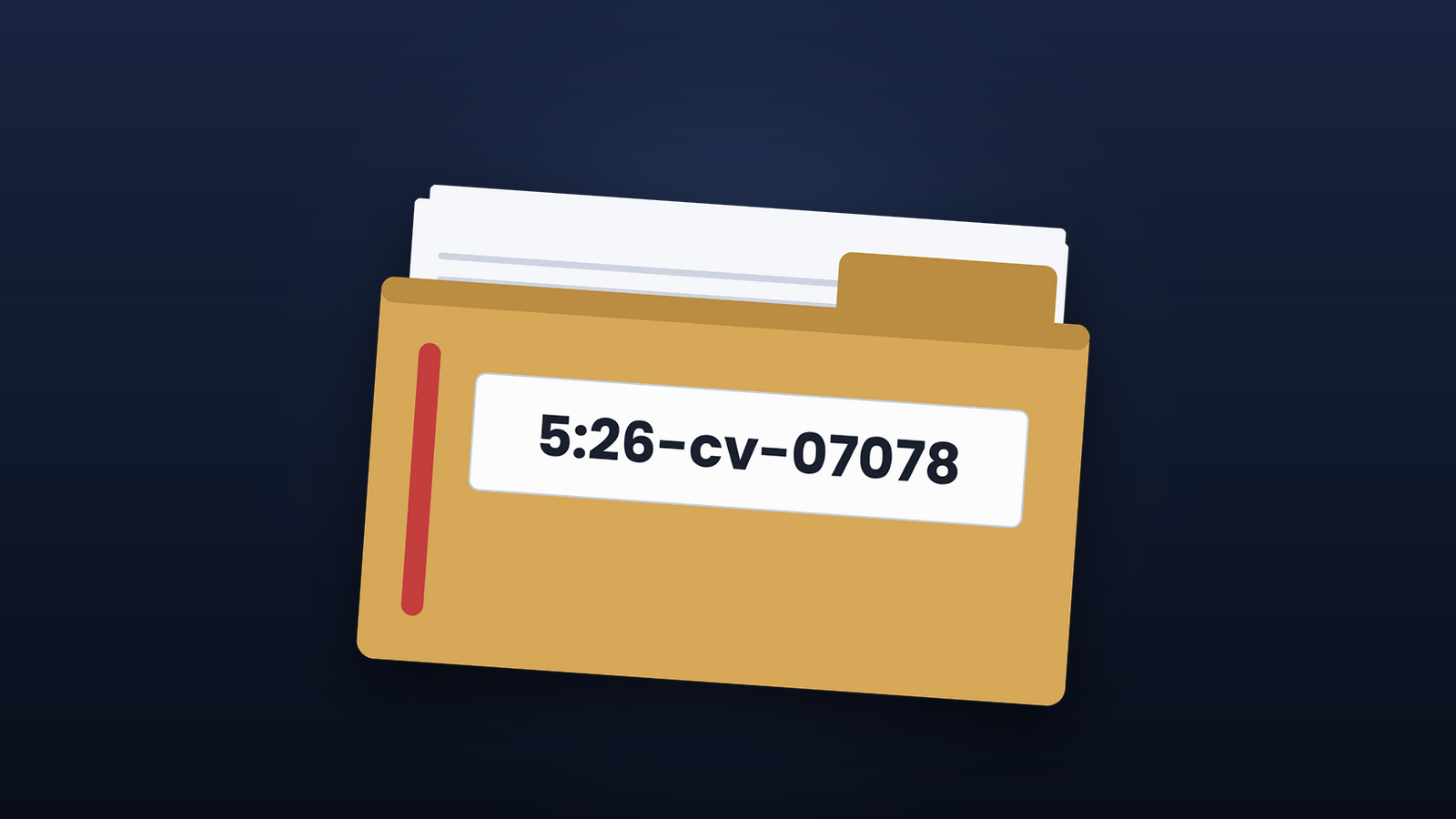
Now, on September 24, the defendants filed objections to Apple's new evidence (Case No. 5:26-cv-07078-EJD, Dct. 167) in the Federal District Court for the Northern District of California in San Jose. These objections are directed against Apple's response to the injunction application (Dct. 152), which Apple submitted last week.
Key Facts at a Glance
- Apple has attached five expert reports totaling 126 pages and numerous new attachments to its response.
- The defendants demand that two of the expert opinions be deleted and that further new evidence not be taken into account.
- Their main accusation: Apple only presents material in its response that it could have submitted earlier, thus depriving the other side of the opportunity to reply.
- Chang Liu explains in his own statement the deletion of his iMac and the messages Apple is citing against him.
- The hearing regarding the injunction is scheduled for October 14th at 6 pm Central European Summer Time.
Five expert reports on 126 pages
With its response, Apple aimed to demonstrate that OpenAI's counterarguments did not refute the allegations. The five expert reports address Apple's security measures, the forensic analysis of Liu's devices, the value of the affected trade secrets, and whether Apple's metal surface treatment processes are publicly known. Energy management and metal surfaces are the two central categories around which the proceedings revolve.
The defendants are going through each expert opinion individually:
| Expert | Theme | Objection of the defendant |
|---|---|---|
| Daniel Roffman | Forensic analysis of Liu's devices | delete including five facilities |
| Dr. Jude Runge | Metal surfaces | cancel |
| Dr. Ayman Fayed | Value of trade secrets | Do not consider new statements |
| James Pooley | Apple's protective measures | Do not consider the new study |
| Dr. Paul Hatch | Metal surfaces | – |
Runge is the only new expert witness in the proceedings. According to the defendants, her statement is partly identical to what Hatch has already presented. Furthermore, as a former Apple employee who still works for Apple, she had no access to OpenAI's confidential documents and therefore cannot comment on OpenAI's own procedures.
Evidence that Apple had previously
The core of the objections lies in the timing. According to the court's rules, a party can raise objections if new evidence only emerges in the response. According to the case law cited by the defendants, such material is usually disregarded because the opposing party can no longer respond to it. Pooley, for example, relies on an investigation he conducted in mid-September, more than a month after his initial report. This includes unsworn interviews with Apple employees, one of which was conducted anonymously.
The allegation is most clearly evident in the case of the MacBook, whose messages Roffman is analyzing. According to the defendants, Liu's legal representatives offered Apple the device for return on July 21, a good week before Apple filed for the preliminary injunction. Apple did not respond until August 13 and received the MacBook on August 21. In addition, there is forensic data from another MacBook that Liu had already returned in January.
Liu's own explanation
For the first time, Liu has issued a statement addressing the news. Apple cites a message from March 12th in which Liu writes to a former colleague that he has "finally" wiped his old iMac – which Roffman considers proof that Liu has erased his digital footprint. Liu explains that resetting a device before returning it was standard procedure at Apple so that it could be handed over to the next employee. His colleague also replied with "Finally."
Liu also interprets messages he sent to a chip supplier in April differently than Apple. He claims he was looking for commercially available, non-custom chips for his work at OpenAI and contacted a source with whom Apple had previously refused to enter into a contract. He maintains this has nothing to do with his work at Apple. The defendants are demanding that the court consider Liu's statement if it allows Roffman's expert opinion despite the objections.
A dispute over the procedure with weight for the hearing
The objections are formally a procedural motion, but in substance they address Apple's most recent evidence against Liu. If the court strikes down Roffman's expert opinion, the very messages Apple has recently used to support its claims will be removed. If it allows them, Liu's statement will stand in contrast, and the evidence will once again become a matter of interpretation.
The timestamps regarding the MacBook are taken from the defendant's written submissions and are therefore part of the parties' testimony. The hearing before Judge Edward J. Davila begins on October 14 at 9:00 a.m. local time, which is 6:00 p.m. in Germany, Austria, and Switzerland.
Should the court consider evidence that Apple only submitted in its response – or should it have been included in the original application? Let us know in the comments how you assess Apple's approach.