Apple no longer wants to simply read what opposing counsel has discovered about the devices of a former employee - it wants to see for itself. And it is demanding access to OpenAI's hardware development. Furthermore, a new legal document contains a date that puts Apple's main argument for the urgency into perspective.
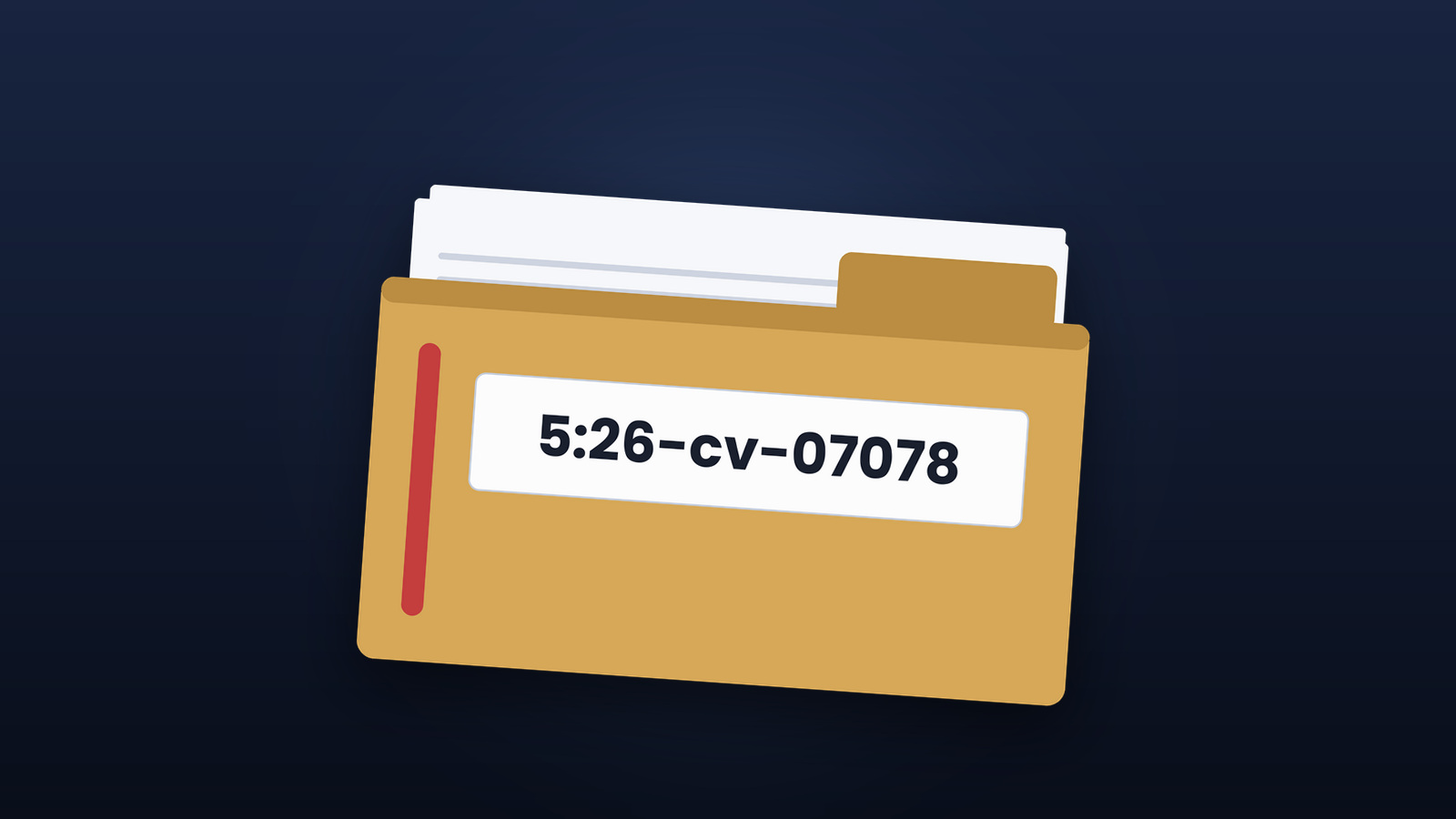
In the lawsuit concerning allegedly stolen trade secrets, which Apple filed in July against OpenAI and former employees, a new document has been submitted. Both sides filed a joint brief for expedited evidence gathering (Case No. 5:26-cv-07078-EJD, Dct. 161) with the Federal District Court for the Northern District of California in San Jose on September 18. The court had requested the brief after a hearing on September 14 because the parties could not reach an agreement.
The written submission presents both positions side by side. Apple submits what it describes as a limited list of requests, while OpenAI considers it broader in many respects than the original list.
Key Facts at a Glance
- Apple wants its own experts to review the forensic images on which OpenAI's experts are relying, and accuses them of critical errors.
- Apple also requires documentation on OpenAI's development in metal surfaces, power management, and battery technology.
- OpenAI claims this is an attempt to spy on a competitor and says it will only hand over the images to a neutral expert.
- According to OpenAI, the first of its own devices will not be delivered until the end of February 2027 at the earliest. The hearing regarding the preliminary injunction is scheduled for October 14.
Apple questions the opposing side's forensic evidence
The focus is on the devices of Chang Liu, who switched from Apple to OpenAI. At the end of August, Apple presented findings regarding a MacBook he used, which OpenAI countered with its own forensic investigation. According to their written submission, the result of this investigation was that all 37 files that Apple identified as Apple files were present on Liu's Mac mini with zero bytes. This strongly suggests that Liu never opened or copied them.
Apple disagrees. Its expert has already found several critical errors: The opposing experts failed to detect files on the Mac mini that were demonstrably used and stored there. Furthermore, they wrongly concluded from zero-byte files or an empty entry for the last access in the metadata that the files had never been used.
Therefore, Apple intends to analyze the underlying images itself. To justify the urgency, Apple points out that Liu erased his Apple-owned iMac before returning it and instructed a colleague to do the same.
Insight into OpenAI's hardware development
The second major point of contention concerns OpenAI's own device. In its response to Apple's request, OpenAI stated that it had developed its own metal surfaces and colors through extensive testing, without using confidential Apple information. A simulation that Liu allegedly conducted using a confidential Apple file, they claimed, had no connection to the upcoming product.
Apple argues that OpenAI has thereby made its own development the subject of the proceedings and must substantiate its claims. Documentation regarding metal surfaces, power management, and battery functions is being requested. A complete technical file is not being demanded.
OpenAI sees things differently. They argue the demand is too broad, premature, and clearly an attempt to spy on a competitor. It doesn't even limit itself to the first product, but encompasses all research and development. Furthermore, OpenAI would have to disclose its trade secrets before Apple has even revealed its own.
Further demands
Apple also wants images of all devices belonging to Liu, Tang Tan, former Apple employee Yu-Ting Peng, and one other individual that contain or have contained Apple information. This includes documentation relating to Liu's use of AI tools. OpenAI stated that its investigation of the Mac mini found no evidence that Liu used the confidential file with ChatGPT, Codex, Claude, or OpenClaw. Apple counters that OpenAI has not provided any evidence to support this claim.
OpenAI is also demanding the complete conversations between Liu and Peng in the LINE messenger app, of which they have so far only submitted excerpts, as well as documentation on what OpenAI's hardware group actually uses for job interviews. OpenAI points out that Apple's questionnaire could be aimed at any of the more than 400 former Apple employees at OpenAI.
OpenAI's counter-proposal
OpenAI rejects a separate, expedited evidence review process. Instead, all parties are expected to respond to existing regular requests within 21 days instead of 30, with these responses counting towards the usual time limits. Forensic images are to be sent to a neutral expert, and only after a mutually agreed-upon procedure.
Apple considers this unfair because OpenAI's reviewers have already directly evaluated the images. Furthermore, the full release of the data would not be completed until months after the hearing.
The timetable of the procedure
| Date | Date |
|---|---|
| September 10, 2026 | Start of the regular taking of evidence |
| September 14, 2026 | Hearing: Court requests limited applications |
| September 18, 2026 | Joint written submission from both sides |
| October 1, 2026 | Appointment for process planning |
| October 14, 2026 | Hearing regarding the preliminary injunction |
| Earliest date: end of February 2027 | Delivery of the first OpenAI device, according to OpenAI |
OpenAI cites a statement in the iyO v. io Products case as the delivery date. According to previous reports, the device is a speaker with an integrated camera.
Why the delivery date puts the urgency into perspective
Apple's central argument for the urgency is the interconnectedness of the two companies: with each passing day of development, the risk grows that Apple secrets will be so deeply embedded in OpenAI's product that it becomes irreversible. Development is indeed continuing, so the argument holds water. However, a device that won't be delivered for at least five months diminishes the urgency that Apple justifies with its five- to fourteen-day release timeframes.
Furthermore, there is a concession that OpenAI cites from the transcript. Apple's lawyer stated on September 14th that the preliminary injunction could be issued even without this evidence. Later, however, he demanded the immediate release of the images before October 14th. We interpret both statements as indicating that Apple is less concerned with the injunction itself than with being able to review OpenAI's defense before the hearing.
The court will now decide this question. How far Apple is allowed to see into OpenAI's development will also determine the outcome of a case that so far has primarily consisted of one claim against another.
Do you think Apple's request for insight into OpenAI's development is justified – or is Apple overstepping its bounds? Let us know in the comments what you think the court should allow.