This article may contain affiliate links. Learn more on our Partner Program page.
Four months after Apple's lawsuit, OpenAI is striking back in court. The accusation is now reversed: Apple allegedly obtained OpenAI's trade secrets and pressured suppliers to stop working for OpenAI. Furthermore, two former Apple employees are challenging the contracts that bind Apple to its employees.
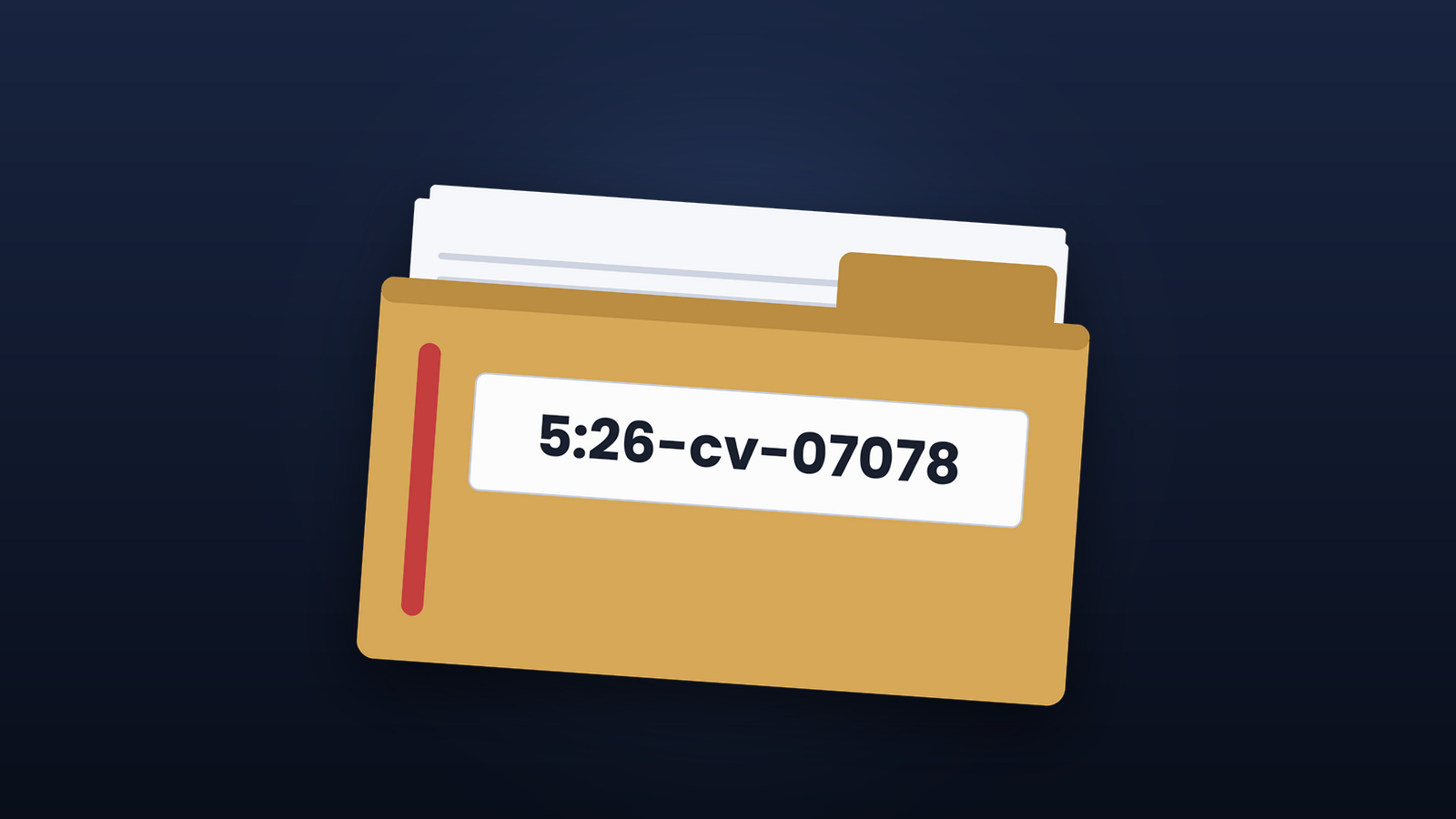
OpenAI, the hardware company io Products, and the two former Apple employees Chang Liu and Tang Tan filed their answer along with counterclaims (Dkt. 217) with the U.S. District Court for the Northern District of California in San Jose on November 27. It is the same case in which Apple took OpenAI to court over its AI hardware in July (Case No. 5:26-cv-07078-EJD, Judge Edward J. Davila). In addition to the response to Apple's allegations, the filing contains twelve claims of its own against Apple, and the defendants are demanding a jury trial.
On the same day, the defendants withdrew their motion to dismiss Apple's lawsuit (Dct. 216). The dispute is therefore no longer about the admissibility of Apple's lawsuit, but about the merits of the case itself.
Key Takeaways
- OpenAI accuses Apple of having obtained trade secrets about an unreleased OpenAI device through a returning employee.
- Apple allegedly pressured joint suppliers to limit work for OpenAI. According to a written statement, one manufacturer canceled orders due to threats from Apple.
- Chang Liu and Tang Tan want to have parts of their Apple employee agreements declared invalid; Liu also accuses Apple of violating his privacy.
- The defendants withdrew their motion to dismiss Apple's lawsuit. The trial is still scheduled for July 19, 2027.
The case of „Employee X“
The core of the counterclaim concerns an employee whom OpenAI refers to only as „Employee X.“ According to the pleadings, he joined OpenAI's device team on December 2, 2025, after many years at Apple, and primarily worked on an unreleased device. His last day of work was June 2, 2026, after which he allegedly returned to Apple.
Before his departure, he allegedly sent confidential documents to private email addresses and phone numbers. These included a 76-page measurement and testing procedure for suppliers, a table with color and resin data, and archives containing geometry and measurement data for an unpublished device. Six more archives were reportedly sent to his Singapore number on June 1, 2026.
In July 2026, at Apple's request, he allegedly reported to the management of OpenAI's Asia-Pacific operations about OpenAI's hardware activities and unpublished product plans. These allegations are not new: OpenAI had already raised them in mid-October, but at that time only in writing and with the announcement that it would decide on its own claims only after reviewing the case. With the counterclaim, that decision has now been made.
Pressure on shared suppliers
The new allegation concerns the supply chain. According to OpenAI, Apple demands that suppliers disclose their OpenAI projects and name which employees with Apple experience are working on them. One finishing company allegedly moved OpenAI parts to a separate night shift for anodizing after objections from Apple.
Another manufacturer stated that it could no longer undertake the planned work, citing threats from Apple as the reason for the written submission. The public version of the submission does not name the suppliers. Overall, OpenAI accuses Apple of using all available means to compete unfairly.
Attack on Apple's employee contracts
A large part of the counterclaim targets the intellectual property agreements that Apple employees sign. OpenAI considers them too broad, citing California law, which largely prohibits contractual clauses that prevent employees from changing employers. Liu and Tan are seeking a declaratory judgment that specific sections of their agreements are invalid.
OpenAI also accuses Apple of encouraging employees to store work files in private iCloud accounts and to communicate about work via private messages. Those who leave the company could thus easily be accused of confidentiality theft. According to the lawsuit, 400 employees have already left Apple for OpenAI, and Apple allegedly intends to deter the next 400. Apple itself, in its lawsuit, stated that more than 400 former Apple employees have joined OpenAI.
Chang Liu raises his own allegation: His former supervisor asked him to leave his private iCloud account logged into the returned device so that Apple could access work files. A forensic service provider commissioned by Apple subsequently reviewed private messages, including some from after his departure from the company.
The twelve claims at a glance
| Counterclaimant | Claims against Apple |
|---|---|
| OpenAI and io Products | Theft of trade secrets under US federal law, deliberate disruption of supply contracts, two counts of unfair competition |
| Chang Liu | Declaratory judgment regarding the invalidity of his agreement, violation of privacy, unfair competition, unauthorized computer access under federal and California law |
| Tang Tan | Declaratory judgment regarding the invalidity of his agreement, unfair competition, attempt to enforce invalid contractual clauses |
The claims include damages, narrowly defined injunctions, and legal fees. Regarding Apple's own claims, the defendants request that Apple be denied any compensation.
Apple also rejects the counterclaims
Apple told Bloomberg that it had found no evidence to support OpenAI's allegations and that it has rules prohibiting the use of confidential information from previous employers. Apple claims OpenAI is trying to deflect attention from evidence that its own employees took product information from Apple. Similarly, Apple had already rejected the initial allegation concerning „Employee X“ in October: an internal investigation found nothing, and OpenAI did not respond to requests for further details.
OpenAI describes the events differently. According to its counterclaim, Apple will only investigate the allegations if OpenAI discloses the alleged secrets outside of the court-supervised proceedings following the injunction. OpenAI proposed instead that Apple's new lawyers submit to this injunction.
The defense attorney becomes a plaintiff
I consider the allegation regarding the supply chain to be the more consequential part. Whether „Employee X“ took files can be determined forensically. The question of whether Apple is using its position with shared suppliers to hinder a competitor, however, goes to Apple's relationship with the entire supply chain. There, Apple, as a major customer, carries weight that a young hardware business like OpenAI's does not.
This changes the starting point for the trial, which is scheduled to begin on July 19, 2027. The proceedings will then no longer focus solely on whether OpenAI defrauded Apple, but also on whether Apple itself overstepped its bounds. I expect Apple to initially request that parts of the counterclaim be dismissed, just as OpenAI attempted to do with Apple's lawsuit this summer and has now withdrawn its request.
Do you see the counterclaim as a serious counterattack – or rather as an attempt by OpenAI to turn the tables before the trial? Let us know in the comments which of the allegations carries more weight for you: the one concerning „Employee X“ or the one concerning the suppliers.