
This article may contain affiliate links. Learn more on our Partner Program page.
For one day, websites of major brands unknowingly delivered malicious code to their visitors. The code swapped crypto addresses, stole card data, and attempted to take over older iPhones and iPads using known exploit chains. German websites were also on the list.
On November 16, malicious code was injected into the websites of 178 organizations via the Optimizely Web platform, including Zoom, BBC, CNN, Salesforce, GitLab, IKEA, and HSBC. The attack was analyzed by security researcher Scott Helme, who published his analysis on Report URI. Optimizely Web is a tool that allows companies to test variations of their websites. To do this, they embed an Optimizely script that runs on each page.
The malware for iPhones and iPads included two familiar threats: the Coruna and DarkSword exploit chains. Apple released updates against both in the spring, one for Coruna on older devices and later one for DarkSword on iOS 18. Therefore, only those who hadn't updated their devices in a long time were at risk.
Key Takeaways
- Attackers injected malicious code into the Optimizely scripts of 178 organizations on November 16, which ran simply upon page loading.
- The code exchanged crypto addresses, read map data from the sites' own forms, and, under certain conditions, sent cookies and screenshots.
- He downloaded the Coruna and DarkSword exploit chains, which only affect older iOS versions, onto iPhones and iPads.
- Among the affected sites are German offerings such as wowtv.de, vaillant.de, pokerstars.de and abnamro.de, as well as the Swiss streaming service Zattoo.
How the malicious code got onto the pages
Optimizely Web loads a script from Optimizely's own network for each client. This script contains a field for the client's own code, which is executed on every page. According to Helme, the attackers inserted their code precisely there; the rest of the script remained unchanged. The websites themselves were therefore not hacked; they trusted a service provider's script.
Helme observed the first intrusion on November 16th at 5:21 a.m. German time on the BBC script. Most of the scripts were cleaned up that evening, and according to Helme's addendum, all were clean shortly after midnight. How the attackers gained write access to so many client projects is unknown. Optimizely has confirmed the incident on its status page.
What the code did in the browser
Every visitor received the same script; no click or download was necessary. It searched the page and the clipboard for crypto wallet addresses and replaced them with the attackers' addresses. Anyone copying an address from an affected page could therefore accidentally paste the wrong one.
From early afternoon onward, the script also extracted card numbers, expiration dates, and security codes as soon as they were entered into custom form fields on a website. According to Helme, it could not access payment windows from providers like Stripe or Adyen. If it replaced an address with wallet or payment terms, it also sent cookies that were not particularly secure, as well as a screenshot of the page.
By the morning of November 17th, payments totaling approximately $7,150 had been received in the attackers' wallets. Helme cannot see how many card details were compromised or how many iPhones were actually compromised.
Which iPhones were at risk
On iPhones and iPads, the script read the iOS version and loaded the appropriate exploit chain in an invisible frame:
| iOS version | Charged chain |
|---|---|
| iOS 13 to iOS 17 | Coruna |
| iOS 18 | DarkSword, and Coruna up to iOS 18.6 |
| iOS 26 | own chain, which according to Helme only records device characteristics |
According to comments within the code itself, iOS 18.7.3 and later, as well as iOS 26.3 and later, are protected. Helme does not specify a protection chain for iOS 27. A visible indication of the vulnerability was observed on devices running iOS 18.6 or earlier: the affected page reloaded every minute to repeat the attack.
Neither of these chains is new. DarkSword gains access to Safari via a specially crafted website and works its way into the system core; a more advanced version for unpatched iPhones already surfaced in October. Helme found the Coruna loader used in the current attack, byte-level accurate, in a sample from another campaign that he had analyzed in October.
Who should do something now
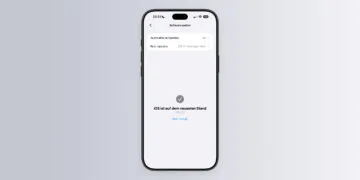
For an iPhone running the latest iOS 27, the exploit chains posed no risk. Devices that hadn't received an update in months were vulnerable. If you have an older iPhone or iPad in your family still running iOS 18 or earlier, it's worth checking under Settings > General > Software Update. With automatic updates enabled, the device will install Apple's security updates without any user intervention.
Regardless of the device, the part of the attack that ran in the browser is what counts. Anyone who prepared a crypto transfer on one of the websites on November 16th should check the recipient's address. Those who paid by card should keep an eye on their statement.
I consider this case more instructive than the list of brands suggests. None of the affected sites had a vulnerability themselves; they trusted a service provider, and the attack targeted visitors who had done nothing wrong. Nevertheless, the simplest solution against the iPhone chains was an up-to-date system.
Did you visit one of the affected websites on November 16th, and is there still an iPhone in your circle that hasn't received the latest update? Tell us in the comments how you keep older devices in your family up to date.